
Selectivity and a stable baseline for NO2

Nitrogen dioxide sensors: choosing and integrating an NO2 measurement method

Measurement range alone is not enough when selecting a nitrogen dioxide sensor. An outdoor node monitoring low levels and a device analysing a process sample require different selectivity, sampling and maintenance arrangements. VOMRO defines a custom measurement system development scope by considering the NO2 sensor alongside low-current electronics, temperature monitoring, embedded software and the sample path.

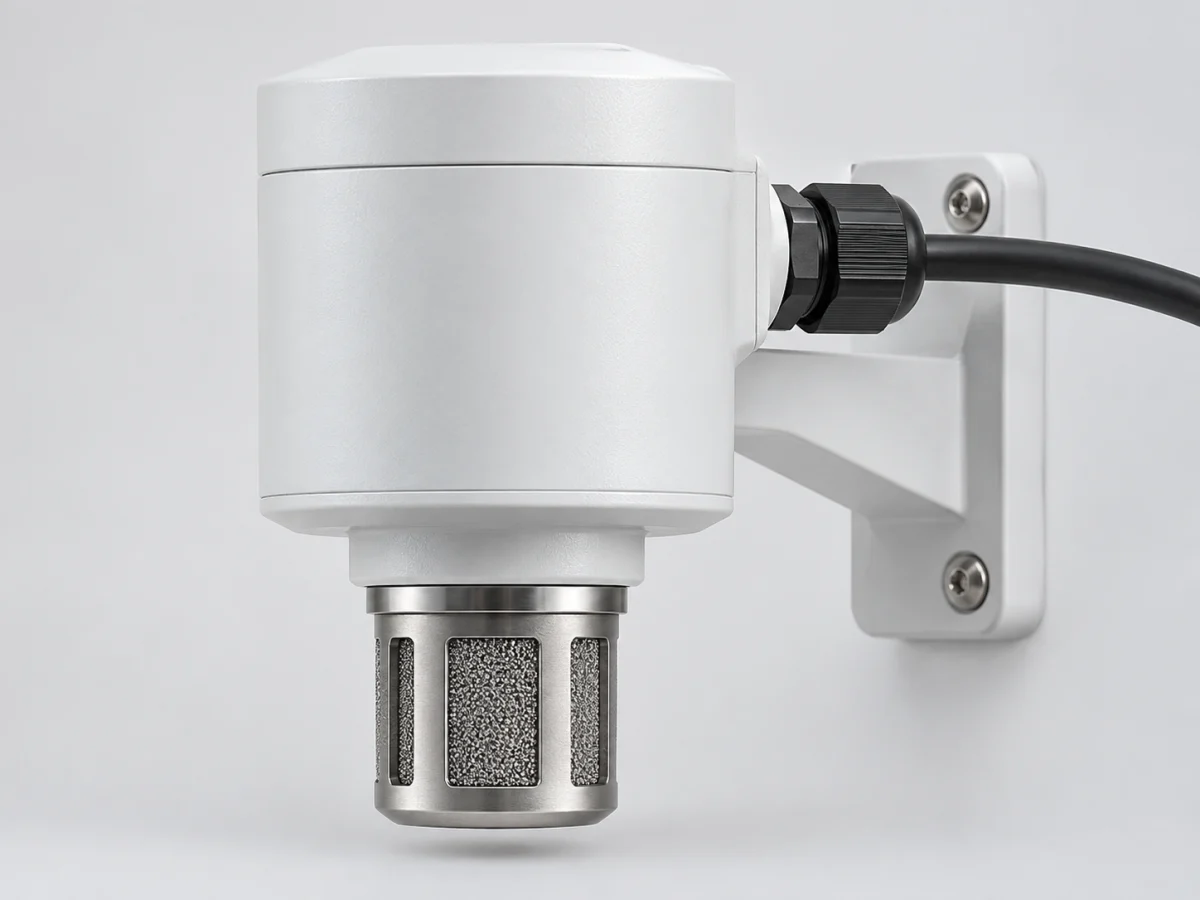
Completed NO₂ gas sensor with a diffusion head, mounting connection and sealed body
Illustrative sensor product image.
Target gasNO2, not N2 or total NOx
Main considerationOzone and environmental effects
VerificationGas + the complete sample path

VOMRO engineering approach

Define the decision the measurement will support at the outset.

Nitrogen dioxide NO2 differs from molecular nitrogen N2 and nitric oxide NO. Selecting an NO2 cell does not automatically provide total NOx. In a multigas setup, clearly state what each channel responds to and the assumptions behind calculations between channels.

An air quality project may aim to observe trends over time, while another project may compare a particular sample composition. Expected levels, the speed of change and the decision based on the result jointly determine sensor type, analogue circuitry, check gases and acceptance criteria. Low-cost modules do not all perform the same task.

The complete measurement process

From sensed quantity to usable data

  1. 01Representative sample
  2. 02NO₂-sensitive measurement cell
  3. 03Zero, cross-interference and environment
  4. 04NO₂ measurement record with units

Conceptual diagram. The actual measurement range, error budget and validation plan are defined for the application.

01

What signal does an electrochemical NO2 cell produce?

In common electrochemical NO2 cells, gas produces a small current through a reaction at the working electrode. A suitable front end converts this current into a measurable voltage; concentration is calculated using zero and sensitivity information. A bare cell must not be treated as a ready-made digital sensor that connects directly to a microcontroller input.

In some four-electrode cells, an auxiliary electrode supports correction of baseline and temperature effects. Its use depends on the manufacturer's algorithm and characterisation; arbitrarily subtracting two signals is not a universal solution. Digital modules may handle some of this internally, but output units, filtering, status codes and calibration methods still require examination.

02

Account for ozone interference and filter limitations

Ozone can be a significant interference in NO2 measurement. Alphasense uses filters to reduce ozone effects in certain NO2 models. This feature cannot be generalised to every NO2 cell. Review the cross-sensitivity table, filter behaviour and operating conditions for the selected part number.

A cross-sensitivity value does not prove that the same correction factor applies to every mixture. Coexisting gases, temperature and cell ageing may alter practical results. If ozone, humidity or other channels are used for correction, validate the method against independent comparison data. Rather than silently replacing negative or unexpected readings with zero, software can preserve raw values and validity status.

03

Distinguish ppb resolution from measurement accuracy

One ppm equals one thousand ppb. However, displaying ppb does not establish that the system measures accurately at that level. Sensor zero current, temperature-related drift, electronic noise and calibration uncertainty become significant at low levels. Display resolution, detection capability and accuracy are separate quantities.

Define the normal expected level, the change to distinguish and possible overexposure together. The manufacturer's operating range differs from the temporary gas level the sensor can withstand without damage. Response time also relates to the test gas and conditions used; total device response must be measured separately after adding filters, housing and tubing.

04

Reactive gas must reach the sensor unchanged

For NO2, a long hose or arbitrarily chosen filter can delay gas arrival or change the measured quantity. Alphasense sampling recommendations emphasise suitable filter materials and prevention of condensation for reactive gases. Hoses, fittings and membranes should not be selected solely by mechanical dimensions.

In a diffusion-based outdoor node, rain protection, airflow and solar heating are considered together. In a pumped system, flow, pressure fluctuations and the exhaust path also affect results. Applying calibration gas only to the cell does not validate the complete field sample path. During acceptance trials, gas is introduced at the actual inlet and rise and recovery behaviour are recorded.

05

Manage temperature, humidity and board cleanliness together

Zero and sensitivity in electrochemical cells can change with environmental conditions. The NO2-D4 datasheet shows these effects in separate curves and operating limits; a single room-temperature adjustment is not assumed to represent all seasons. Humidity measurement also helps distinguish condensation from high relative humidity.

Low-current front-end design addresses leakage current, contamination, supply noise and nearby heat sources. Check whether the temperature sensor represents a hot board component or the gas cell's conditions. Digital filtering can reduce noise but delays real changes, so filter settings and total delay are presented clearly to the user.

06

Verify zero, sensitivity and field comparisons separately

The calibration plan uses suitable zero gas, a known NO2 mixture and application conditions matching the sensor instructions. Records include traceability of the cylinder composition, connection materials and sample stabilisation time. A check measurement reveals a deviation; changing coefficients is a separate adjustment operation.

In outdoor monitoring, co-locating the device with a suitable reference helps reveal real environmental effects. A correction derived at one location does not automatically transfer to another season or environment. VOMRO can plan records to distinguish raw signals, corrected values and status information. An application prototype does not establish official measurement or certified alarm performance.

07

Project information to share for an NO2 device

Describe the measurement location, expected NO2 range, ozone and other possible gases, and environmental temperature and humidity variations. Will the sample come directly from ambient air or be drawn through a line? Battery life, display, communication, mounting and maintenance access are also initial requirements. If an existing cell is used, share its part code and datasheet.

Deliverables are made concrete through sensor or module selection, an analogue front end, PCB, embedded software, enclosure and comparison tests. Project source files and the structure of calibration records are defined at the outset. Acceptance means demonstrating the intended behaviour under defined gas and environmental conditions, not merely displaying a number.

NO2 measurement options and checkpoints
OptionWhat does it provide?What requires additional verification?
Bare electrochemical cellCustom dimensions and front-end designCurrent measurement, zero and environmental correction
Filtered four-electrode cellReduced ozone interference in suitable modelsFilter conditions and auxiliary-electrode algorithm
Module with integrated electronicsShorter electronics integration effortCalibration, data quality and status codes
Pumped sampling systemSampling gas from a specific locationLine loss, delay, flow and pressure

How it works

A clear process from start to delivery.

Not every project looks the same; however, the measurable requirement, controlled revision, and field verification steps remain unchanged.

  1. 01

    Document the measurement purpose

    Define the NO2 range, rate of change and decision based on the result.

  2. 02

    Identify interference

    List ozone, other gases, temperature and humidity conditions.

  3. 03

    Test the complete system

    Test the cell, front end, enclosure and sample path together.

  4. 04

    Plan maintenance

    Define check gases, records, component replacement and field comparisons.

Frequently asked questions

Before starting the project

The technical scope, deliverables and test plan are clarified together according to the requirements of your project.

Does an NO2 sensor measure nitrogen N2?

No. NO2 is nitrogen dioxide; N2 is molecular nitrogen. Sharing the name of an element does not mean they can be measured with the same sensor.

Can total NOx be calculated from a single NO2 sensor?

Total NOx cannot be reported without knowing the NO contribution or using a suitable conversion and analysis method. The device output must clearly name the measured gas as NO2.

Does ozone affect every NO2 sensor by the same amount?

No. Cell chemistry, filters and model differences matter. One component's cross-sensitivity value cannot be applied directly to another component or every operating condition.

Do four electrodes eliminate the need for calibration?

No. An auxiliary electrode supports correction of certain effects; zero, sensitivity, the sample path and actual environmental performance still require verification.

Is a waterproof enclosure enough for an outdoor device?

The gas inlet must also remain open and defined. Protective membranes and enclosure geometry can affect response time; rain protection, condensation and airflow are tested together.

How often should I calibrate an NO2 sensor?

There is no universal interval. Checks and any necessary adjustments are planned from the selected cell's instructions, field drift, exposure and required measurement quality.

Your project, your product

Developed confidentially and delivered with source files.

We may work with a confidentiality agreement (NDA) before sharing technical details. At the end of the project, we deliver the source codes, design files and technical documents we have developed to you.

  • NDA before sharing technical information
  • Clear deliverables agreed at the outset
  • Source and technical files at the end of the project
Our confidentiality and delivery process
Let's start with your idea

Let us discuss your NO2 measurement conditions

Share expected gas levels, possible ozone, the environment and connections; together, we can define measurement electronics and validation scope.