Analytical measuring electronics

Gas sensors and chemical analysis systems

We develop sensor interface, analog measurement electronics, calibration and data recording infrastructure according to the target gas, measurement range and working environment.

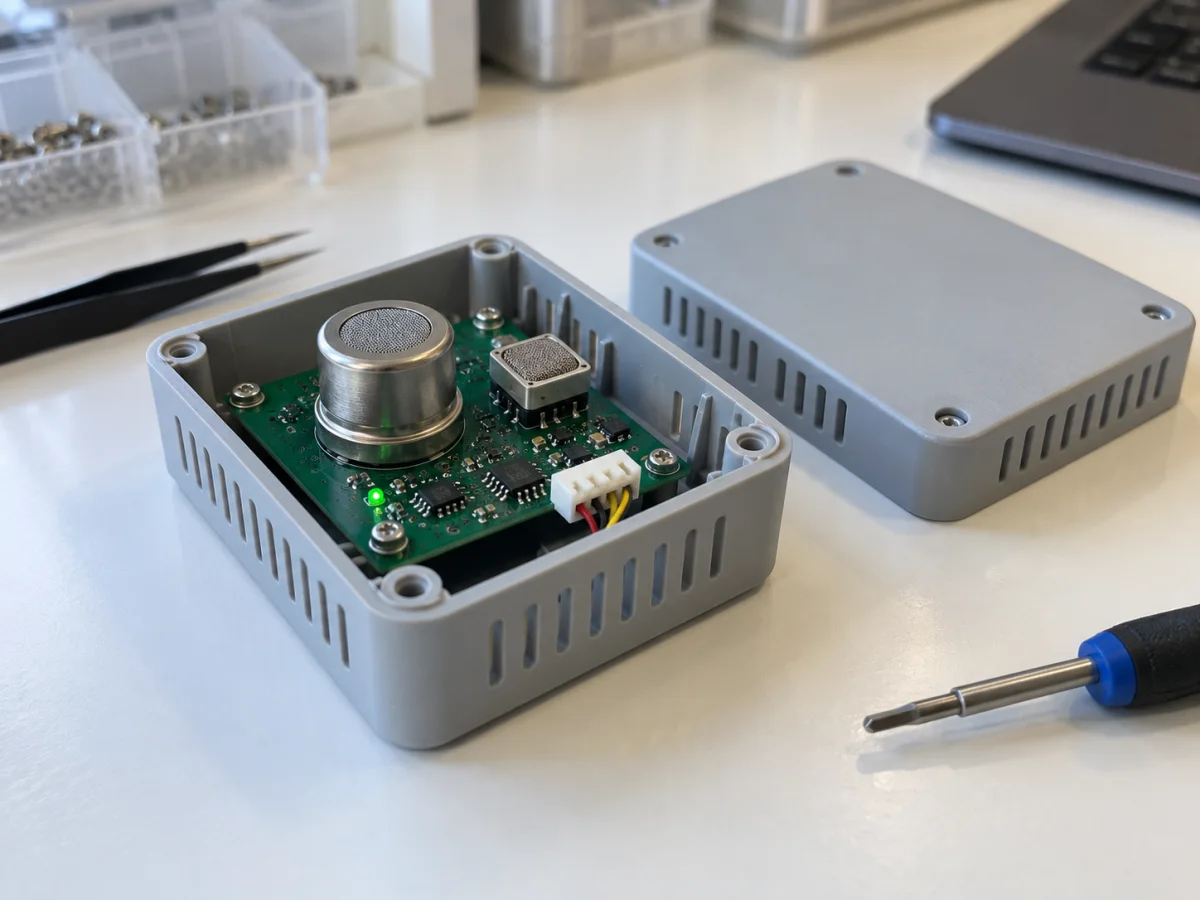
Sensor head, custom electronic circuit board and housing with ventilation openings in the gas detection prototype
Representative application image.
SensorElectrochemical, NDIR, MOS
MeasurementLow noise analog front end
DataRecording, alarm and remote monitoring

Your project, your product

Developed confidentially and delivered with source files.

We may work with a confidentiality agreement (NDA) before sharing technical details. At the end of the project, we deliver the source codes, design files and technical documents we have developed to you.

  • NDA before sharing technical information
  • Clear deliverables agreed at the outset
  • Source and technical files at the end of the project
Our confidentiality and delivery process

VOMRO engineering approach

We first define the target gas and measurement condition.

No single sensor technology answers every problem in gas measurement. Target gas, expected concentration, cross sensitivities, ambient temperature and humidity, response time, sensor life and calibration frequency should be evaluated together. The sampling and electronic requirements of a laboratory setup and a continuously operating field device are not the same.

VMR works on the electronics that turn a sensor into a device whose measurements can be read and monitored. Sensor excitation, low-level current or voltage measurement, temperature and humidity compensation, pump and valve control, local display, alarm outputs and remote data transmission can be addressed within the same product architecture.

01

Choosing the appropriate gas sensor technology

Electrochemical cells can provide selective measurements at low concentrations, but require an analogue front end suited to their bias, temperature effects and cell current. NDIR sensors use optical absorption for particular gases, making the light source, optical path and reference channel important. Metal oxide sensors can be economical and durable, but heater control and cross-sensitivities must be considered.

The typical curve in the sensor datasheet alone is not considered sufficient. The measurement range, other gases expected, air flow and sample preparation method are determined. If a filter, pump, flow restrictor or sample cell is required, mechanical and electronic design proceed together.

  • Target gas and concentration range
  • Cross-sensitivity and environmental effects
  • Diffusion-based or pumped sampling arrangement
02

Signal conditioning and measurement board

Electrochemical sensors use transimpedance amplifiers to measure currents at nanoampere and microampere levels. Leakage current, board cleanliness, protection components and moisture on the PCB surface can affect results at these levels. Optical and semiconductor sensors place greater emphasis on power management, heater drive, source modulation and digital filtering.

The analogue front end and ADC range are matched to each other; the software distinguishes fault conditions such as saturation and sensor disconnection. Temperature and humidity sensors are read alongside the main measurement to supply data to the compensation algorithm. Access to raw values from the prototype board makes it easier to refine the calibration model using field data.

  • Transimpedance and low offset measuring stages
  • ADC, reference and filter design
  • Temperature/humidity compensation and sensor fault diagnosis
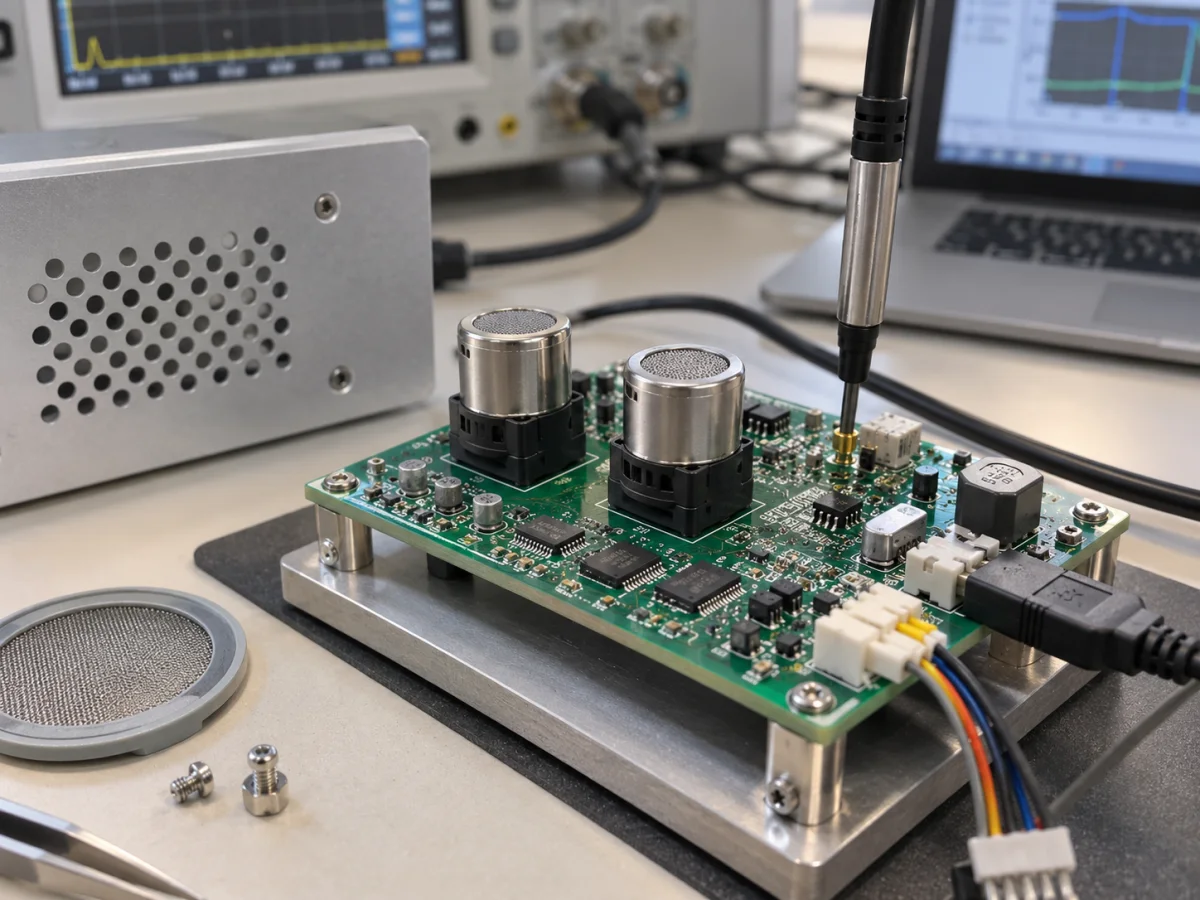
Prototype checks of socketed sensors and power connections on a gas sensor interface board
Representative application image.
03

Calibration, recording and system integration

The calibration method is determined by the target gas, reference mixture, flow condition and desired uncertainty. In addition to zero and span calibration, multi-point curve, temperature coefficients and sensor serial number can be kept in the device memory. Maintenance alerts can be generated by monitoring the calibration date and usage time.

The device can operate independently with a display and audible or visual alerts, or send data to a supervisory system through Modbus, Ethernet, Wi-Fi or cellular connectivity. Alarm thresholds, relay behaviour and the safe state during communication loss are defined through the application's risk analysis. Life-safety or regulated measurements require separately planned certification and verification.

  • Zero, span and multi-point calibration
  • Time-stamped measurement and maintenance records
  • PLC, SCADA, web panel or cloud link
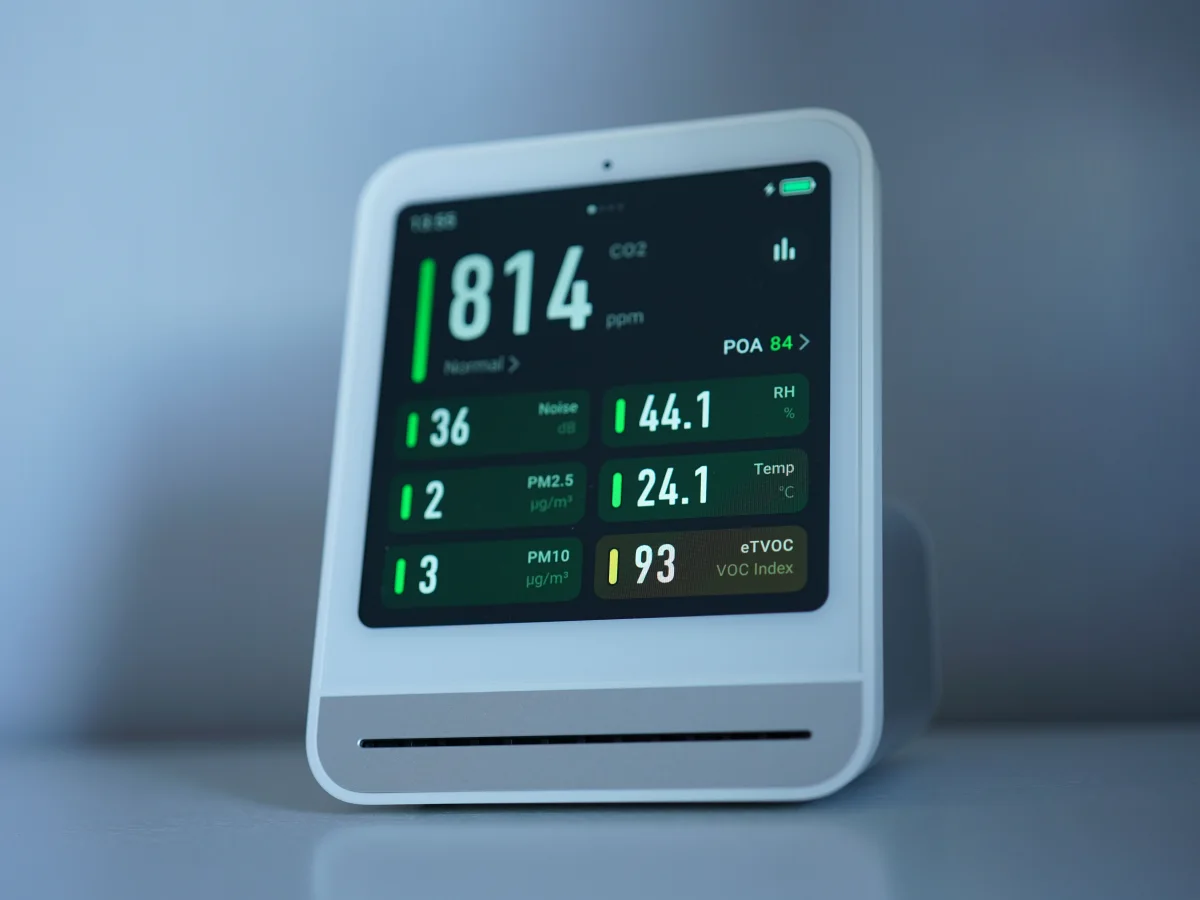
Air quality measuring device that displays CO₂, particles, temperature and humidity values
On-screen monitoring of CO₂ and ambient data on an air quality meter.
04

What gas or chemical quantity will you measure?

Nitrogen, NO₂, CO₂, CO and oxygen are not treated with the same measuring principle. The sample matrix, interferences and calibration conditions are defined along with the target gas. pH, conductivity and ion selective measurements in liquids also have their own electrode and electronic requirements.

How it works

A clear process from start to delivery.

Not every project looks the same; however, the measurable requirement, controlled revision, and field verification steps remain unchanged.

  1. 01

    We define the analyte

    The target gas, measuring range, other gases and operating environment are clarified.

  2. 02

    We verify the sensor

    Sensor technology, sample path and analog front end are evaluated together.

  3. 03

    We measure the prototype

    The raw signal, environmental effects and calibration curve are compared to the reference.

  4. 04

    We convert it into a device

    Recording, alarm, user interface and communication functions are added to the product.

Frequently asked questions

Before starting the project

The technical scope, deliverables and test plan are clarified together according to the requirements of your project.

Which gas sensors can you work with?

Depending on the target gas and measurement range, electrochemical, NDIR, metal oxide or another suitable sensor technology can be considered. The selection is made based on the project requirement and verification availability.

Can the calibration be stored inside the device?

Yes. Sensor or device specific coefficients, serial number, date and environmental compensation parameters can be kept in non-volatile memory.

Can these systems be used as safety alarms?

A working prototype alone is not sufficient for life safety and regulated use. The relevant standard, risk analysis, independent verification and certification should also be included in the project scope.

Can we work with NDA before sharing technical details?

Yes. We can complete the NDA arrangements together before you share your project's technical details.

Do you deliver source codes and technical files at the end of the project?

Yes. We deliver the source codes, design files and technical documents we developed within the scope of the project to you at the end of the project. The delivery list and file formats are clarified at the beginning.

Let's start with your idea

Let's talk about the product you dream of and the need you want to solve.