Measurement electronics

Precision sensor, measurement and data acquisition system development

We design analogue circuits and develop custom data acquisition systems for devices that measure pressure, force, temperature or electrical quantities. We plan the sensor interface, measurement board, embedded software and communication together according to the target accuracy, sampling rate and field conditions. We evaluate measurement performance against defined references and under defined test conditions.

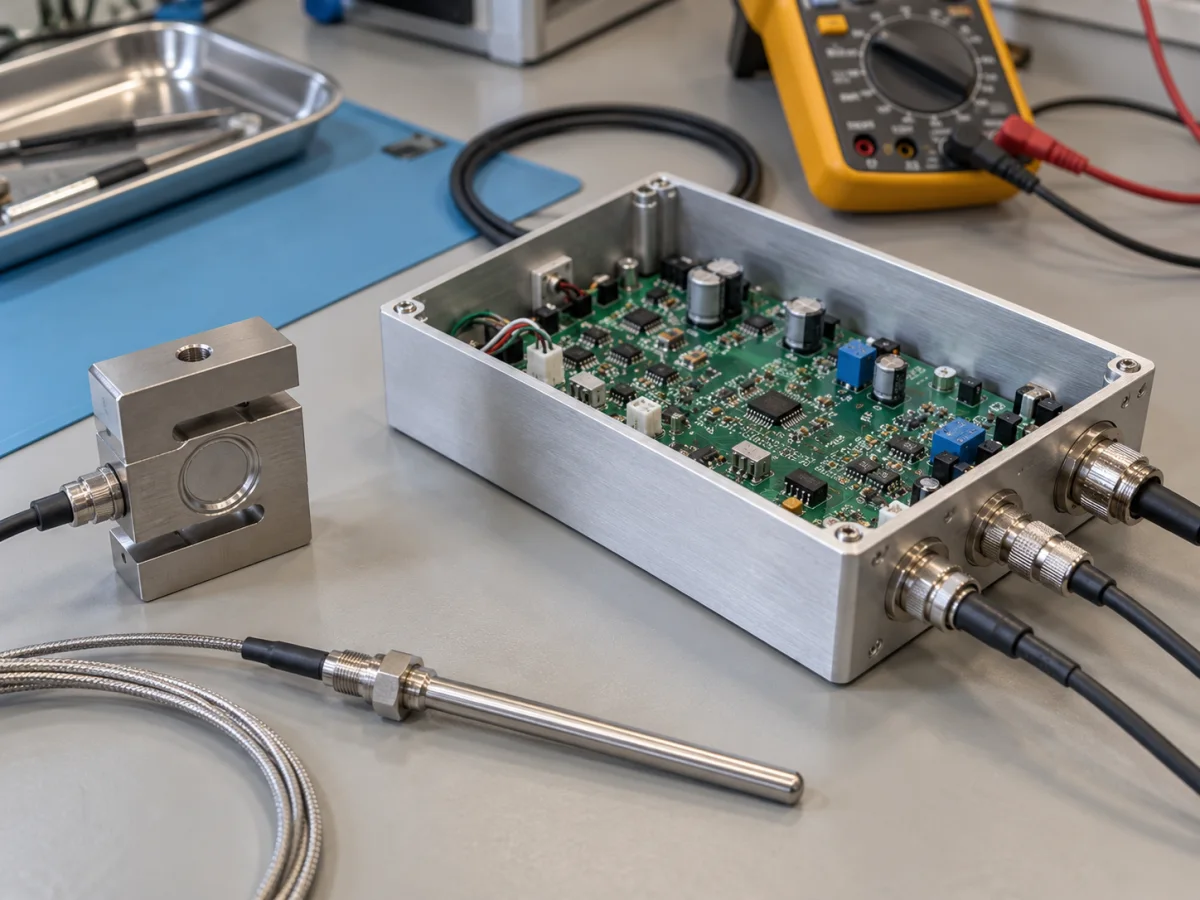
Bench prototype of a custom analogue measurement board connected to a load cell and temperature probe
Representative application image.
SignalAnalog + digital sensors
FocusStability and traceability
OutputDevice, PLC or cloud

Your project, your product

Developed confidentially and delivered with source files.

We may work with a confidentiality agreement (NDA) before sharing technical details. At the end of the project, we deliver the source codes, design files and technical documents we have developed to you.

  • NDA before sharing technical information
  • Clear deliverables agreed at the outset
  • Source and technical files at the end of the project
Our confidentiality and delivery process

VOMRO engineering approach

Precision requires more than choosing a high-resolution ADC.

Measurement accuracy depends on the complete chain: sensor, excitation source, analogue front end, voltage reference, PCB layout, digital filter and calibration. A converter with high resolution on paper may produce unstable field results because of unsuitable grounding, temperature drift or inadequate shielding. We therefore treat the system as a single chain from the sensor to the recorded data.

Project-specific interfaces can be developed for sensors measuring pressure, force, weight, temperature, humidity, light, current, voltage, conductivity and similar physical quantities. Where a ready-made sensor module is required, its power supply, level shifting, isolation and communication are designed for the device's operating conditions.

01

Low noise analog circuit design for sensor measurement

Bridge type sensors, strain gauge, load cell, RTD, thermocouple, photodiode or current output sensors require different excitation and amplification topologies. Instrumentation amplifier, transimpedance stage, programmable gain, active filter and protection circuits are determined according to the measurement range.

Input protection must account for the protection component's leakage current and capacitance. The reference source, ADC drive conditions and sampling rate are selected together with the required bandwidth. Keeping sensitive PCB nodes away from current-carrying and power paths is an essential part of measurement stability.

  • Signal amplification and conditioning
  • Analog/digital filtering
  • Isolation, protection and correct grounding
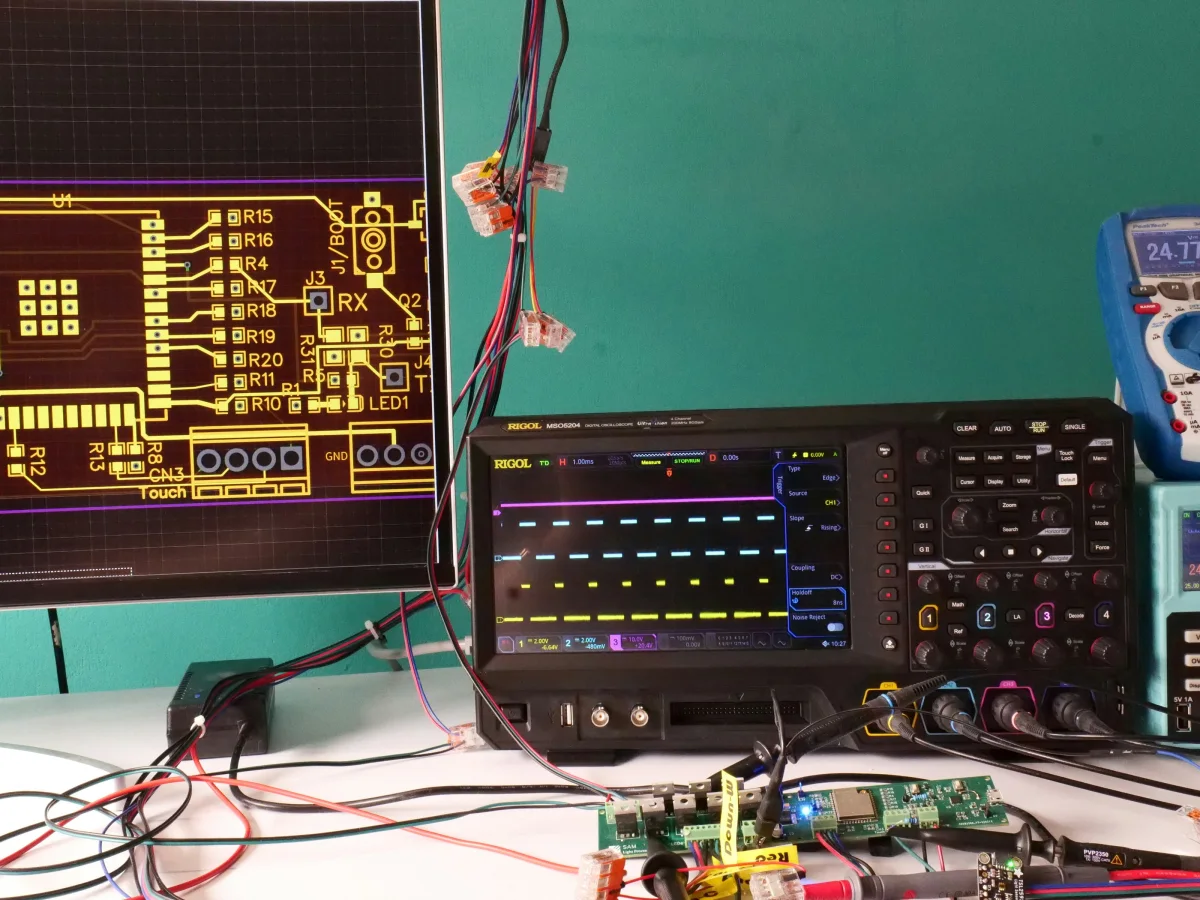
Measurement workbench with a PCB layout, oscilloscope, multimeter and circuit board
Electronics development workbench with a PCB layout drawing and electrical measurement instruments.
02

Calibration, temperature compensation and error budget

Resolution, accuracy and repeatability are distinguished when determining the measurement target. An error budget is prepared for sensor tolerance, amplifier offset, gain error, reference drift and temperature effect. Thus, it can be seen at the prototype stage how reliable the system will give results under what conditions.

Single point, two point or multi point calibration can be applied depending on the project. Calibration coefficients can be stored on the device; serial number, production date and verification information can be associated with the measurement record. If field maintenance is required, the service menu or remote calibration flow is designed separately.

  • Offset and gain correction
  • Evaluation of temperature and humidity effects
  • Device-based calibration data
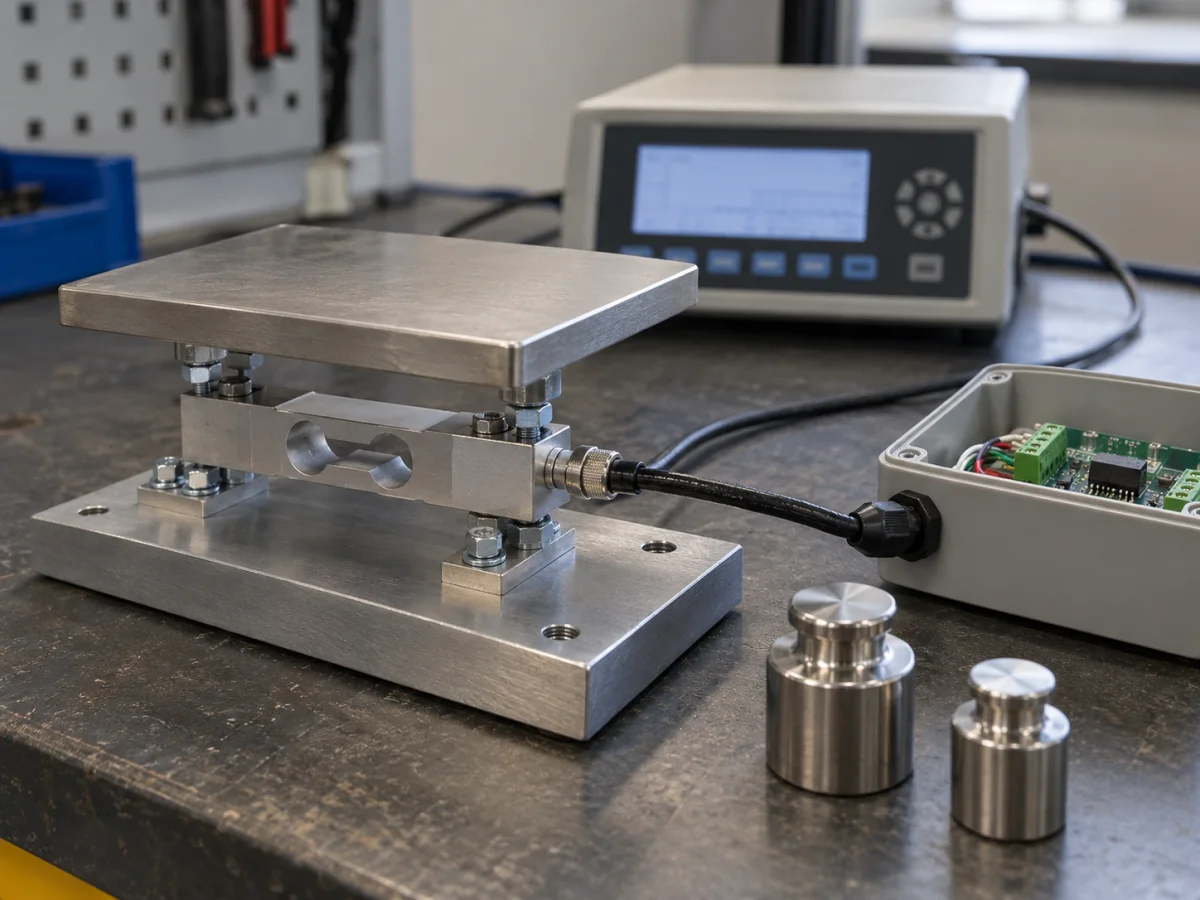
Comparative prototype trial with load cell, reference weights and electronic measurement module
Representative application image.
03

Integrating data collection system with device and automation

If the measured value will only be displayed on the screen, a local user interface may be sufficient. In projects that require process monitoring, functions such as time-stamped recording, threshold alarm, event history and remote update become important. If the device will be connected to the existing PLC or SCADA infrastructure, the data model and error codes are defined from the beginning.

We choose the appropriate one among RS485/Modbus, CAN, Ethernet, Wi-Fi, LoRa, 4G or 5G connections according to the field condition and data amount. Behaviors such as local logging when internet access is interrupted and data completion when connection is restored are part of a reliable measurement system.

  • Time-stamped measurement and alarm records
  • Modbus, CAN, Ethernet and wireless connection
  • Data transfer to web panel, server or existing automation
04

Selection and application guides by sensor type

Temperature, humidity, air quality, gas, pressure, thermocouple, light, motion and chemical measurements use different sensing principles. Our sensor technologies section explains measurement methods, selection criteria, calibration and project integration for each quantity separately.

How it works

A clear process from start to delivery.

Not every project looks the same; however, the measurable requirement, controlled revision, and field verification steps remain unchanged.

  1. 01

    Measurement target

    Range, resolution, accuracy, sampling rate and environmental conditions are defined.

  2. 02

    Error budget

    Error sources affecting the measurement from the sensor to ADC are evaluated.

  3. 03

    Prototype measurement

    The board is tested in comparison with the real sensor and reference values.

  4. 04

    Field validation

    Calibration, recording and communication behavior are verified in the operating environment.

Frequently asked questions

Before starting the project

The technical scope, deliverables and test plan are clarified together according to the requirements of your project.

Which sensors do you work with?

Depending on the project needs, sensors with analog voltage/current output, bridge type, resistance-based, frequency output or digital interface such as I²C, SPI and UART can be evaluated.

Can you connect the existing sensor to a PLC system?

Yes. The sensor signal can be converted to 0–10 V, 4–20 mA, Modbus, CAN or another industrial interface in the project with appropriate conditioning and isolation.

How to determine measurement accuracy?

The target value is not given alone; The operating range, temperature, sampling time, calibration method and reference equipment are defined together.

Can we work with NDA before sharing technical details?

Yes. We can complete the NDA arrangements together before you share your project's technical details.

Do you deliver source codes and technical files at the end of the project?

Yes. We deliver the source codes, design files and technical documents we developed within the scope of the project to you at the end of the project. The delivery list and file formats are clarified at the beginning.

Let's start with your idea

Let's talk about the product you dream of and the need you want to solve.