
From CO2 measurement to ventilation and process data

Carbon dioxide sensors: direct CO2 measurement and device design

When developing a ventilation controller, greenhouse node or process monitoring device, the CO2 sensor's measurement method must be understood. Optical CO2 measurement and eCO2 calculated from other gases are different data. VOMRO develops custom carbon dioxide measurement electronics by considering sensor selection, board and enclosure layout, calibration behaviour and data connections together.

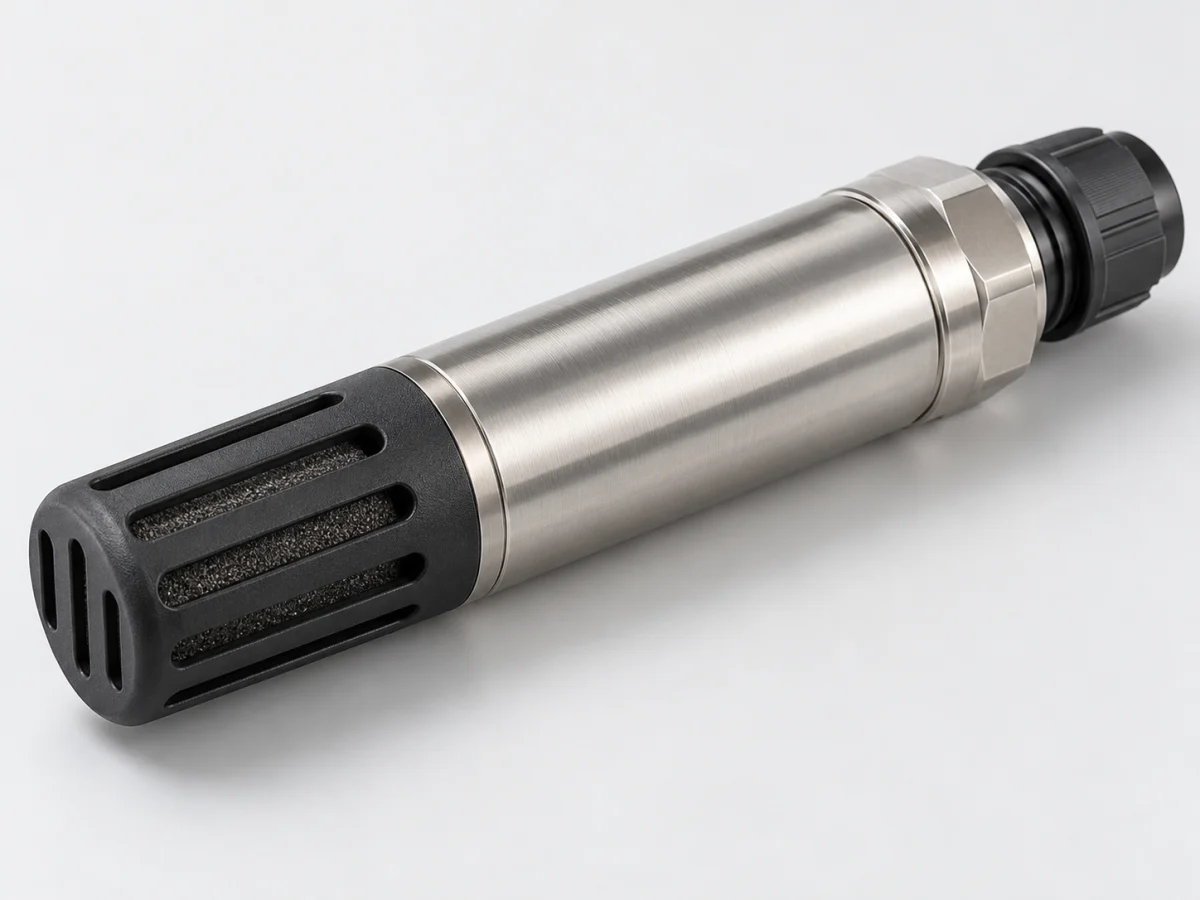
Enclosed CO₂ sensor probe with a protected gas inlet and connector
Illustrative sensor product image.
Target gasCarbon dioxide, CO2
MeasurementConventional or photoacoustic NDIR
Critical distinctionCO2 and eCO2 are different

VOMRO engineering approach

Correct placement matters as much as selecting the right sensor.

In an appropriate context, CO2 data helps monitor ventilation behaviour or process changes. Alone, it does not indicate overall air quality, microorganism levels or the suitability of an environment in every respect. Particles, volatile compounds, humidity and carbon monoxide require separate measurements.

The first decision is whether measurement will take place in room conditions or in a process gas containing high CO2 levels. Even within one brand's product family, the output range may differ from the range over which accuracy is specified. Do not select by product name alone without knowing the expected concentration, environmental conditions and change needed to support a decision.

The complete measurement process

From sensed quantity to usable data

  1. 01Air or process sample
  2. 02Actual optical CO₂ channel
  3. 03Pressure and temperature assessment
  4. 04CO₂ value and measurement status

Conceptual diagram. The actual measurement range, error budget and validation plan are defined for the application.

01

How do conventional and photoacoustic NDIR CO2 sensors work?

NDIR sensors evaluate how much selected infrared light is absorbed as it passes through the gas. The source, measurement volume and detection arrangement belong to the same measurement chain. An appropriate reference channel can help reduce the effects of source or optical-path changes. The resulting stability does not make contamination and condensation unimportant.

The photoacoustic method detects pressure changes in the gas caused by absorbed light. Sensirion's SCD4x family uses this principle and measures actual CO2. The method name does not establish equal accuracy across every range. The finished device's response, power consumption and environmental robustness are evaluated alongside the selected model's conditions and integration.

02

Why is eCO2 not a substitute for carbon dioxide measurement?

eCO2, or CO2 equivalent, is an estimated indicator some air quality sensors generate algorithmically from their response to other gases. For example, Sensirion's SGP30 documentation explains that its equivalent CO2 signal is calculated from ethanol and hydrogen measurements. A ppm display does not prove that carbon dioxide molecules are measured directly.

Changes in cleaning products or other volatile compounds can cause the estimate to diverge from actual CO2. If the requirement is CO2 concentration, select a measurement method defined for that gas. If a device shows both CO2 and VOCs, label them separately; technical documentation should clearly identify the sensor type and how the data is produced.

03

Read ppm, percentage and accuracy specifications together

A CO2 concentration of 1% by volume equals 10,000 ppm. A module monitoring room-air changes and a probe measuring percentage-level process gas are selected for different expectations. Some sensors provide a wide numerical output range while their stated accuracy applies only over a narrower range.

The fixed ppm term and the percentage-of-reading term in an accuracy specification must be considered together. Repeatability and the final display digit are distinct from accuracy. The acceptance plan should include normal operating points, the highest expected level and recovery behaviour. Returning to the normal range after very high gas exposure may also matter in the application.

04

Verify the assumptions behind automatic baseline correction

Some sensors' automatic calibration algorithms assume periodic exposure to a known low CO2 level. A continuously occupied space or a process kept rich in CO2 may not meet that condition. An incorrect assumption can cause the displayed value to drift over time even when the actual concentration does not change.

Algorithm settings therefore follow the selected component's current instructions and actual use profile. A forced adjustment using known gas or a reliable reference is a separate operation. Record check conditions rather than assuming that opening a window makes the reading correct. Sensor replacement, installation and calibration coefficient updates can be retained as traceable software events.

05

How do pressure, heat and airflow affect measurement?

Since gas density changes with pressure and temperature, examine how the sensor compensates for these effects. Not every probe measures its own pressure; some models require external pressure data or an altitude setting. Electronics warming inside the enclosure can also change the sensor's environment.

For room monitoring, direct breath or positions beside an open window or air outlet may produce unrepresentative results. Enclosure openings and internal volume affect how quickly gas reaches the sensor. In line with Sensirion's design guide, heat sources, vibration and unintended airflow effects are examined on the prototype. Condensing processes require a suitable probe and sampling arrangement rather than a room-type module.

06

What is designed when turning a CO2 module into a product?

An internal connection such as I2C and a long field communication line require different designs. The power supply must handle measurement-related load changes as well as average sensor current. PCB and enclosure layouts can alter results from a previously successful evaluation board, so the final design is tested again.

Embedded software separately handles startup, new-data readiness, communication faults and invalid measurements. A lost connection must not leave the last reading appearing current. Filtering and control outputs define delay, repeated switching around thresholds and restart behaviour. The display, records and server must use the same units and timestamps.

07

What information can start a CO2 project?

Share the space or process, expected CO2 range, temperature and humidity conditions, mounting position and decision the data will support. Battery life, measurement frequency, display, network connections and maintenance access are part of the design. Specifically identify continuously high-CO2 use so the calibration approach can suit it.

A VOMRO project clarifies sensor selection, electronics, embedded software, enclosure and validation scope together. The comparison location and acceptable deviation from a reference are documented. Source code and design documents are included in the deliverables list. A prototype displaying CO2 does not promise an independently unverified life-safety alarm function.

Differences between approaches that provide CO2 data
ApproachInformation producedMain selection check
Optical NDIRConcentration based on CO2 absorptionRange, pressure and optical-path conditions
Photoacoustic CO2Concentration from the acoustic effect of absorptionModel limitations and finished-product placement
VOC-based eCO2Algorithmically calculated equivalent valueMust not be labelled as direct CO2 measurement
Process-type CO2 probeMeasurement under defined process conditionsSuitability for humidity, pressure, cleaning and maintenance

How it works

A clear process from start to delivery.

Not every project looks the same; however, the measurable requirement, controlled revision, and field verification steps remain unchanged.

  1. 01

    Define the application

    Document room or process conditions and the required CO2 range.

  2. 02

    Select the method

    Compare actual CO2 measurement, calibration behaviour and environmental limits.

  3. 03

    Compare the finished product

    Test response, deviation and power with the enclosure and PCB in place.

  4. 04

    Deliver the records

    Document settings, test conditions, sources and maintenance methods.

Frequently asked questions

Before starting the project

The technical scope, deliverables and test plan are clarified together according to the requirements of your project.

Does a CO2 sensor detect carbon monoxide CO?

No. CO2 and CO are different gases. A CO2 module cannot replace CO measurement or a device designed for carbon monoxide.

Does a photoacoustic sensor measure actual CO2?

A photoacoustic sensor designed for CO2 measures the effect of this gas absorbing light. It is not the same method as eCO2 calculated from VOC data.

Does a 40,000 ppm sensor output guarantee the same accuracy across that range?

No. The numerical output range and specified accuracy range must be read separately. Compare the intended range with the relevant model's datasheet accuracy and environmental conditions.

Should automatic calibration remain enabled in every project?

No. The algorithm's assumption of exposure to a low baseline must match actual use. Applications with continuously high CO2 may require different settings or reference checks.

Does a CO2 reading indicate overall indoor air quality?

No. It may provide useful ventilation data, but does not measure all particles, VOCs, CO and other constituents. Each quantity displayed by the device must be explained separately.

Can a logging CO2 device be developed for my own brand?

Once the measurement range, connections and operating conditions are defined, a custom board, display, software and enclosure scope can be evaluated. Sensor placement and reference comparisons in the finished product are also planned.

Your project, your product

Developed confidentially and delivered with source files.

We may work with a confidentiality agreement (NDA) before sharing technical details. At the end of the project, we deliver the source codes, design files and technical documents we have developed to you.

  • NDA before sharing technical information
  • Clear deliverables agreed at the outset
  • Source and technical files at the end of the project
Our confidentiality and delivery process
Let's start with your idea

Let us develop your CO2 device for its intended location

Describe the measurement range, environment and logging or control needs; we can discuss the sensor, board, software and validation scope.