From design to production method

Mould design and manufacturing-ready part development

We develop device enclosures and product parts for the selected moulding process. Where plastic injection mould design is required, we assess part geometry, material, demoulding direction and assembly together. Design delivery, mould manufacture and sample validation are defined as separate work packages.

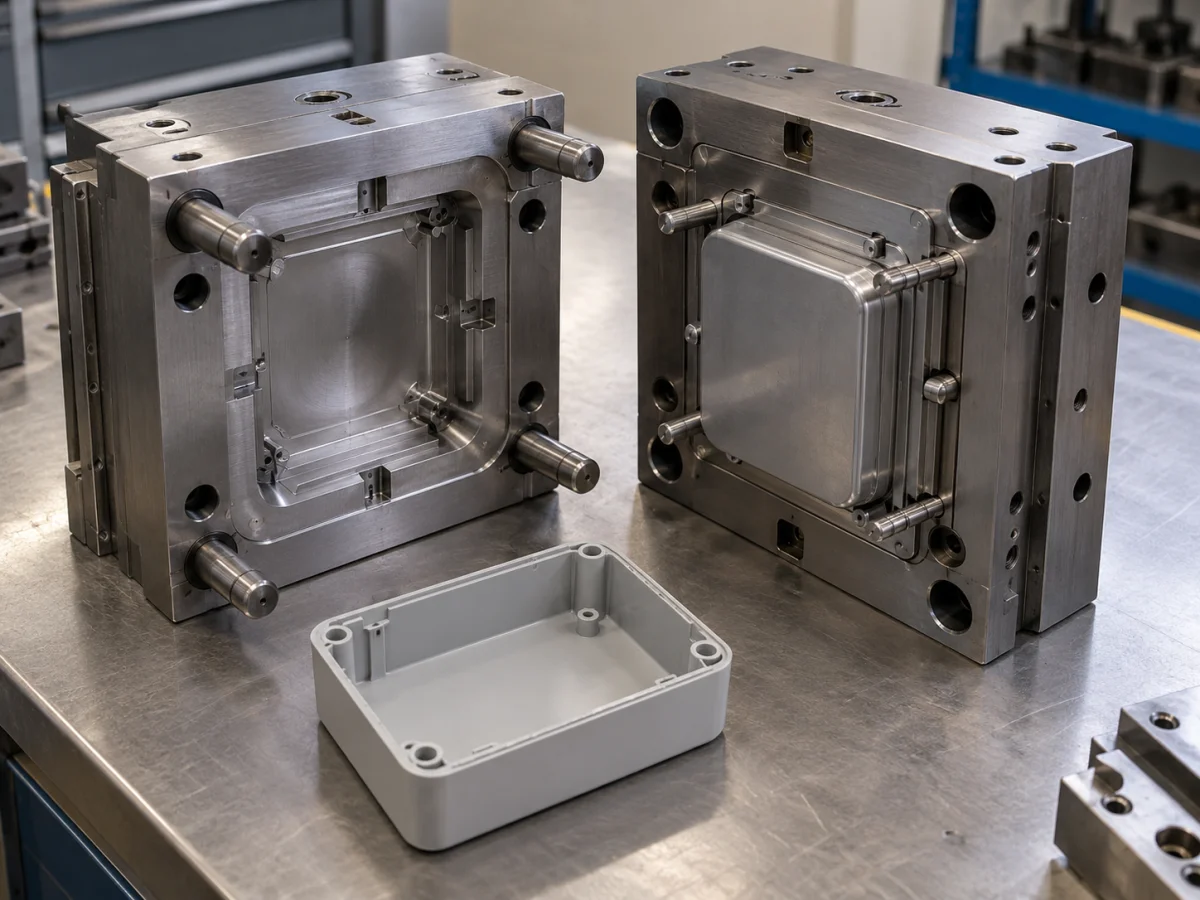
Open injection mold with core, cavity and guide elements for electronic product body
Representative application image.
FocusPart and mold compatibility
InputMaterial+quantity+method
ScopeDesign and technical preparation

Your project, your product

Developed confidentially and delivered with source files.

We may work with a confidentiality agreement (NDA) before sharing technical details. At the end of the project, we deliver the source codes, design files and technical documents we have developed to you.

  • NDA before sharing technical information
  • Clear deliverables agreed at the outset
  • Source and technical files at the end of the project
Our confidentiality and delivery process

VOMRO engineering approach

The mold decision is made together with the product geometry.

A part made as a 3D prototype cannot always be transferred unchanged to a mould. Demoulding direction, surfaces, wall thicknesses, joints and material behaviour may require design changes. VOMRO assesses these needs alongside the product's use and assembly requirements, seeking a workable balance between part function and manufacturing method.

Mould design scope depends on the part and selected process. Design preparation, physical mould manufacture, trial moulding and series production are separate stages. The mould manufacturer, technical data to be transferred and validation responsibilities are agreed at the outset; design work does not automatically include a commitment to manufacture the mould.

The timing of tooling investment matters as much as the design. While sales potential is still being assessed, suitable projects can consider low-volume production using 3D printing, SLA, silicone mould casting or sheet-metal fabrication with press-brake forming. Once demand is sustained and the design is mature, tooling, part, assembly and testing costs are compared within the same production plan.

01

Part and assembly suitability for plastic injection

The initial review covers part function, visible surfaces, critical dimensions and connections to other parts. For processes such as plastic injection moulding, we examine draft angles, wall-thickness transitions, ribs and screw locations. Geometric constraints imposed by the material and manufacturing conditions inform design decisions.

A change must do more than ease demoulding: board placement, sealing surfaces and connection tolerances must also be maintained. Part revisions are therefore assessed in the assembly model. Proposed changes for mould suitability are documented alongside their effects on product function.

  • Identification of critical dimensions and visible surfaces
  • Demoulding direction and geometry assessment
  • Material, joint and assembly compatibility
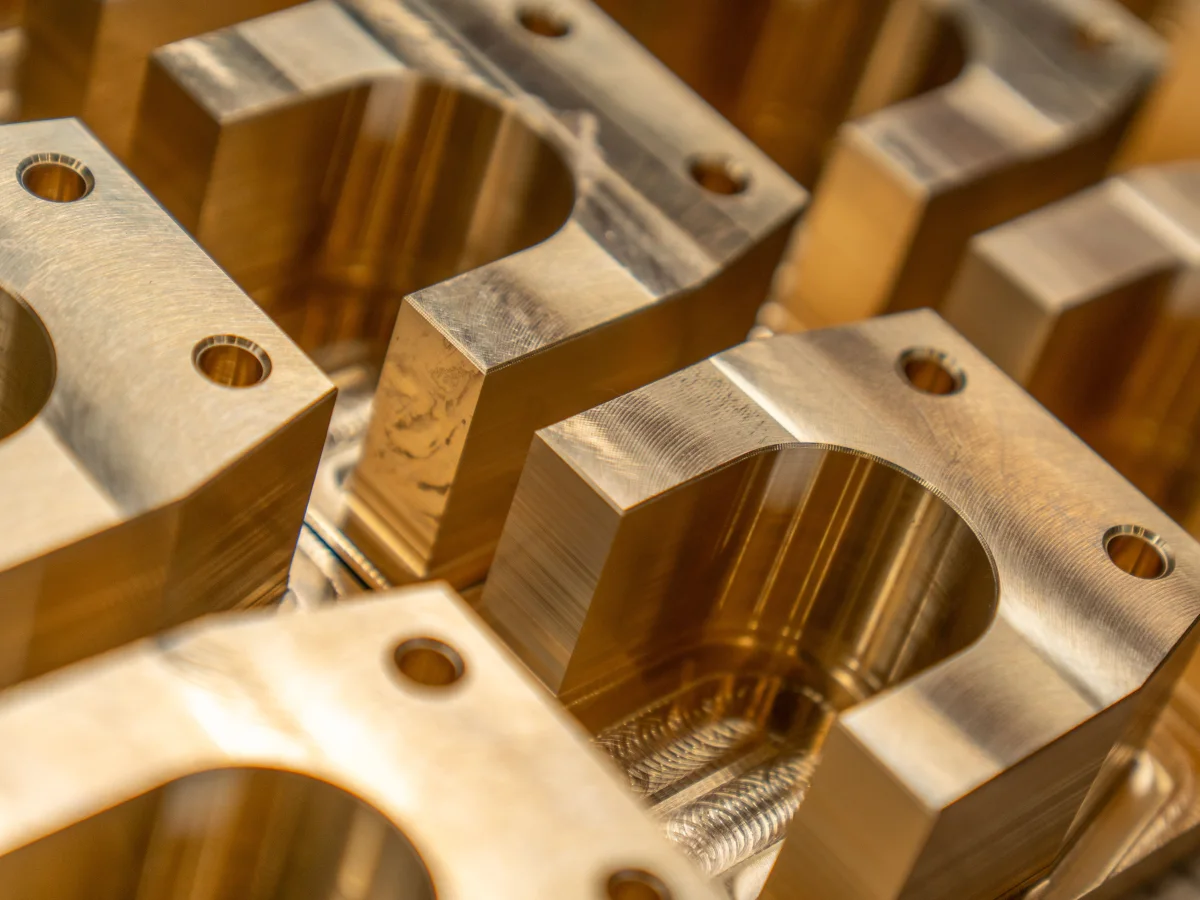
Machined metal parts with curved pockets and attachment holes
Machining surfaces, pockets and connection details on metal parts.
02

Mold architecture and technical details

The mould's parting approach, demoulding requirements and any moving elements are defined alongside the geometry. Decisions such as cavity count and layout are evaluated against target quantity, cost and production conditions. Technical limits imposed by the manufacturer or intended equipment are treated as design inputs.

The scope of details such as runners, gates, cooling and ejector placement is defined according to the moulding method. Required analyses and specialist validation are planned separately for each project. Reviewing design files together with the party manufacturing the mould is part of the transition to production.

  • Parting surface and part removal approach
  • Modeling of mold components suitable for scope
  • Manufacturing inputs and technical file preparation
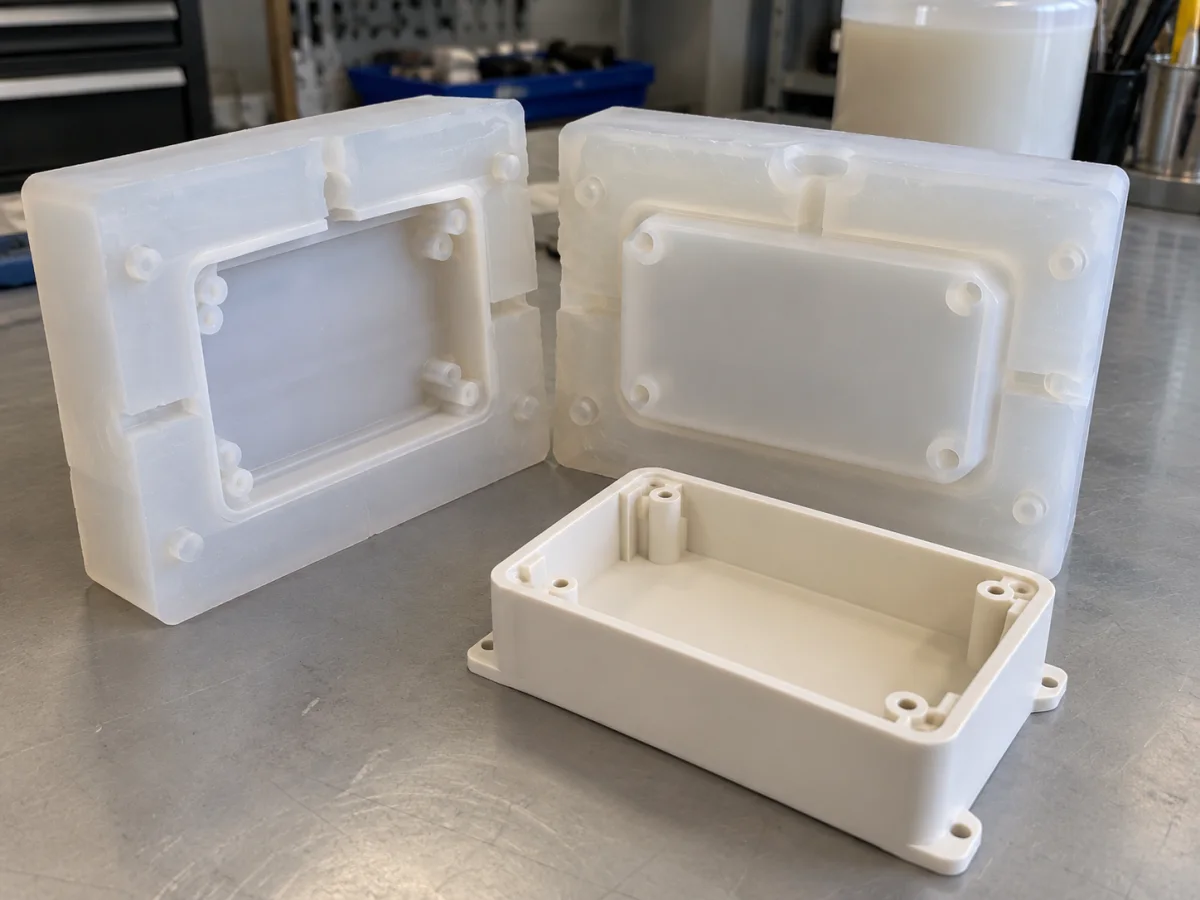
Silicone mold halves and cast casing sample for low quantity production
Representative application image.
03

Sample findings and transition to production

Assessing moulded samples for dimensions, appearance and assembly helps validate the design. Findings such as shrinkage, surface marks or mismatched joints are compared with part function and acceptance criteria, rather than judged solely by appearance. Required changes are considered alongside production conditions.

According to the scope of delivery, current part and mold models, technical drawings, revision records and explanations to be transferred to the manufacturer are prepared. Mold cost, manufacturing time, production capacity and mold life also depend on conditions independent of the design file. These issues are further clarified through the relevant manufacturing and production plan.

  • Measurement and assembly evaluation of the sample
  • Revision tracking of design changes
  • Preparation for technical data sharing with the manufacturer
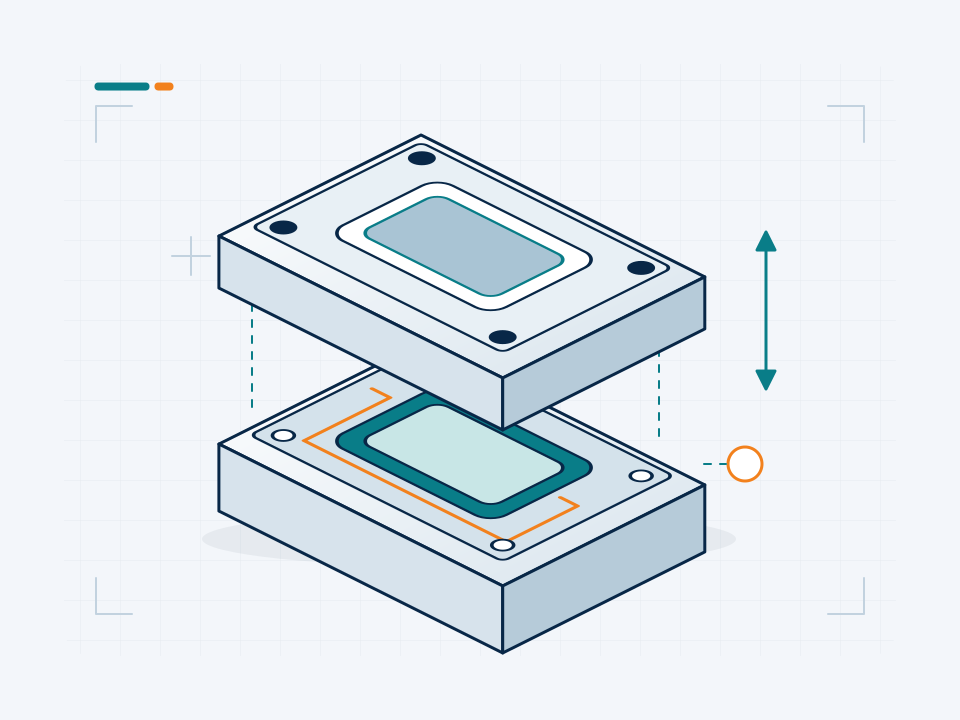
Diagram showing the design relationship between the product part, parting surface and mold components
Conceptual representation of the technical process.

How it works

A clear process from start to delivery.

Not every project looks the same; however, the measurable requirement, controlled revision, and field verification steps remain unchanged.

  1. 01

    We define the part

    We determine the function, material, critical dimensions and production target.

  2. 02

    We review suitability

    We evaluate the geometry in terms of the chosen molding method and assembly needs.

  3. 03

    We design the mold

    We develop mold architecture and technical details according to defined manufacturing inputs.

  4. 04

    We process the findings

    Depending on the scope, we transfer sample results and manufacturer feedback to the revision.

Frequently asked questions

Before starting the project

The technical scope, deliverables and test plan are clarified together according to the requirements of your project.

Does the mold design service also include mold manufacturing?

Not automatically. Mould design, physical mould manufacture and sample production are separate work items. The project stages to be undertaken and responsibility for each are defined in advance.

Can the part designed for 3D printing be transferred to the mold?

It can be assessed, but revisions may be needed because of draft angles, wall thickness, connections and the selected material. The assessment also covers product function and assembly.

When are mold cost and time determined?

Once the part geometry, mold approach, material, number of cavities and manufacturing conditions are clarified, they are evaluated through the relevant manufacturing plan. An exact number or duration cannot be given just by looking at the product idea.

Can we work with NDA before sharing technical details?

Yes. We can complete the NDA arrangements together before you share your project's technical details.

Do you deliver source codes and technical files at the end of the project?

Yes. We deliver the source codes, design files and technical documents we developed within the scope of the project to you at the end of the project. The delivery list and file formats are clarified at the beginning.

Let's start with your idea

Let's talk about the product you dream of and the need you want to solve.