From device to management panel

Server software and device management

We develop server applications that record, interpret and deliver device data to users. We design the API, database and web management dashboard around how devices operate in the field.

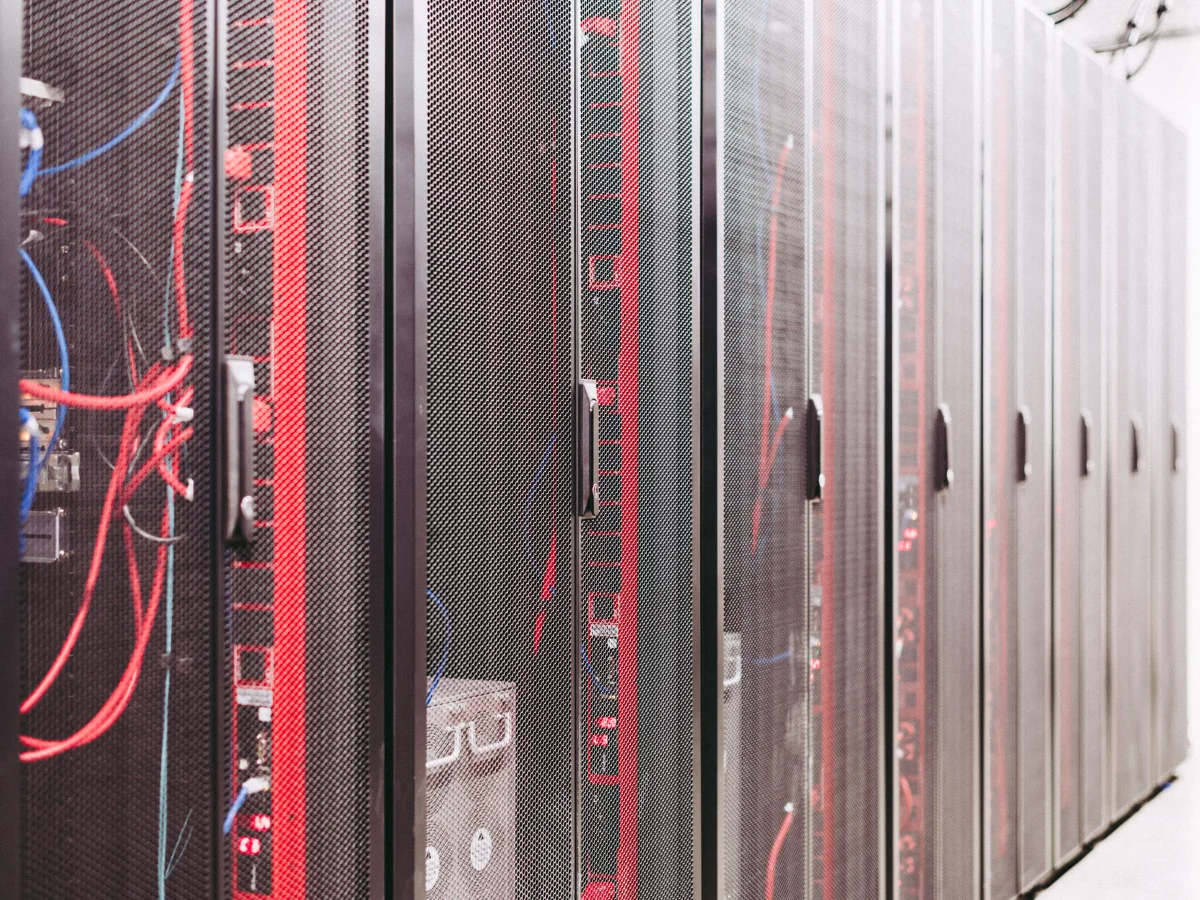
Server rack cabinets with network cables in data center
Data center infrastructure where server software can run.
ScopeAPI + database + panel
ConnectionDevice to server
FocusData and device lifecycle

Your project, your product

Developed confidentially and delivered with source files.

We may work with a confidentiality agreement (NDA) before sharing technical details. At the end of the project, we deliver the source codes, design files and technical documents we have developed to you.

  • NDA before sharing technical information
  • Clear deliverables agreed at the outset
  • Source and technical files at the end of the project
Our confidentiality and delivery process

VOMRO engineering approach

We do not consider the digital side of the product separately from the device.

A connected product is not complete when it sends data to the server. It should be explained which device it belongs to, when it was measured, whether the recording is repeated and what the user can access. VOMRO defines this contract between the firmware and the server layer at the beginning of the product architecture. Thus, the relationship between the value appearing on the panel and the event occurring in the field is preserved.

While instant monitoring is sufficient in one application, historical data, alarms, user roles or remote parameter management are required in another project. These functions are selected according to the actual usage scenario. Instead of an unnecessary number of screens, we focus on data flows that make it easier for the user to make decisions, maintain and manage their devices.

01

Data model and design of API

Device ID, measurement channels, units, timestamps and status codes are defined in the common data model. When the connection is interrupted, transfer of locally accumulated records, processing of duplicate messages and missing data situations are evaluated. Retention time and query needs affect database design; It is not enough to have a table structure that only works in the first example.

API endpoints are developed for devices and applications. Communication approaches such as HTTP or MQTT are assessed according to the project. Authentication, access permissions, input validation and connection security are part of the design. Where integration with existing enterprise software is needed, the other system's data format and authorisation requirements are examined together.

  • Device ID, measurement and event data model
  • API and database development
  • Message validation and access control
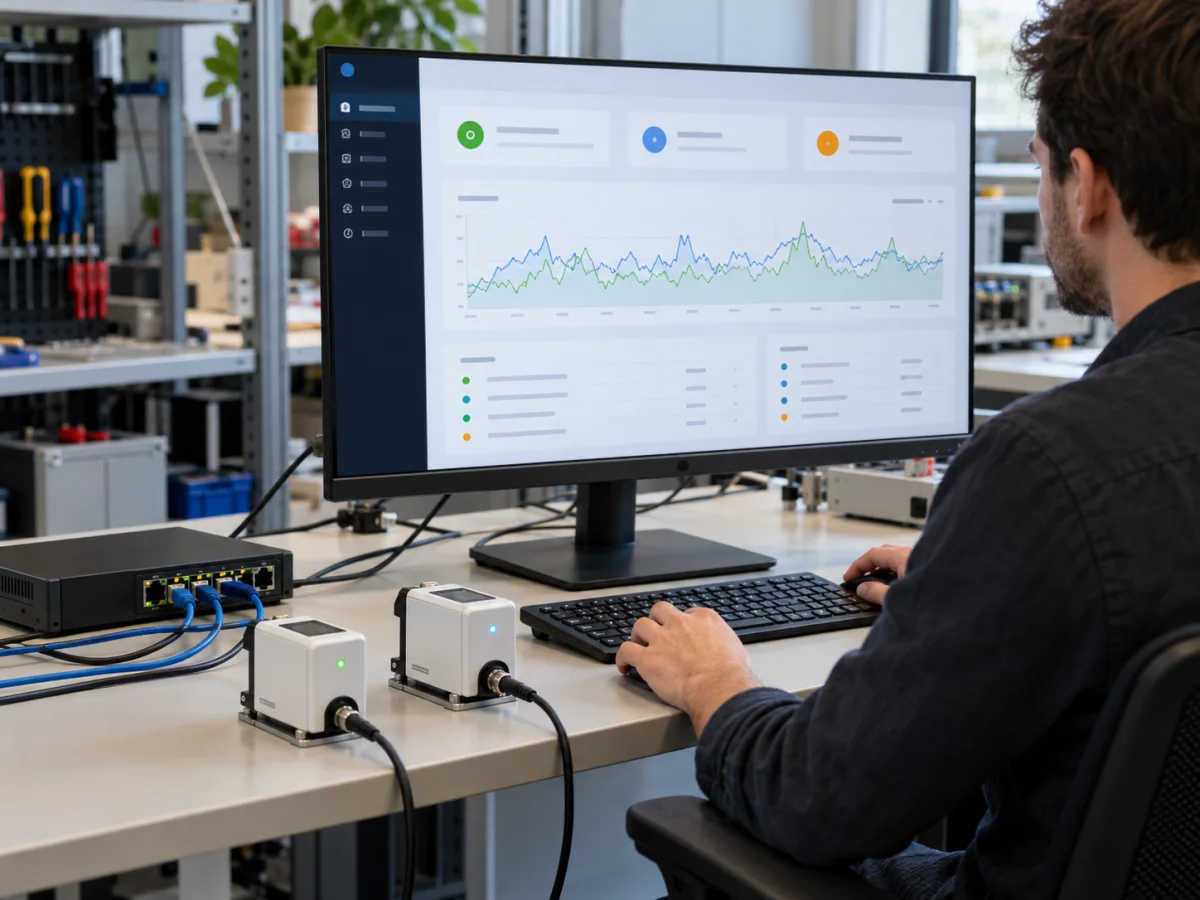
Data exchange testing between an Ethernet-connected field device and server software
Representative application image.
02

From monitoring screen to device management

Current status, history graphs, alarm records and device connection information can be displayed together on the web panel. The information to be displayed is organized by user role. The needs of the customer using a single device and the service team supporting devices in different locations are not the same; panel flows are created through these tasks.

For remote commands or parameter changes, the server merely sending a request is not considered sufficient. Device receipt, execution results and the authorised user must be traceable. The validity of queued commands after connection loss and approval workflows for critical operations are defined according to product use.

  • Web administration panel and user roles
  • Historical data, alarm and event viewing
  • Monitoring command result and device status
Example of management panel showing device statuses, measurement curves and event logs
Representative application image.
03

Installation, operation and sustainable delivery

Whether the application will run on an in-house server or in a suitable hosting environment is determined by the needs. Resource needs are evaluated based on the expected number of devices, message frequency and data retention period. Backup, logs, error tracking and restore approach are included in the operating plan.

Testing uses the actual device to check end-to-end data flow, reconnection and permission boundaries. Project application source code, installation information, API documentation and configurations needed for maintenance are delivered at project completion. Ongoing hosting and operational requirements are defined separately in the initial operating plan.

  • End-to-end integration tests with the device
  • Installation, backup and monitoring approach
  • API, configuration and release documentation
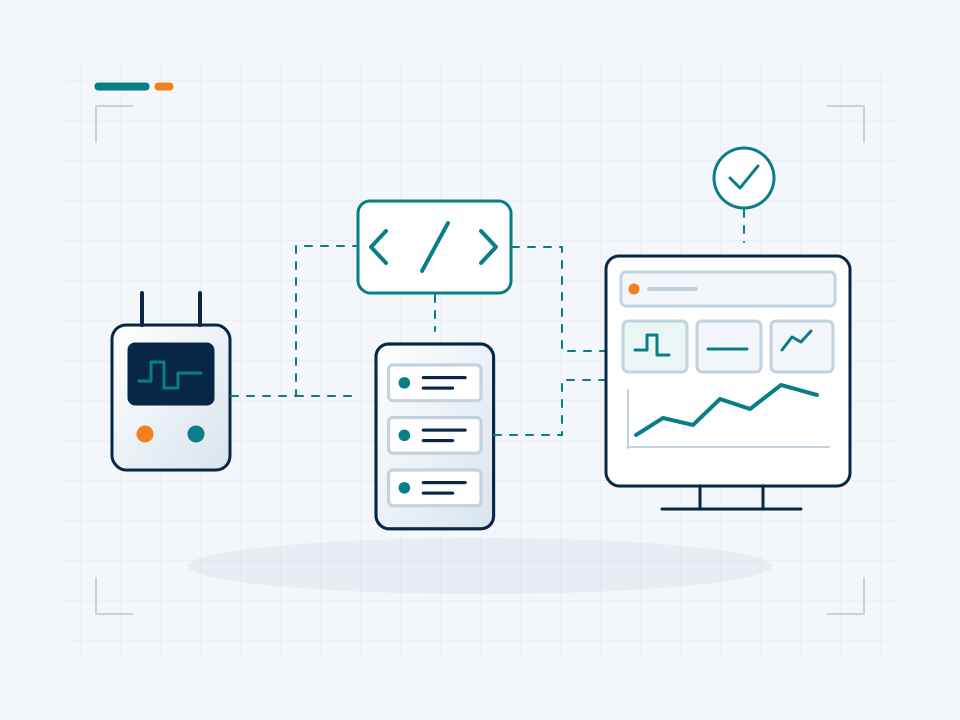
Server architecture connecting devices to a web management dashboard through APIs and a database
Conceptual representation of the technical process.

How it works

A clear process from start to delivery.

Not every project looks the same; however, the measurable requirement, controlled revision, and field verification steps remain unchanged.

  1. 01

    We define the data

    We identify devices, messages, user roles and logging requirements.

  2. 02

    Develop the infrastructure

    We build the API, database and access controls alongside the device protocol.

  3. 03

    We create the panel

    We organize monitoring and management flows according to the user's actual tasks.

  4. 04

    We test together

    We validate data, commands and outage scenarios end-to-end with the real device.

Frequently asked questions

Before starting the project

The technical scope, deliverables and test plan are clarified together according to the requirements of your project.

Can the software run on our own server?

On-premise installation may be considered when the technical environment, network access and operational requirements are appropriate. Installation and ongoing system administration responsibilities are determined in advance.

Can our existing devices be connected to the system?

The device's protocol, data format, network connection and access rights are examined. The integration scope is created via the necessary API, gateway or firmware changes.

Will data be lost when the connection is lost?

Data recovery can be designed using local logging, retransmission and duplicate-record checks on the server. Storage capacity and the interruption duration that can be covered are assessed against device resources.

Can we work with NDA before sharing technical details?

Yes. We can complete the NDA arrangements together before you share your project's technical details.

Do you deliver source codes and technical files at the end of the project?

Yes. We deliver the source codes, design files and technical documents we developed within the scope of the project to you at the end of the project. The delivery list and file formats are clarified at the beginning.

Let's start with your idea

Let's talk about the product you dream of and the need you want to solve.