
Choose the chemical question first, then the measurement method

Chemical sensors and analytical electronics for your application

Chemical sensors convert a particular chemical property of a sample into an electrical or optical signal. Acidity, ionic conductivity and the activity of a particular ion are different quantities; one universal probe cannot measure them all with equal reliability. VOMRO can evaluate integration of a suitable probe with reading electronics, temperature measurement, firmware and mechanical flow arrangements for applications such as water quality and process monitoring. A good project starts by explaining the decision you need to make and how the sample changes.

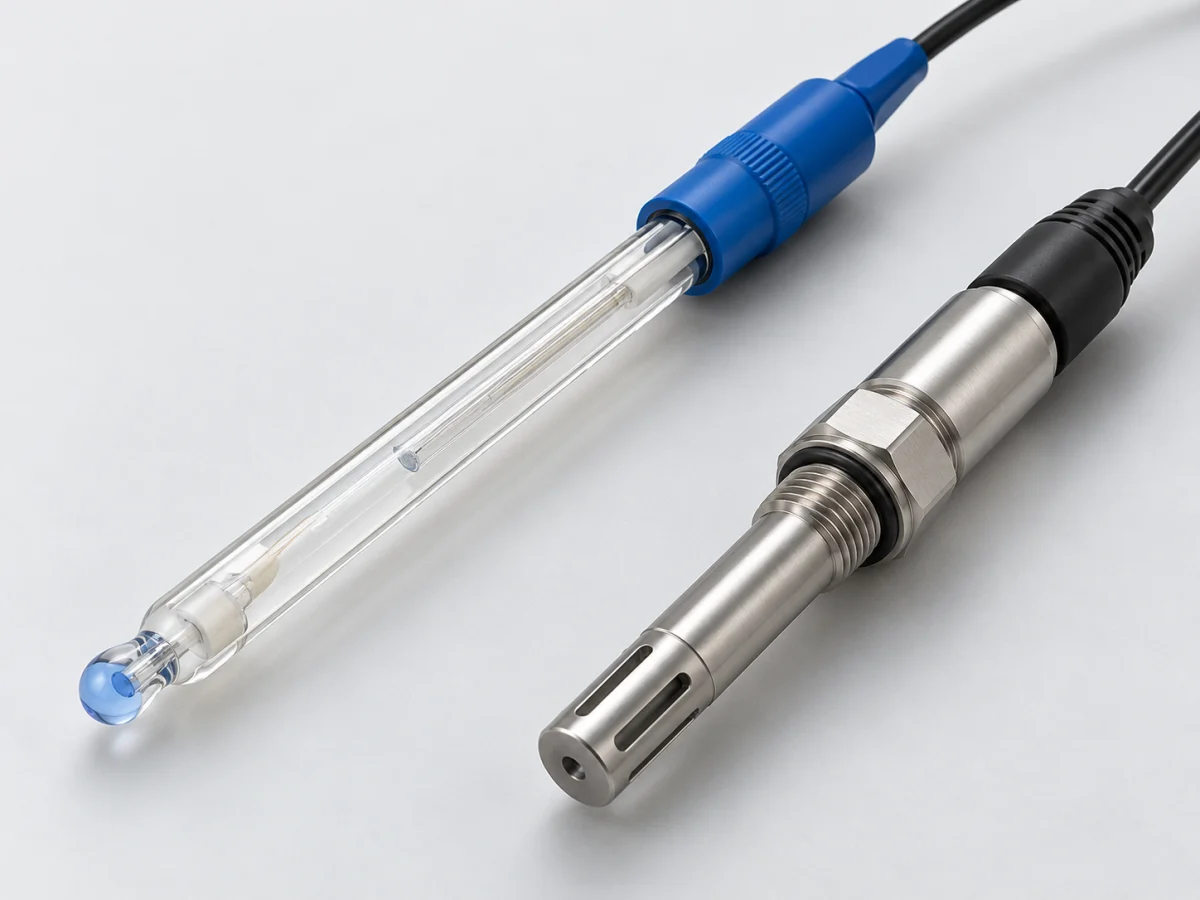
Finished chemical sensor products comprising a glass pH electrode and stainless steel conductivity probe
Illustrative sensor product image.
QuantitiespH, EC, ORP or a specific ion
PreconditionSample matrix and method compatibility
DevelopmentProbe integration, board and software

VOMRO engineering approach

Define a measurable target instead of simply 'measuring water chemistry'.

Fertilisation monitoring in irrigation water, treatment outlet monitoring and process bath control require different sensors. Sample temperature, conductivity, solids content and expected chemical composition affect probe behaviour. At the outset, clarify the target analyte or property, expected range and process decision supported by the measurement.

Cleaning, calibration and consumable needs matter alongside catalogue accuracy. The prototype should be tested with actual samples as well as standard solutions. These examples illustrate a development approach; they do not mean VOMRO has a ready-made sensor or laboratory analyser for every chemical.

The complete measurement process

From sensed quantity to usable data

  1. 01Defined liquid and sample
  2. 02pH, EC or selective electrode
  3. 03Temperature, reference and maintenance
  4. 04Measured quantity and its limitations

Conceptual diagram. The actual measurement range, error budget and validation plan are defined for the application.

01

What does a pH sensor measure, and which probe should be selected?

pH expresses a solution's acidity or alkalinity in relation to hydrogen ion activity. A common glass electrode produces a potential together with a reference electrode; the electronics convert this into pH. The glass, reference structure and junction are selected for the sample. A probe for low-conductivity water may differ from one suitable for dirty process liquid.

The board must not load this signal, which requires very high input impedance. Moisture or contamination in cables and connectors, or leakage across the board surface, can distort results even when the sensor is sound. Project review also addresses probe removal, storage and replacement. The aim is consistent recommissioning after maintenance as well as a good first-day measurement.

02

EC and TDS: conductivity does not quantify each chemical separately

Electrical conductivity reflects the combined effect of ions in solution; it does not identify which ions are present. Different compositions can produce the same EC. Conductivity should therefore not be presented directly as nitrate, a particular heavy metal or overall purity. Many instruments also calculate TDS from conductivity using a selected factor, which depends on sample composition.

Two- or four-electrode cells and, in suitable processes, inductive conductivity methods may be considered. Cell constant, range, temperature correction, bubbles and surface deposits matter in selection. For example, EC and temperature records can help a fertilisation device, but they do not become separate laboratory results for each nutrient. Display labels should clearly reflect the measured quantity.

03

Which questions do ion-selective electrodes and ORP sensors answer?

An ion-selective electrode measures a potential sensitive to the activity of a particular ion. With suitable calibration and sample preparation, it can support concentration calculations; interference from other ions, pH and ionic strength can affect the result. Method-specific solutions may be needed to bring standards and samples to similar ionic conditions. Electrode and operating procedures are assessed separately for each ion.

ORP expresses a sample's oxidation-reduction potential relative to the electrode and reference used. Alone, it is not a selective concentration measurement for a particular substance. A project first turns 'Is a chemical present?' into an analytical target: which substance, in which sample and at what limit? If the method lacks sufficient selectivity, an alternative sensing or reference analysis approach is included in feasibility work.

04

Analogue front ends and isolation for chemical sensors

For high-impedance sources such as pH electrodes, low input bias current, suitable guard traces, clean PCB surfaces and shielding become important. Analog Devices' CN0326 example shows how temperature compensation and electrical isolation can be considered together in pH measurement. Evaluation-board results do not automatically transfer to a product using a different probe and enclosure.

A conductivity channel needs suitable excitation and impedance measurement; it does not use the same circuit as a pH input. Interactions between channels in the same sample are examined on the prototype. Design may include measurement sequencing, analogue filters, power domains and channel isolation where needed. Leakage introduced by protection components is included in the error budget. For a ready-made digital probe, verify the protocol and meaning of calibration data against manufacturer documentation.

05

Why are sampling, temperature and flow arrangements decisive?

Good electronics cannot correct changes that occur before the sample reaches the sensor. Waiting time, air contact, bubbles, precipitation and adhesion to tubing are assessed for the application. A flow cell should provide representative sample around the probe, minimise dead volumes and allow cleaning access. Temperature at the measurement point may differ from that measured inside a distant cabinet.

Temperature compensation is not one operation that reverses every chemical change. Correction of electrode slope is distinguished from actual sample pH changes; the conductivity temperature coefficient must suit the sample. A VOMRO project can identify raw and corrected values in records and the interface. Temperature sensor position and simultaneous measurement planning are therefore defined at the outset.

06

How are calibration, cleaning and probe life managed?

Calibration follows the selected probe manufacturer's method using suitable standards. Consider buffers covering the expected pH range, appropriate conductivity standards and cell constants, or sample-appropriate standards and preparation for ion-selective measurements. Adjusting with a contaminated standard can make a sound device read incorrectly. Record standards' dates, temperatures and conditions of use.

Maintenance planning reflects the burden the sample places on the probe. User instructions cover cleaning-agent compatibility and storage. Firmware can retain calibration dates, slope or cell coefficients, stabilisation time and check results. Acceptance criteria are not left as 'the correct number on screen'; repeatability and comparison with a reference method on actual samples may also be defined.

07

How do you start developing a custom chemical sensor system?

A water monitor may combine pH, EC and temperature channels, while another project may need only one selective electrode. Method feasibility using actual samples and existing analysis results reduces uncertainty. If selectivity or maintenance burden is unsuitable, changing the method may be necessary instead of adding more sensors.

For discussion, share the target property or ion, sample composition, range, temperature, continuous or intermittent measurement, cleaning arrangements and data output. VOMRO uses this to define probe integration, electronics, firmware, interface and mechanical flow components. Projects requiring chemical method validation separately plan the relevant expertise and reference analysis. Source files, calibration arrangements and acceptance records are specified in the deliverables list.

Chemical measurement methods measure different quantities; match the method to the sample and decision required.
MethodInformation measuredWhat it does not establish aloneMain check
pHActivity related to acidity/alkalinityComplete chemical compositionReference, buffer and temperature
ECCombined conductivity contribution of ionsIndividual quantity of each ionCell constant and temperature model
Ion-selective electrodePotential sensitive to the target ion's activityUniversal concentration free from interferenceIonic strength, pH and interference
ORPRedox potentialSelective quantity of one chemicalReference and sample conditions

How it works

A clear process from start to delivery.

Not every project looks the same; however, the measurable requirement, controlled revision, and field verification steps remain unchanged.

  1. 01

    Define the analytical target

    We define the sample, measured property and limits needed for the decision.

  2. 02

    Test the method

    We compare the candidate probe using standards and actual samples.

  3. 03

    We develop the device

    We integrate electronics, firmware, flow arrangements and maintenance access.

  4. 04

    Validate the measurement

    We record calibration, repeatability and reference comparisons.

Frequently asked questions

Before starting the project

The technical scope, deliverables and test plan are clarified together according to the requirements of your project.

Can one probe measure every chemical?

Generally, no. pH, EC, ORP and selective ion measurements monitor different properties. Select the method for the target substance and sample, then verify sufficient selectivity in actual samples.

Does a TDS sensor measure nitrate or heavy metals?

TDS calculated from conductivity does not identify individual ions. A particular contaminant needs a selective, validated method; the same TDS may represent different compositions.

Is temperature compensation enough for pH measurement?

Correcting the electrode's temperature-dependent slope helps, but does not eliminate temperature changes in the sample's own chemical equilibrium under all conditions. Record the result and sample temperature together.

Does an ion-selective electrode directly provide ppm?

The electrode produces an activity-dependent potential. A concentration result requires suitable calibration, sample preparation and interference assessment. Displaying ppm alone does not prove these conditions have been validated.

How often should calibration be performed?

The sample, probe design, cleaning and target error affect the interval. Manufacturer recommendations provide a starting point; check standards and field records establish an application-specific maintenance plan.

Can you make a custom board for an existing pH or EC probe?

After reviewing probe documentation and target performance, suitable projects can include a reading board, temperature channel, software and data interface. Method validation and mechanical integration scope are defined separately.

Your project, your product

Developed confidentially and delivered with source files.

We may work with a confidentiality agreement (NDA) before sharing technical details. At the end of the project, we deliver the source codes, design files and technical documents we have developed to you.

  • NDA before sharing technical information
  • Clear deliverables agreed at the outset
  • Source and technical files at the end of the project
Our confidentiality and delivery process
Let's start with your idea

Turn your chemical measurement target into a practical device project

Share the sample, property to measure and existing analyses; together, we can examine the probe, method and custom electronics development scope.