
A complete working device for your brand

Custom product development for vending machines, kiosks and self-service devices

You may want to develop a vending machine under your own brand, design electronics for a self-service device or add features to an existing machine. VOMRO develops the control board, embedded software, display, dispensing mechanism and server application together. For payments, we integrate the chosen provider's supported interface with the device's transaction and delivery flow.

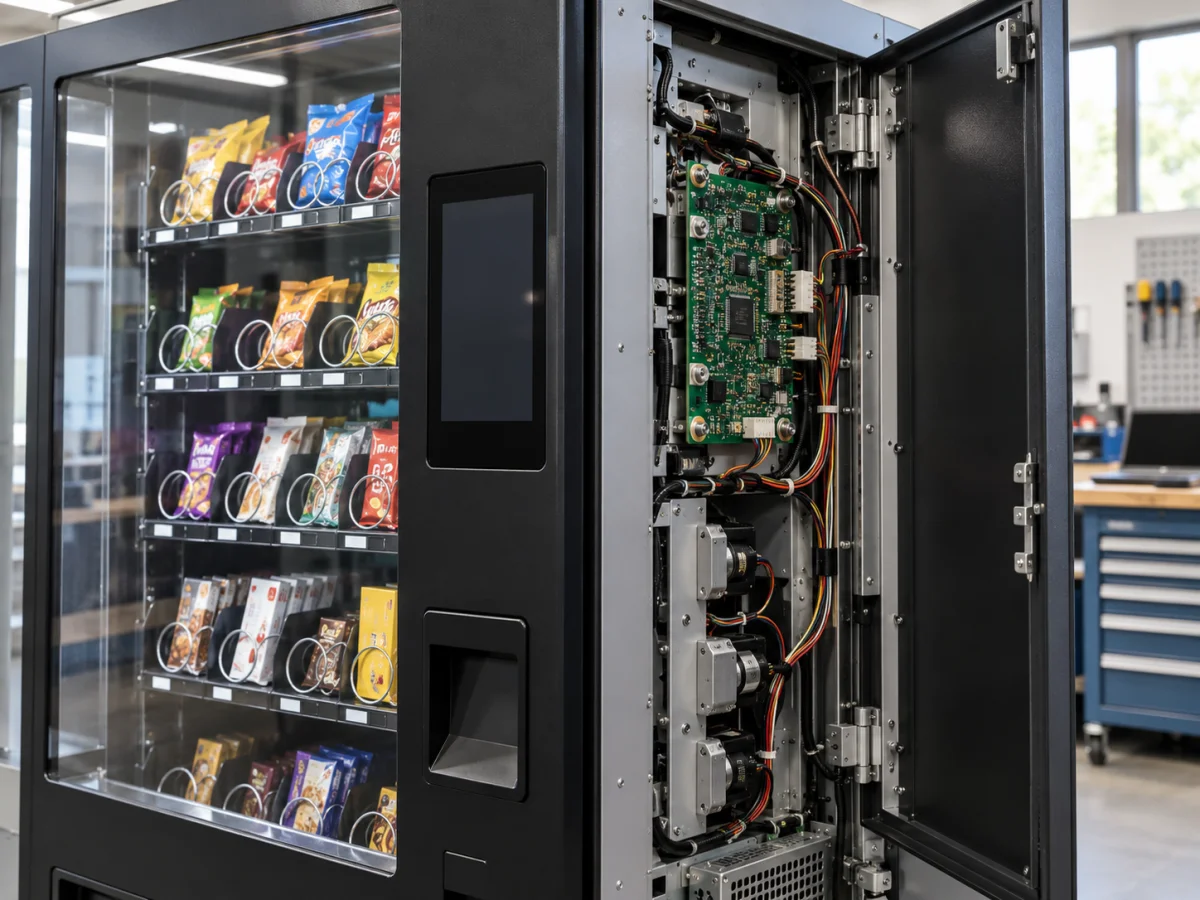
Custom vending machine control board shown with the product dispensing mechanism, motor and sensor connections
Representative application image.
CustomerDevice manufacturers and product owners
IntegrityProduct selection, transaction and delivery
DeliverySource code, PCB/CAD and technical files

Your project, your product

Developed confidentially and delivered with source files.

We may work with a confidentiality agreement (NDA) before sharing technical details. At the end of the project, we deliver the source codes, design files and technical documents we have developed to you.

  • NDA before sharing technical information
  • Clear deliverables agreed at the outset
  • Source and technical files at the end of the project
Our confidentiality and delivery process

VOMRO engineering approach

We address the on-screen transaction and the machine's physical result within the same project.

Selecting a product, approving payment, running a motor and delivering the product to the customer are separate events. Vending development must execute them in the correct order under the same transaction record. A kiosk that only displays information has different requirements; opening a lid, issuing a receipt or dispensing a product also requires confirmation of the physical result.

The first discussion examines device use, product range, mechanism, existing hardware and operating workflow. A new OEM design and replacing an existing machine's control board have different scopes. Retained parts, developed functions and acceptance tests are defined at the outset. VOMRO supplies electronics, software and mechanical engineering for the customer's device project rather than selling off-the-shelf vending machines.

01

New device design and existing vending machine upgrades

For a new product, the display, board, power supply, motors and product path can be planned together. For an upgrade, the wiring harness, sensors, dimensions and interfaces of retained units constrain the design. Technical documentation and authorised interfaces define the new board's boundaries. Access to every function of an undocumented terminal or closed software is not assumed.

If a shared control board is intended across models, list the differing motors, channels, displays and software options. Link model configuration to board revision. Assess development costs separately from materials and assembly in repeat production. Once the model and functions validated by the first prototype are clear, the quotation becomes a reviewable project scope rather than just a PCB price.

  • A new OEM device or defined modernisation scope
  • Mechanical and electrical interfaces to retain
  • Model options and production revisions
02

Dispensing mechanisms, motor control and delivery detection

Loads and motion vary between spiral, conveyor, drawer and other dispensing mechanisms. Motor type, drive method, position feedback and jam behaviour are evaluated with the mechanical design. Actual products test how package dimensions, weight and surface affect passage through the mechanism. The method for detecting a falling product or its arrival at the outlet depends on the device's physical arrangement.

Motor movement does not prove product delivery. If no product emerges, retries, channel disabling or service notifications follow the operator's rules. Transaction records manage cases in which repeating a command must not dispense a second product. Dirty, stuck or disconnected sensors are also tested. How failed delivery appears to the customer and operating dashboard is part of the software scope.

  • Mechanism and channel trials with actual products
  • Combined assessment of motors, position sensing and product-exit sensors
  • Jam, retry and failed-delivery behaviour
03

Aligning the touchscreen and user flow with the device

Users should understand their selection, the transaction stage and where to collect the product. Display software includes selection, waiting, cancellation, completion and error states. Disabled or out-of-stock options are handled appropriately. An unfinished session must not carry over to the next user, and personal transaction information should not remain on screen unnecessarily.

Display position, viewing angle, touch area and distance from the collection compartment are assessed with industrial design. Service-menu motor tests and settings are separated from the customer interface. Permissions define who can change language, content or product lists. A visual prototype supports physical usability assessment, followed by integrated transaction testing with the actual board and mechanism.

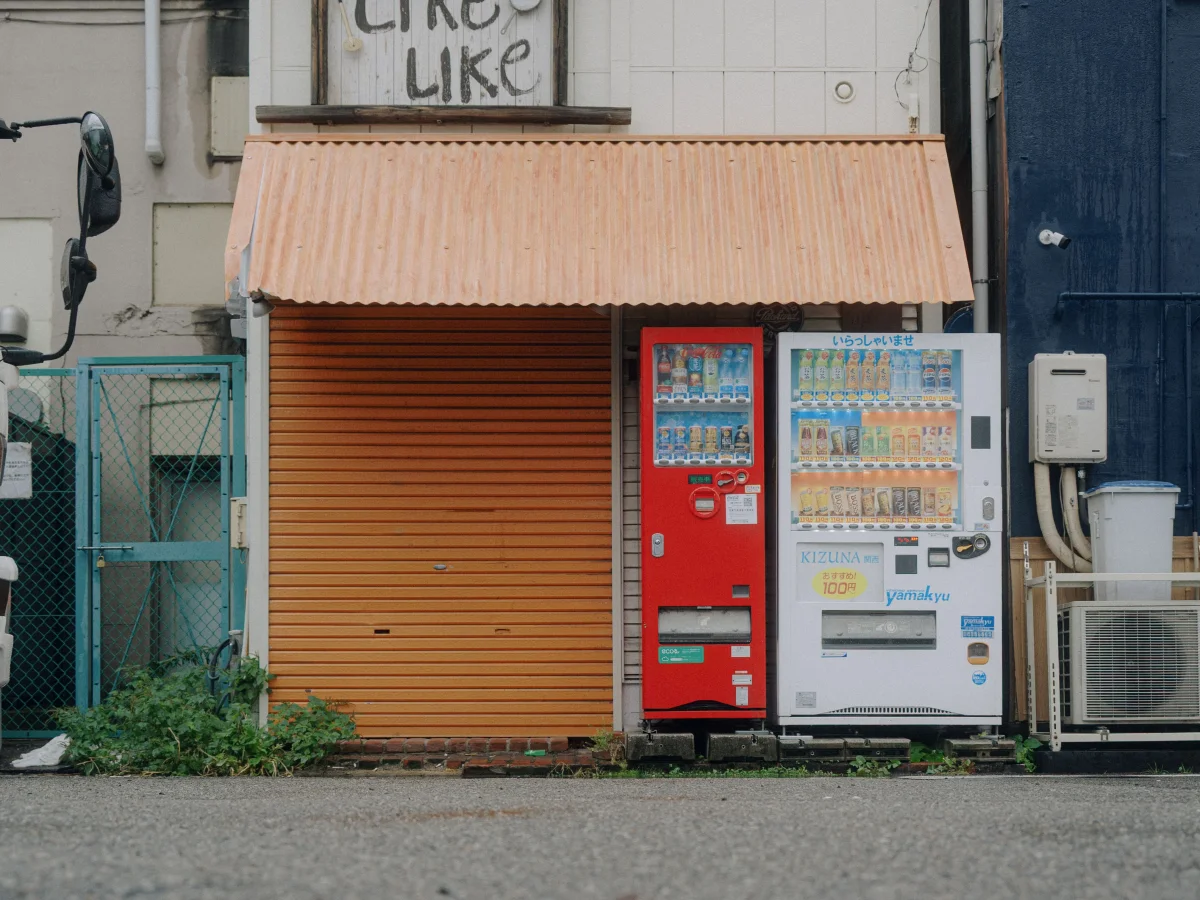
Two beverage vending machines standing side by side outside a building
Beverage vending machines.
04

Integrating the payment provider correctly with product delivery

Payment terminal or provider selection is assessed against the business model and supported integration. VOMRO connects product selection, transaction identity and device states to that interface. The design specifies payment initiation, the channel used to confirm the result and provider responsibilities for cancellations or refunds. Payment and authorisation responsibilities remain separate from device control.

An absent response does not necessarily mean a failed transaction. The result is verified using supported status queries or notifications; an uncertain transaction is not simply restarted. Payment approval and physical delivery remain separate. If dispensing fails, the record enters the correction flow agreed between the operator and provider. The scope aims to avoid unnecessary handling of card or account data by device software, and integration acceptance uses the actual terminal and test environment.

05

A flow that maintains transaction consistency during network and power interruptions

Define which local functions continue when internet access is lost. Offline payment acceptance is considered only under provider-supported conditions accepted by the operator; terminals are not assumed to have identical capabilities. Local selection, payment status and dispensing are tracked as separate records. The design specifies how device and server records are compared after reconnection.

If power fails mid-transaction, test how the last state is recovered at startup. The device must not replay an uncertain record as a new sale. If physical delivery cannot be confirmed, provide an inspectable state to the operator. Repeated notifications must not decrement stock twice or dispense two products. Reconciliation compares payment, delivery and stock events; showing a success message alone does not complete it.

06

Developing stock, telemetry and service dashboards around the operating workflow

The server application defines relationships between devices, channels, products and refill records. Successful delivery, failed attempts and manual stock adjustments are separate events. Specify how software stock counts are checked against physical refilling and dispensing. Last connection time, channel faults and maintenance information are displayed according to the operator's service plan.

Track which device applied a remote setting, with which version and when. Operators, service staff and administrators can have different permissions. Events are stored locally while offline and transferred after reconnection under ordering and deduplication rules. Updates and remote servicing are planned around power, connectivity and maintenance conditions. If the customer has existing software, its interfaces and data responsibilities are assessed without imposing a new platform.

07

Electronics, mechanical design and prototypes through production preparation

Motor drivers, sensor inputs, display and communication interfaces are arranged on a custom PCB for the project. Supply variations, motor-load effects on measurement and communication, connector order and service access are considered together. Board placement is checked against the cabinet, mechanism and wiring harness. Suitable 3D prototyping or manufacturing methods are selected for enclosure and mechanical parts.

Pilot tests cover different products, stock levels, jams, interruptions and return to operation after servicing. Hardware and software revisions are recorded. Production preparation defines the BOM, programming and functional checks. Prototype PCB fabrication and assembly support are limited to customer projects developed by VOMRO. A working one-off sample and testing every manufactured device are different tasks; production checks are also included in the delivery plan.

08

Confidentiality, source file delivery and the first technical discussion

At your request, we sign an NDA before product ideas and technical details are shared. The work is for the customer's own device and brand. Product types, mechanism, operating environment, expected production volumes and existing hardware provide a starting point. If the payment provider has not been chosen, the required interface expectations are clarified during scope discussions.

Project source code, schematics, PCB sources, mechanical CAD and technical documentation are delivered at completion. Build/programming, interfaces, data models and testing information are included in the delivery list defined at the outset. Third-party terminal, tool and library licences are explained separately. Acceptance requires the defined selection, transaction, delivery and error scenarios to work together, not simply the device to switch on.

Define device development scope from the starting situation
Project typeInitial inputDevelopment focusExample acceptance criterion
New OEM vending machineProducts, user flow and mechanism objectivesElectronics, mechanics, display and transaction architectureThe complete flow from selection to verified product dispensing
Updating an existing deviceUnits to retain and technical interfacesNew control board and compatible softwareInterruption testing with actual motors, sensors and display
Kiosk integrationExisting application, terminal and physical functionState management and device interfaceCancellation, timeout and uncertain-transaction behaviour

How it works

A clear process from start to delivery.

Not every project looks the same; however, the measurable requirement, controlled revision, and field verification steps remain unchanged.

  1. 01

    We define the transaction flow

    We establish product selection, payment interfaces, physical delivery and servicing requirements.

  2. 02

    We develop the device together

    We design the board, software, display, mechanism and server connection to a shared plan.

  3. 03

    We confirm with the pilot

    We test normal operation, jams, network loss and power interruptions using actual products.

  4. 04

    We deliver the technical package

    We deliver approved sources, designs, manufacturing files and test records.

Frequently asked questions

Before starting the project

The technical scope, deliverables and test plan are clarified together according to the requirements of your project.

Can you develop a custom vending machine for our brand?

Yes. Electronics, embedded software, display, mechanical and server scope are defined together. VOMRO develops the customer's device project; this is not an off-the-shelf vending machine sales or rental service.

Can we retain the existing vending machine's motors and housing?

Technical documentation, electrical interfaces and mechanical condition determine which units can be retained. Compatibility of the new board with actual sensors, loads and display is validated on the prototype.

Is payment automatically restarted if approval is not received?

An absent response alone does not indicate failure. Status is verified through provider-supported queries or notifications. Repeat-transaction handling and corrections after failed delivery are defined at the outset.

Can sales operate without internet access?

Local functions can be designed for offline operation. Payment acceptance depends on provider support and conditions set by the operator. Recording, reconnection and reconciliation behaviour are validated separately.

Can we work under an NDA and receive source code and designs?

At your request, we sign an NDA before technical details are shared. Project source code, electronics/PCB and mechanical CAD sources, and technical documents are delivered at completion. Formats and the delivery list are agreed upfront, with third-party licences stated separately.

Let's start with your idea

Let's talk about the product you dream of and the need you want to solve.