Physically test the model

3D prototyping and product validation

We evaluate the size, use and assembly of the digital design with a physical example. We use 3D prototyping as an engineering tool that validates product development decisions earlier.

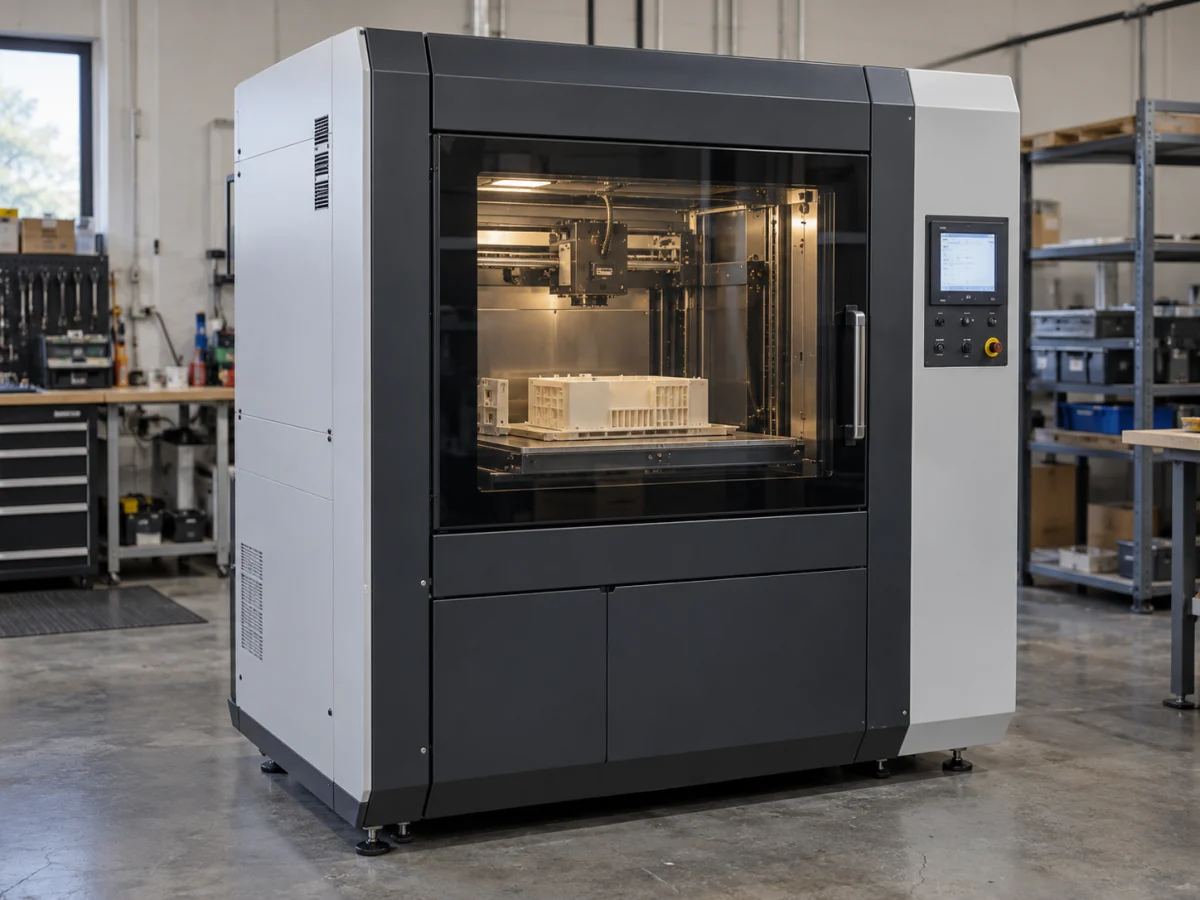
Electronic product enclosure prototype production on a closed-cabinet industrial 3D printer
Industrial 3D printing · Representative application image.
AimSize + usage + assembly
ApproachPrototype suitable for testing purposes
ResultConcrete feedback for design

Your project, your product

Developed confidentially and delivered with source files.

We may work with a confidentiality agreement (NDA) before sharing technical details. At the end of the project, we deliver the source codes, design files and technical documents we have developed to you.

  • NDA before sharing technical information
  • Clear deliverables agreed at the outset
  • Source and technical files at the end of the project
Our confidentiality and delivery process

VOMRO engineering approach

Every prototype has a question it must answer.

A product that looks right on screen may still be uncomfortable to hold or difficult to assemble. A 3D prototype shows enclosure volume, connector positions, button access and assembly sequence at full scale. Defining the design decision being tested at the outset helps obtain useful feedback without spending time on unnecessary detail.

At VOMRO, prototyping connects industrial design, mechanical design and electronics development. An initial sample may assess only volume and appearance. A more advanced prototype can contain the actual board, display and connectors. As its purpose changes, material, manufacturing method and dimensional expectations are reassessed.

We use 3D printing as part of the development process through which your product gathers market and user feedback. Next, we compare silicone moulding, sheet-metal fabrication with press-brake forming and injection moulding against design maturity and total cost. Our product development cost guide explains these decisions from the first prototype to tooling investment.

01

Appearance model, assembly mockup and function prototype

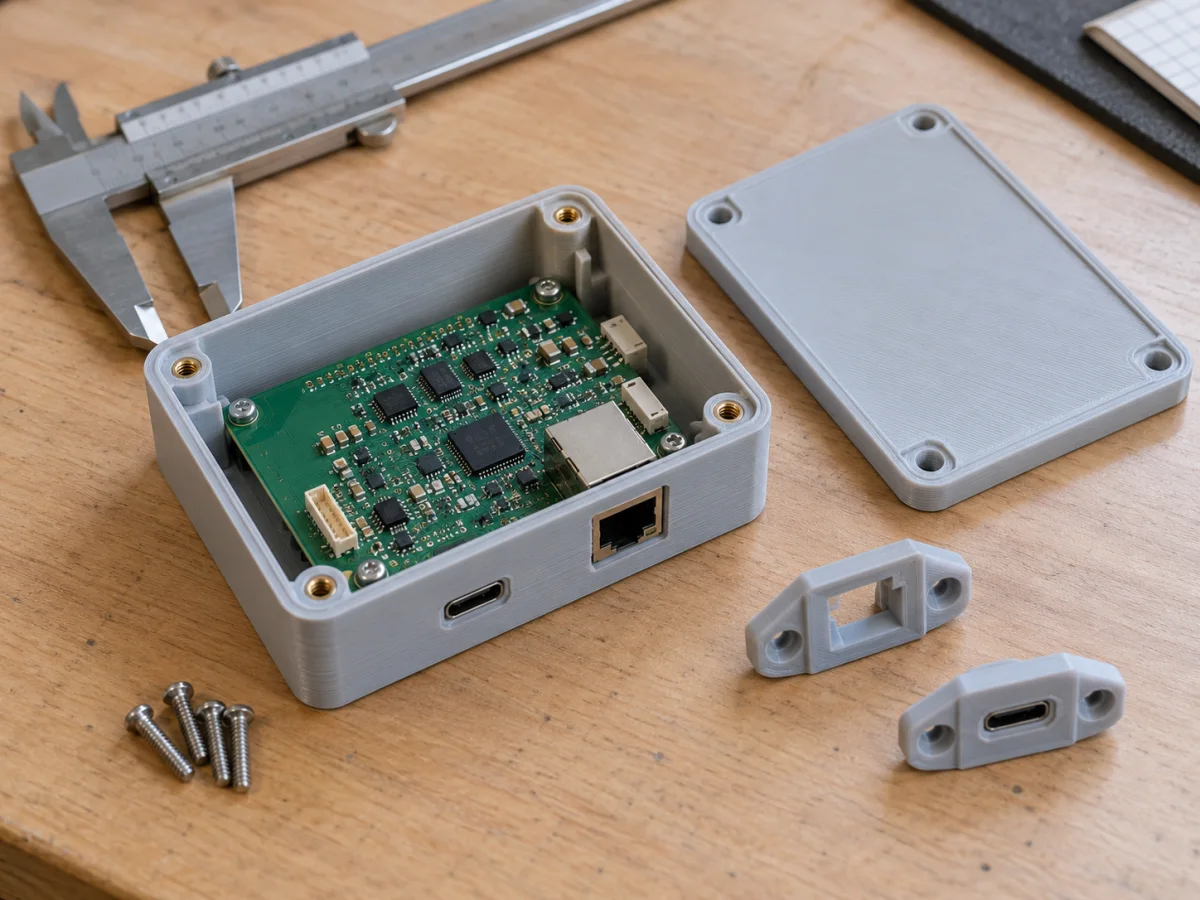
An appearance model communicates product size and form without necessarily representing every property of the production material. An assembly prototype checks part fit, screw access and cable placement. A functional prototype focuses on movement or operation with electronics. These objectives can be combined in one prototype or tested in separate samples.

The measurements and acceptance conditions to be checked before prototyping are put in writing. Sufficient clearance of a connector and the ability of a part to withstand load are different tests. When the test purpose is clear, manufacturing selection becomes more meaningful and the results can be transferred directly to the next design step.

  • Volume, appearance and ergonomics models
  • Electronic layout and assembly trials
  • Working examples for defined function
Testing the assembly and connection compatibility of the electronic board in the 3D printed housing
Representative application image.
02

Choosing the method according to the purpose of the part

We assess 3D printing and other prototyping methods against dimensions, surface requirements, geometry, loads and temperatures. Build orientation, support surfaces and layer behaviour can affect the finished part. Critical surfaces and joints are therefore reviewed before the model is sent to manufacture.

Board mounting posts, display frames and connector openings are important in electronic enclosures; bearing supports and connection areas matter in mechanical parts. Where necessary, the design can be divided and validated using separate parts and connections. When prototype material differs from the final material, we clearly identify which results are representative.

  • Examination of geometry and critical dimensions
  • Evaluating materials and build orientation
  • Preparing part joints and assembly
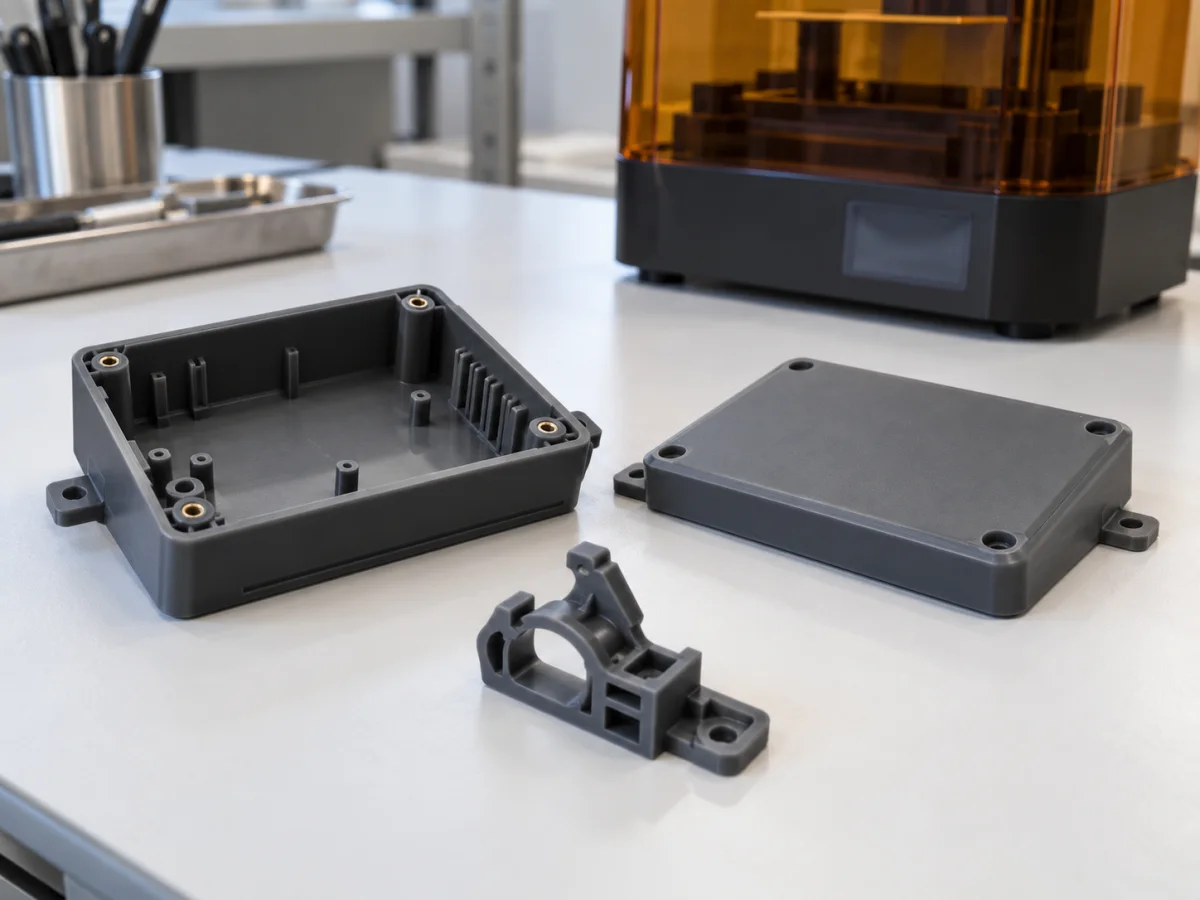
Highly detailed resin printed parts and electronic product housing sample
Representative application image.
03

Turning physical findings into design decisions

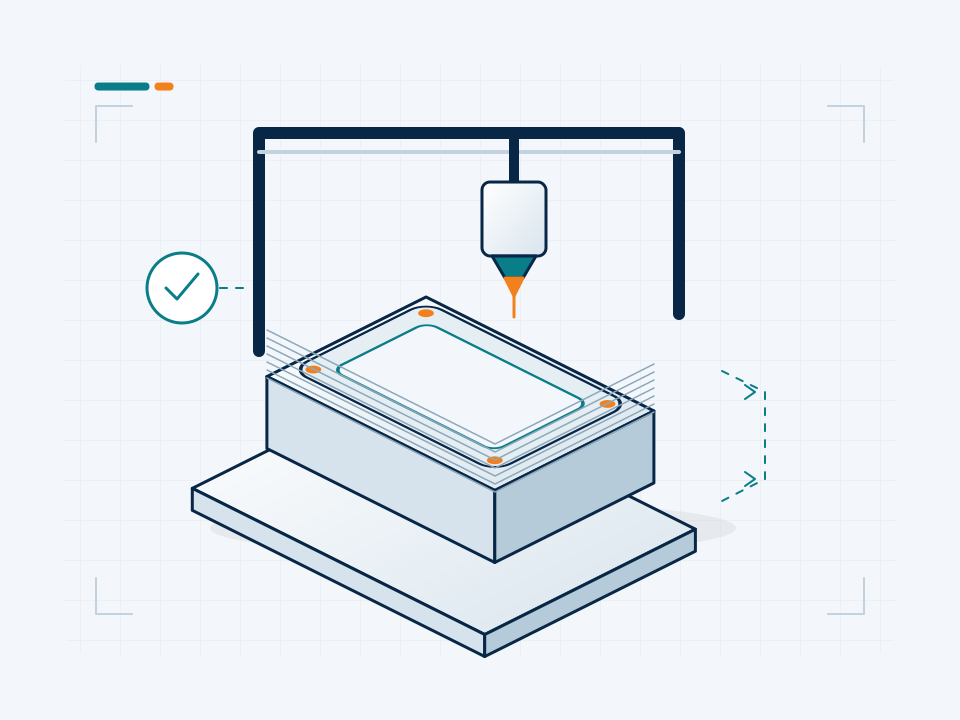
Grip, access, assembly and defined functions are checked on the prepared sample. If experimenting with real electronics, cable bending, board fixing and service access are also considered. Problems found are not only fixed on the prototype; What revisions are required are recorded in the digital model.

After prototyping, we organise the current model, inspection findings and requirements for the next stage. A successful print does not fully validate moulded production or long-term field use. When moving to the final manufacturing process, tolerances, surfaces, materials and strength requirements are reassessed under that process's conditions.

  • Full-scale usability and assembly checks
  • Finding list and model revision
  • Technical feedback to next production stage
Comparison of the digital product model and the 3D prototype prepared for dimension and assembly control
Conceptual representation of the technical process.

How it works

A clear process from start to delivery.

Not every project looks the same; however, the measurable requirement, controlled revision, and field verification steps remain unchanged.

  1. 01

    We determine the question

    We clarify which size, use or function decision the prototype will validate.

  2. 02

    We prepare the model

    We review the geometry, critical surfaces, and compliance with the manufacturing method.

  3. 03

    We evaluate the example

    We carry out assembly and usage tests defined in the physical part.

  4. 04

    We update the design

    We transfer findings and measurements to the next product revision.

Frequently asked questions

Before starting the project

The technical scope, deliverables and test plan are clarified together according to the requirements of your project.

Will the 3D prototype have the same strength as the final product?

This depends on the material and production method. What mechanical and environmental conditions the prototype represents are also evaluated; The same strength cannot be inferred merely from similarity in form.

Can we try the electronic circuit board inside the prototype case?

Yes. Depending on the project scope, the board, display, battery and connections can be placed in the physical prototype to check assembly and access. The limits of functional testing depend on the material used.

Would one prototype be enough?

Not always. Volume, assembly and function questions may require different revisions. How many stages are required is planned according to the maturity of the design and the results obtained from the first sample.

Can we work with NDA before sharing technical details?

Yes. We can complete the NDA arrangements together before you share your project's technical details.

Do you deliver source codes and technical files at the end of the project?

Yes. We deliver the source codes, design files and technical documents we developed within the scope of the project to you at the end of the project. The delivery list and file formats are clarified at the beginning.

Let's start with your idea

Let's talk about the product you dream of and the need you want to solve.