
Device development for your brand

Custom electronics for professional kitchen and beverage equipment

You want to develop a coffee machine, tea-making device or measured beverage system under your own brand. The mechanical arrangement may be ready, but temperature, pumps, valves and the display must operate within the same workflow. VOMRO develops custom circuit boards, embedded software, user interfaces and mechanical designs for professional kitchen and beverage equipment manufacturers. From initial trials to production preparation, we address the device's electronic and physical requirements together.

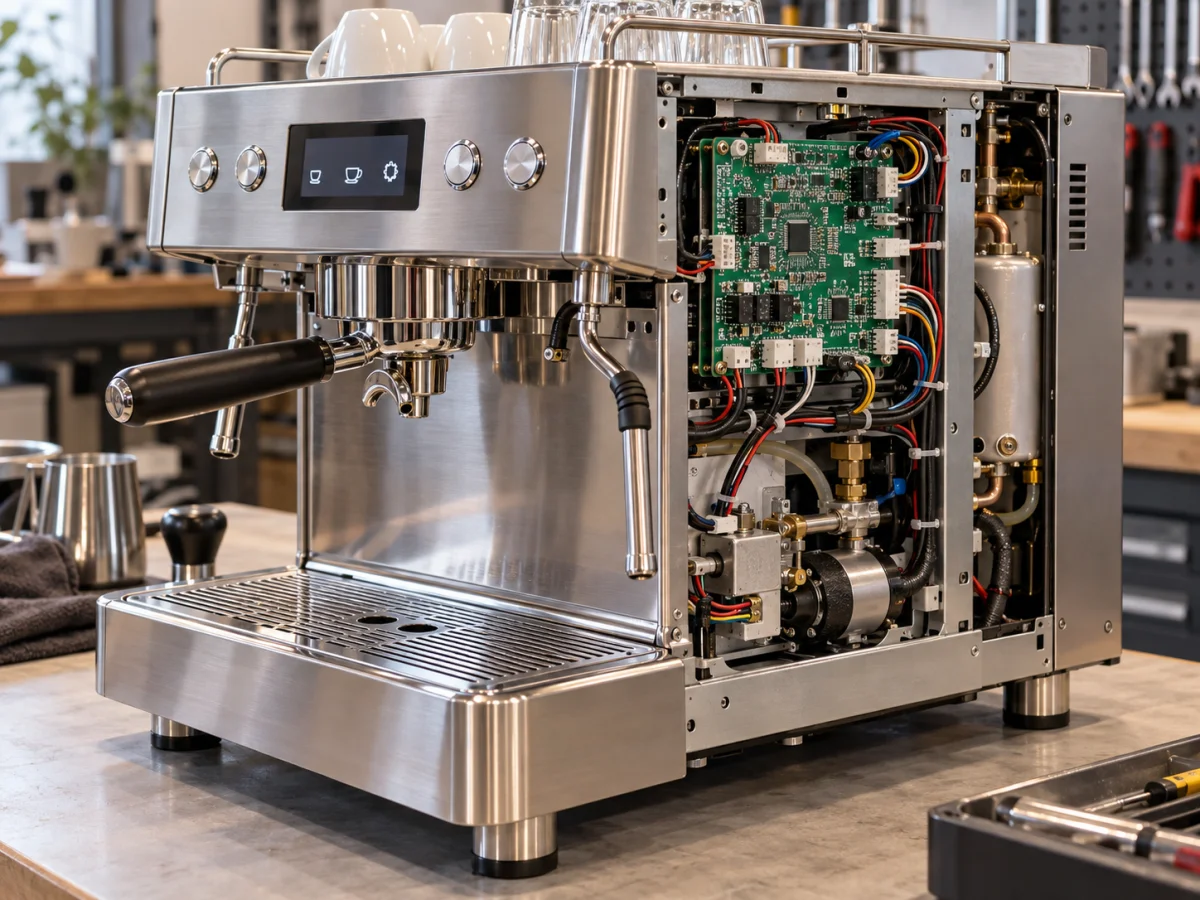
Custom electronic control board with sensor, pump and display connections in the service compartment of a professional coffee machine
Representative application image.
ProductYour device, your brand
DevelopmentBoard, software, display and mechanics
ProcessFrom the first prototype to production preparation

Your project, your product

Developed confidentially and delivered with source files.

We may work with a confidentiality agreement (NDA) before sharing technical details. At the end of the project, we deliver the source codes, design files and technical documents we have developed to you.

  • NDA before sharing technical information
  • Clear deliverables agreed at the outset
  • Source and technical files at the end of the project
Our confidentiality and delivery process

VOMRO engineering approach

We turn the device description into a measurable operating cycle.

Preparing a drink involves more than running a pump for a set time. Water temperature, flow, ingredient quantity, waiting and rinsing sequences can affect the result. What does the user select, what does the device measure and when should it stop? These questions begin the design. Required functions become acceptance criteria tested with the actual equipment.

In OEM development, the product is prepared for your brand. Updating an existing device, creating a model family and operating the first prototype have different scopes. Heating, fluid paths, sensors and production objectives are assessed together. When you need to exceed an available control board's capabilities, a clear plan identifies which parts require custom development and which can use suitable existing components.

01

Defining product architecture for coffee machines and beverage equipment

Espresso machines, filter-coffee systems, hot-water and tea devices, syrup dosing units and mixed-drink equipment do not share one workflow. Functions follow actual use. Define startup, preparation, drink selection, completion and standby states. For multiple heaters or outlets, specify which operations can run together and the available power limits.

You may have a working mechanical sample or only a product idea. A device diagram, intended fluids, target quantities and approximate production volume help the initial assessment. Electronics can be organised as one main board or connected control and display boards. The choice affects assembly, wiring and serviceability as well as enclosure layout.
02

Validating temperature and heating control with the actual device

A boiler-mounted sensor may not indicate the temperature at the drink outlet. Sensor position, heater power, incoming water and successive operation must be assessed. Control software adjusts heating commands from measured temperature. The method follows the device's response time; using PID alone does not prove that the target temperature is maintained under every condition.

Cold starts, long idle periods and consecutive preparations are different tests. Reference measurements are taken at required points, recording time to target and variation around it. Define responses to disconnected sensors and unexpected temperature rises. Software control and independent thermal protection have separate roles; neither is assumed to replace the other.

03

Flow, mass and dosing are different measurements

A flowmeter can measure dispensed water volume, while weighing measures mass reaching the cup. Time-based dosing differs from measurement: delivered quantity may change with pressure and flow. Select the method for the fluid characteristics, flow range and intended result. A fixed grams-to-millilitres conversion is not assumed for every beverage.

Weighing assessment includes container or cup tare, vibration and pump effects. Repeated tests include flow continuing after a valve closes, fluid remaining in tubing and initial conditions. Define calibration methods for production and servicing. A display distinguishing target quantity, measured result and incomplete operations is more useful than a counter value alone.

04

Custom control boards for pumps, valves, heaters and motors

Pump supplies, valve coils, grinder or mixer motors and heaters do not use the same output circuit. Define current, startup behaviour, switching frequency and feedback needs for each load. Select suitable relays, solid-state switching or interfaces to existing drives. A command to operate a load and confirmation that the intended flow occurred are separate information.

The mains-powered section is designed together with low-voltage measurement and display connections. Validation for isolation, protection, wiring and temperature follows intended use. Define behaviour for dry running, low water levels and unexpected lid states. These conditions are not assessed only through software simulation; controlled prototype trials are also specified.

05

Developing displays and recipe management for daily use

Users need to select a drink, see readiness and understand interrupted operations. Touchscreens, physical buttons or both are evaluated for countertop conditions, gloves and cleaning requirements. Recipe settings such as temperature, quantity and waiting time use understandable names. Values adjustable during operation are separated from service settings.

For variants of the same basic device, available recipes and hardware options are linked to the version. Changes by authorised users are checked against valid limits. Remembering a selection after power loss and restarting an interrupted hot-liquid process are separate decisions. Required local functions can be planned to operate without internet access.

06

Planning rinsing and cleaning cycles as part of the device

Cleaning is not completed by displaying a reminder. Product design specifies which fluid paths operate in which order, when the user intervenes and how the process ends. Rinse, wait and drain steps become software states. Define responses to a missing container or insufficient flow; an incomplete cycle is not recorded as complete.

Cleaning agents, temperature and contact time are evaluated with device and materials expertise. Electronics running a cycle does not automatically validate its hygiene outcome. Fluid-path accessibility, drainage and material compatibility also matter. Required trials and instructions for the manufacturer's chosen method are included in development planning.

07

Designing electronics, the mechanical body and fluid paths together

Board fit matters alongside separation from hot and humid areas, avoiding kinked hoses and reaching connections during servicing. PCB dimensions, displays, buttons, interfaces and supports are developed together. A 3D prototype can assess enclosure arrangement and service access. The first housing trial may not represent every property of the final manufacturing material and process.

Fluid-contact parts and seals are assessed for the drink, temperature, pressure and cleaning conditions. Required material documentation and product-level validation are defined in scope. Selecting a visually suitable plastic or stainless-steel part alone does not establish food-contact suitability. Controlled prototype tests examine leaks, condensation, heat transfer and the possibility of liquid reaching electronics.

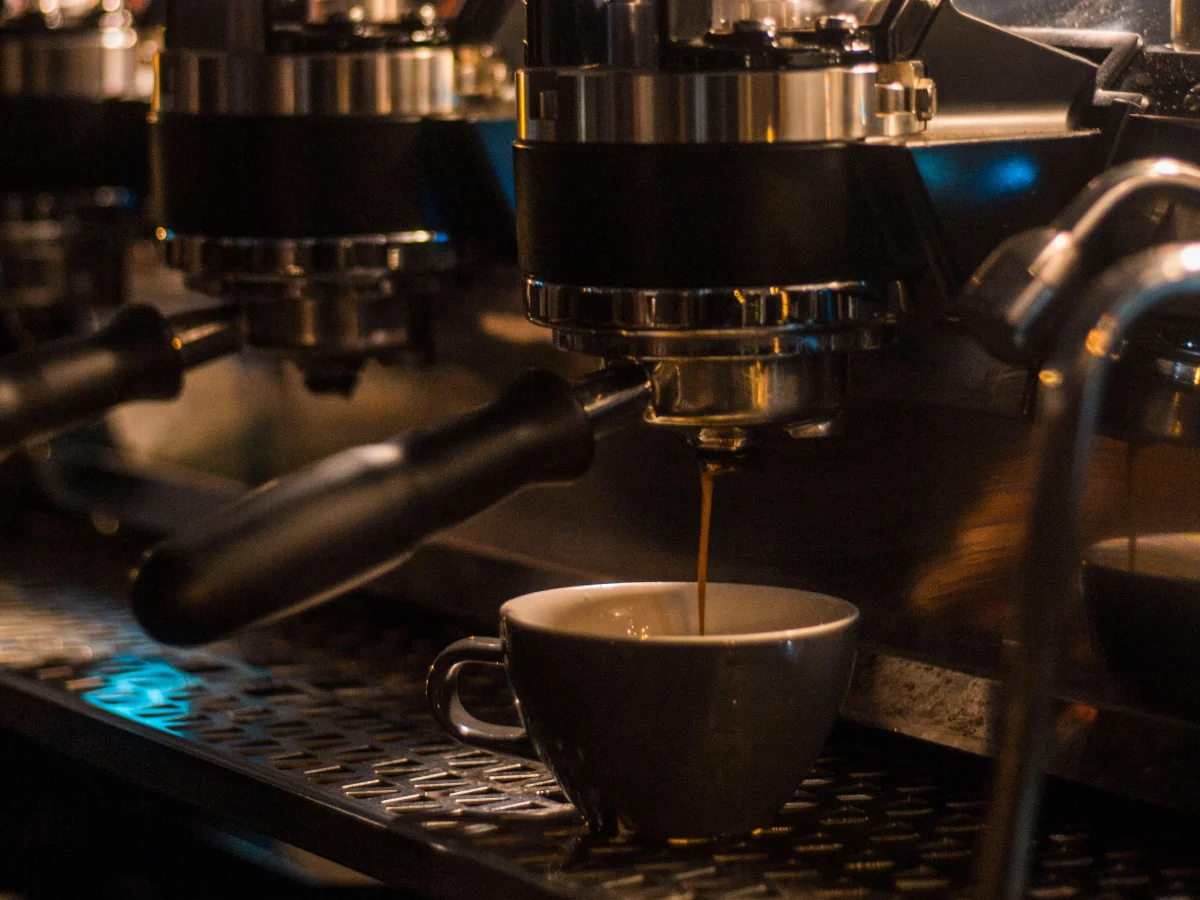
Coffee flowing from an espresso machine into a cup
A coffee machine preparing espresso.
08

What do we test between the first prototype and repeat production?

The first electronics prototype is tested with actual sensors, pumps, valves and display. Acceptance results cover warm and cold starts, consecutive preparation, sensor faults and power loss. Quantity and temperature records identify the hardware and software versions used. Required revisions and pilot production checkpoints are defined after the first working sample.

Repeat production can use a test setup for correct programming, model-specific settings and I/O checks. Calibration data is linked to device identity. Relevant revalidation is planned when components or pumps change. PCB fabrication and assembly support are offered only within customer projects developed by VOMRO, not as standalone contract manufacturing from an external design.

09

Development for your brand, NDA and source file delivery

At your request, we can work under an NDA before ideas and technical details are shared. Product architecture, mechanical drawings and recipe information are handled within the agreed sharing scope. Electronics, software, mechanical work, prototypes and testing are separate quotation items. If production volume is uncertain, decision points can follow a critical-function prototype and then a pilot.

Project schematics, editable PCBs, firmware sources, display software, mechanical CAD and technical documents are delivered at completion according to the contractual list. Manufacturing outputs, the BOM, programming and testing instructions are also specified. Third-party software and component licences are explained separately. This provides a development package for planning maintenance and later versions of your device.

Your starting point for professional beverage equipment development
RequirementInformation to share firstResult to assess
New device ideaPreparation flow, beverage and target quantityArchitecture and initial prototype scope
Control for an existing mechanical arrangementSensors, loads and fluid pathBoard and software operating with actual equipment
Improving an existing modelSource files, dimensions and requested changesParts to retain and update
Pilot and repeat productionApproved prototype and model optionsProgramming, calibration and testing package

How it works

A clear process from start to delivery.

Not every project looks the same; however, the measurable requirement, controlled revision, and field verification steps remain unchanged.

  1. 01

    Let's define the device's task

    Establish the preparation flow, measurements, mechanical conditions and target production volume.

  2. 02

    Let's develop the control and interface

    Prepare the board, embedded software, display and mechanical arrangement against the same requirements.

  3. 03

    Let's test with actual equipment

    Assess quantity, temperature, operating sequence and fault conditions on the prototype.

  4. 04

    Let's deliver the manufacturing package

    Organise approved sources, manufacturing files, calibration and testing instructions.

Frequently asked questions

Before starting the project

The technical scope, deliverables and test plan are clarified together according to the requirements of your project.

Can we develop a professional coffee machine for our own brand?

Yes. Custom electronics, software, displays and mechanical work can be planned together for the device's task. The mechanical and fluid-system information you provide as manufacturer, and the parts to be developed, are clarified upfront.

Can you make a control board and display for our existing mechanical device?

A suitable scope can follow assessment of pumps, valves, heaters, sensors and connections. Board dimensions, load characteristics, user flow and the actual test device are evaluated; unconditional compatibility with an available board is not assumed.

Should dosing use time, a flowmeter or weighing?

The choice depends on the fluid, target quantity, repeatability requirements and device design. Time, volumetric flow and weighing provide different information. Trials with actual fluids and equipment determine the suitable method.

How is testing for device safety and food contact defined?

Electrical safety, independent protections, EMC, materials and cleaning conditions are assessed for intended use and target markets. Required specialist and laboratory work is planned. Board development alone does not provide completed-device certification or validate hygiene suitability.

Do you offer NDAs and source file delivery?

We can work under an NDA before technical information is shared. PCB, firmware, display and CAD sources developed within scope, together with technical documents, are delivered according to the contract. Third-party licences are explained separately; prototype PCBs and assembly are provided only within customer projects we develop.

Let's start with your idea

Let's talk about the product you dream of and the need you want to solve.