
Define motion, presence and distance as separate requirements

How to choose a motion sensor: PIR, radar or ToF?

Choosing a motion sensor involves more than detecting a change in an area. Detecting someone passing, monitoring a user who moves very little and measuring an object's distance are different expectations. PIR, radar and time-of-flight (ToF) sensors use different physical principles. VOMRO evaluates the sensing technology, circuit board, embedded algorithm and enclosure together according to the target behaviour.

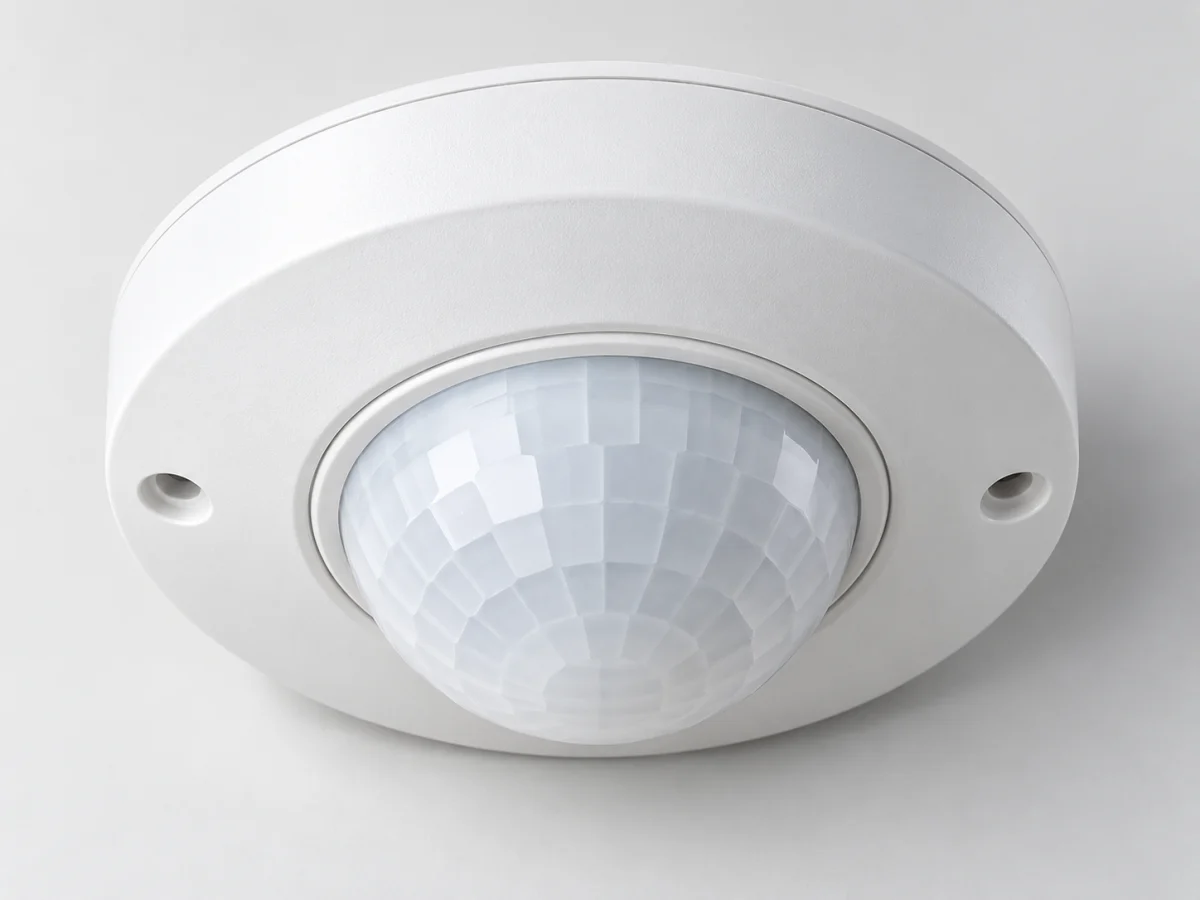
Completed PIR motion sensor with a Fresnel lens and enclosed white mounting housing
Illustrative sensor product image.
RequirementPassage, presence or distance
TechnologiesPIR, radar and optical ToF
Acceptance testActual target, mounting and environment

VOMRO engineering approach

First document which event to detect and which events to exclude.

Passage detection may be sufficient for corridor lighting, while small movements of a seated person may matter at a desk. A kiosk may require approach distance, while another device only monitors entry into a defined zone. For each case, the target, approach direction, dwell and departure behaviour are described separately.

People outside the detection area, swinging objects and the device's own movement are also project conditions. Rather than deciding from a bench trial that only demonstrates target detection, prepare a list of unwanted events. Technologies are compared against that list.

The complete measurement process

From sensed quantity to usable data

  1. 01Target and field of view
  2. 02PIR, radar or ToF
  3. 03Detection and false-trigger testing
  4. 04Motion, presence or distance event

Conceptual diagram. The actual measurement range, error budget and validation plan are defined for the application.

01

What does a PIR sensor detect?

PIR uses passive infrared sensing; it does not emit light towards the target. Panasonic explains that detection relies on changes in infrared energy within the field of view. Lens zone layout, target movement and temperature contrast with the surroundings affect the result. A PIR output is therefore not treated as definitive evidence of a particular person's continuous presence or position.

PIR may be a candidate for a simple passage detection or motion-activated wake-up project. Selection considers mounting height, approach direction and expected small movements. A software timer that holds the output active does not change physical detection; it only changes how the system responds to that detection.

02

What does radar offer for presence detection?

Radar processes transmitted radio waves reflected by the target to produce application-specific information. Infineon's presence detection library is one example that allows macro and micro movements to be evaluated separately or together, with adjustable detection distance and thresholds. Results depend on the selected operating mode and algorithm as well as the radar chip.

Where small movements matter, the candidate radar solution is tested with actual targets. Empty-space recordings, people passing outside the area and nearby moving objects are included. Increasing sensitivity alone does not establish a good setting; missed targets and unwanted triggers are evaluated together. Settings and the software version are included in the pilot report.

03

When is ToF used as a motion sensor?

Optical ToF derives distance from light travelling to a target and returning. Changes in distance or in the target within a defined area can be converted into approach or movement decisions. This is a different data type from a PIR change output. The detection target and optical field geometry must be defined together.

ST's driver guide explains checking measurement status alongside distance and adjusting the region of interest where required. Designs monitor validity rather than reading only the millimetre field. Trials use the expected object sizes, surfaces, distances and environmental conditions; catalogue range is not applied unconditionally to the application.

04

Why are covers, lenses and mounting technology-specific?

A visibly transparent cover is not suitable for every sensor. Panasonic's PIR guide notes that ordinary glass or acrylic may block the relevant infrared sensing. For ToF, ST treats light reflected within the cover as a separate optical crosstalk design issue. A single window solution cannot be transferred across all technologies.

The prototype drawings specify sensor mounting angle, cover spacing and detection aperture. Radar candidates are also tested with the actual enclosure material and nearby mechanical parts. Placement should remain repeatable after opening and closing a maintenance cover. Test records are used to assess whether apparently similar mechanical revisions require rechecking.

05

How does detection output become device behaviour?

A state machine is useful when sensor data controls lighting, a display or another output. Initial detection, confirmation, continued presence and vacancy decisions are described separately. Losing a sensor reading is not treated as the same event as a person leaving the area. The system response is defined around usage expectations and made recordable.

The electronics scope covers power, communication, interrupt lines and connections to the main controller. Software can log the raw signal or accessible measurement, decision output and timestamps separately. If multiple sensors are combined, the decision rule is explained. Before adding a complex fusion algorithm, test whether one sensor is sufficient for the intended use.

06

Are calibration and detection acceptance testing the same thing?

The procedures vary by technology. ST's VL53L1X driver guide describes offset and cover-induced crosstalk calibrations, with data stored in the host system and loaded at startup. Radar sensitivity adjustment is part of application-specific algorithm evaluation. Treating all of these as one calibration button is inappropriate.

Acceptance tests define entry and exit directions, slow and fast movement, brief pauses and extended stays. Unwanted triggers during unoccupied periods are counted too. Project criteria are set for missed-target rate, decision delay and detection boundaries. Final trials use the actual mounting and intended software version.

07

Which mistakes should be avoided, and what should be prepared for a project?

Common errors include equating PIR detection with stationary presence, assuming all radar modules offer the same algorithm and using ToF distances without status information. Desired behaviour is documented separately for lighting, kiosks, automatic lids and device wake-up. A setting that succeeds in one scenario may not represent all users.

For VOMRO's review, share the target, area dimensions, mounting height, cover material and expected response. Power, communication, target quantity and environmental photographs help candidate selection. The scope can include sensor evaluation, a custom board, embedded software and pilot logging; source files and test documents to be delivered are specified in the quotation.

  • Define passage, presence and distance targets separately.
  • Test situations that should not be detected as well.
  • Validate the cover and software settings together.
Initial comparison of PIR, radar and ToF
TechnologyBasic informationCritical project consideration
PIRChange in infrared energyLens zones, movement and thermal environment
RadarMotion/presence decision from the reflected signalAlgorithm, detection area and sensitivity settings
Optical ToFDistance and measurement statusOptical field, target and cover effects
Sensor fusionDecision from multiple measurementsJustification, timing and testing workload

How it works

A clear process from start to delivery.

Not every project looks the same; however, the measurable requirement, controlled revision, and field verification steps remain unchanged.

  1. 01

    Define the event

    We document target, area, movement and dwell scenarios.

  2. 02

    Test the technology

    We examine a PIR, radar or ToF candidate under the same operating conditions.

  3. 03

    Adapt it to the device

    We develop the board, cover and decision software together.

  4. 04

    Measure acceptance

    We record missed detections, unwanted triggers and delays.

Frequently asked questions

Before starting the project

The technical scope, deliverables and test plan are clarified together according to the requirements of your project.

Does a PIR sensor always detect a stationary person?

PIR relies on changing infrared energy. Results when movement decreases depend on the lens, target and environment; continuous presence detection is not guaranteed.

Can a radar sensor detect small movements?

A suitable radar and algorithm can evaluate micro movements. Its effective distances and conditions must be tested using the selected module, settings and actual target.

Does a ToF sensor measure a person or a distance?

Its primary outputs are distance and measurement status. Application software can use these to detect approach or entry into a defined zone; the output does not inherently identify a person.

Will a PIR sensor work behind ordinary glass?

Panasonic documentation notes that ordinary glass and acrylic may block the relevant infrared sensing. Window material is selected according to the sensor's optical requirements.

Does ToF require production calibration?

Follow the selected sensor's instructions. For example, the VL53L1X specifies offset and cover-effect calibrations; storing the results and loading them at startup must be planned.

Can you investigate false triggering in an existing device?

A test plan can be prepared after reviewing the mounting, sensor model, software settings and event logs. Contributions from the environment, hardware and decision software are distinguished first.

Your project, your product

Developed confidentially and delivered with source files.

We may work with a confidentiality agreement (NDA) before sharing technical details. At the end of the project, we deliver the source codes, design files and technical documents we have developed to you.

  • NDA before sharing technical information
  • Clear deliverables agreed at the outset
  • Source and technical files at the end of the project
Our confidentiality and delivery process
Let's start with your idea

Let us test the motion you want to detect in the actual device.

Share the target, area, mounting and expected response; together, we can plan technology selection, custom electronics and acceptance testing.