
For campervan and vehicle conversion manufacturers

Campervan control panels and auxiliary vehicle electronics development

You may want to manage your campervan's living area through a panel designed for your brand. VOMRO develops control boards, display software and mechanical panels for campervan manufacturers, vehicle outfitters and specialist bodybuilders. Water levels, lighting, fans, pumps and auxiliary energy information are planned together around the vehicle's equipment options.

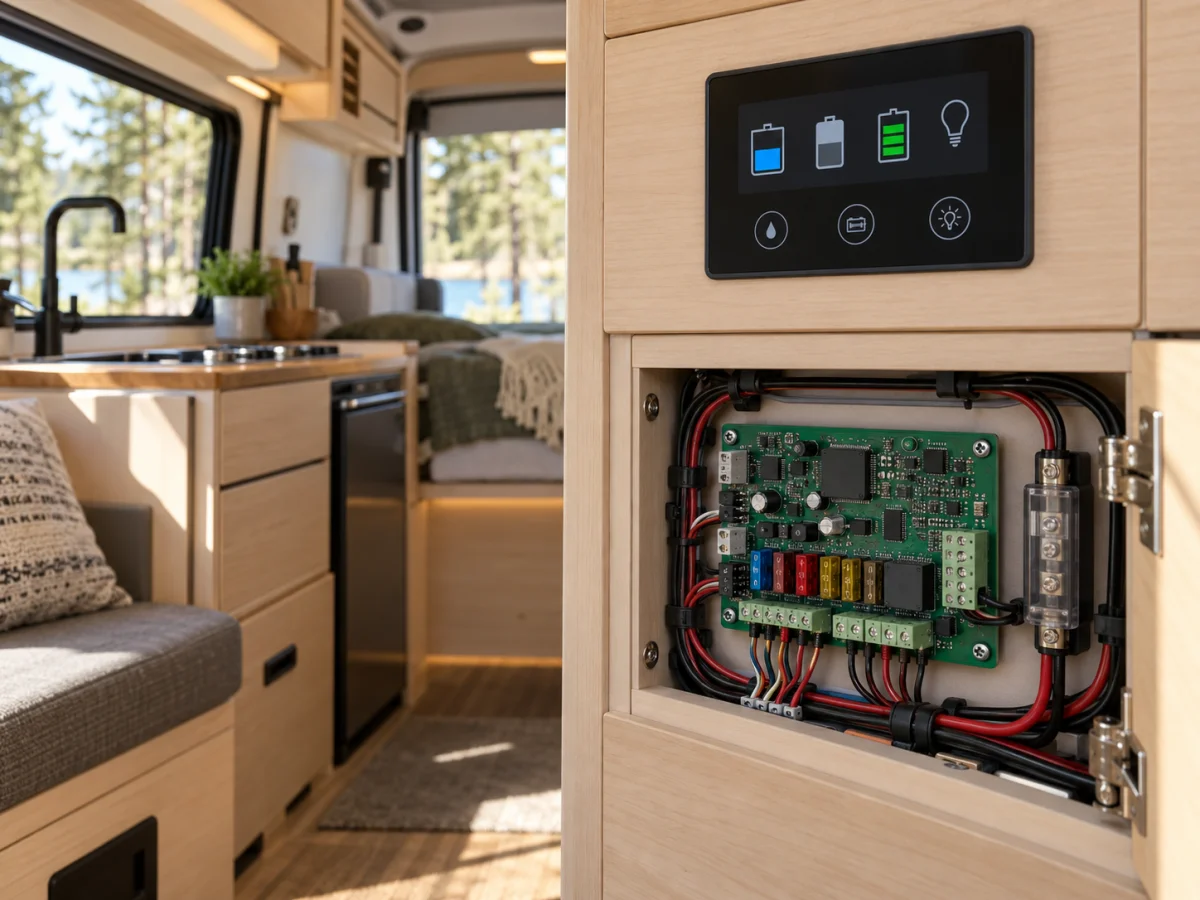
Custom control panel in a caravan's living area, with an electronic control board inside its enclosure
Representative application image.
CustomerCampervan manufacturers and vehicle outfitters
DesignPanel, control board and device software
Product approachModel options and repeat production

Your project, your product

Developed confidentially and delivered with source files.

We may work with a confidentiality agreement (NDA) before sharing technical details. At the end of the project, we deliver the source codes, design files and technical documents we have developed to you.

  • NDA before sharing technical information
  • Clear deliverables agreed at the outset
  • Source and technical files at the end of the project
Our confidentiality and delivery process

VOMRO engineering approach

We develop panels around the manufacturer's vehicle family and users' everyday habits.

An end user seeking a campervan panel has different needs from a manufacturer developing electronics for a vehicle range. Our work is custom engineering for the manufacturer's product. Controlled equipment, wiring-harness connections and differences between equipment packages are defined upfront. User experience, production and servicing needs meet within the same design.

The same approach can serve defined auxiliary equipment in specialist vehicle projects, such as lighting and ventilation in a mobile workspace or a monitoring panel for a particular body conversion. Before selecting a panel, establish functions, mounting space, power and loads. These inputs guide the transition from one validated vehicle prototype to a design produced across models.

01

Custom campervan control panels and equipment options

Equipment counts and layout can differ between a manufacturer's compact campervan and larger model. One may have two lighting circuits, while another has separate living areas, extra fans and different tanks. We first identify common and model-specific functions. A shared board may support configurable options; substantially different power or interface requirements may call for separate modules.

An equipment option is more than a menu item. It includes the output used, connector location and settings loaded during production. Linking model codes to board and software versions helps reduce incorrect assembly configuration. Custom panel design therefore combines screen appearance, electrical interfaces and manufacturing information.
02

Clear displays and physical controls for everyday use

Users should not need technical terminology to turn on a light or check water levels. The interface is built around key information, night brightness, button sizes and frequent functions. Touchscreens, physical buttons or both are selected for mounting and use conditions. On, off and waiting states are shown clearly.

Discuss daily scenarios during design: which light can users find at night, which settings survive main shutdown and who may access service screens? Define the state after panel restart in advance. Where an on-screen command differs from actual equipment status, plan suitable feedback. The interface then becomes more than a surface of colourful control icons.

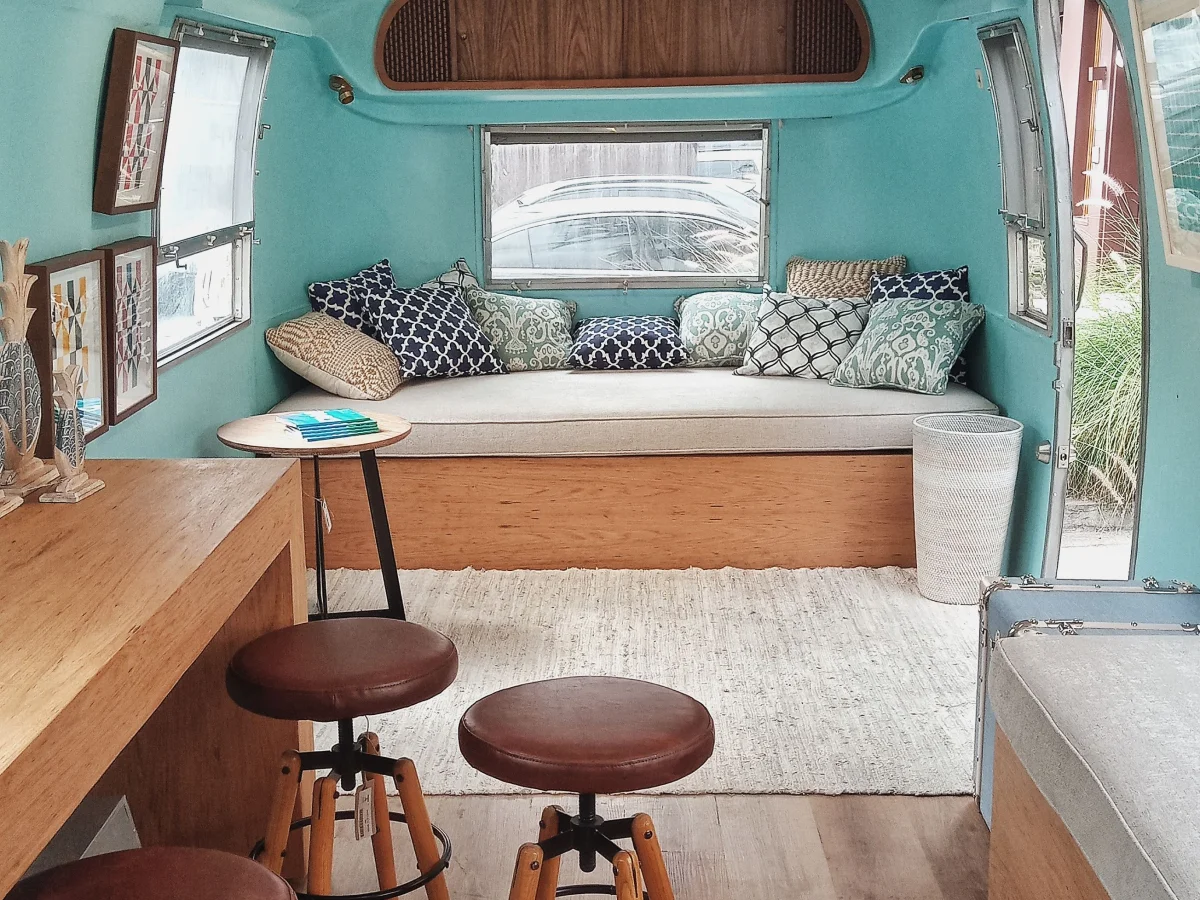
Cabinets, seating and interior fittings in a campervan living area
A campervan living area and interior fittings.
03

Auxiliary control boards for lighting, fans and water pumps

For auxiliary living-area loads, load type matters as much as output count. Dimming LED lighting and switching a water pump may require different circuits. Assess fan or pump startup current, continuous consumption and run time. Actual equipment determines which loads the board drives directly and where external relays or drivers are needed.

Output connections, cable cross-sections and fuses are planned with the auxiliary installation. Prototype testing includes heating, loose connections and electrical effects from motor loads. Define pump conditions requiring notification or shutdown. Measurement and protection choices consider usage and installation, not nominal power alone.

04

Displaying fresh-water and waste-water tank levels

Tank-level sensing combines sensor type, tank material and placement. Showing several discrete levels differs from estimating volume. Different tank shapes across models may require different display settings. Expected behaviour during filling and draining is matched to the information the sensor can actually provide.

Rapid reading changes may result from tank movement, sensor connections or actual consumption. Filtering and warnings are evaluated through use trials. A disconnected sensor must not appear as an empty tank. Project documentation can include production parameters for each tank option and sensor replacement during servicing, allowing the indicator to be managed across the vehicle family.

05

12 V and 24 V power, battery information and consumption trends

A nominal 12 V or 24 V auxiliary supply does not remain constant at the board input. Charging, load changes and wiring are assessed to define the operating range. Input protection, reverse polarity, voltage drops and startup after power restoration are design topics. Standby consumption also matters when the vehicle is unused for long periods.

The panel can display battery voltage, current measured appropriately and selected load history to show consumption trends. State-of-charge estimation requires separate assessment of battery type, measurement method and starting conditions. Monitoring and the protective BMS perform different functions. If data is required from an existing BMS or charger, integration follows manufacturer-supported interfaces and permitted information.

06

Local operation, service connectivity and optional remote monitoring

Basic controls without internet access can be a starting requirement for a campervan panel. Connections between display and control modules follow in-vehicle distances and electrical conditions. BLE or Wi-Fi may support nearby configuration or servicing. Permissions, pairing and retaining settings are part of those functions.

Remote status viewing can add LTE and server software. Transfer depends on operator coverage; define which records persist offline and how they are sent after reconnection. Device identity, version and fault history are useful in the manufacturer's service interface. Updates require coordinated design of authorised access, version selection and interruption behaviour.

07

Panel enclosures, wiring and ease of installation

Mounting depth behind the panel matters alongside external dimensions. Furniture clearances, viewing angle, connector access and cable bend space inform mechanical design. If electronics and the front panel are separated, connections and servicing are addressed together. An early enclosure sample can demonstrate vehicle fit before the board is finished.

The manufacturing package can define connection labels, wiring-harness information and mounting points. How much furniture must be removed to replace the board, and how to prevent incorrect connectors, are practical design questions. Temperature, vibration, humidity and cleaning conditions follow the mounting location. Enclosure and connector performance is assessed through tests on the completed prototype.

08

From prototypes to production variants, confidentiality and source delivery

The first prototype tests loads, sensors, display and power together, followed by use and installation assessment in the target vehicle. Model options, startup settings and diagrams are linked to versions. Repeat production can include programming and functional-test instructions. PCB fabrication and assembly are offered only within customer projects developed by VOMRO.

We can work under an NDA before product plans and technical information are shared. Project schematic and PCB files, embedded software sources, mechanical CAD and technical documents are delivered at completion. Sources for applications and server software within scope are included in the list. Third-party licences are stated upfront, providing the information needed for maintenance, new models and future versions alongside the panel.

Project options for campervan and auxiliary vehicle electronics
Manufacturer requirementDevelopment focusInitial information
A branded campervan panelUser interface and control boardFunctions, panel location and appearance requirements
Multiple vehicle modelsShared module and equipment optionsModel differences, interfaces and target volume
Auxiliary energy and water monitoringMeasurement inputs and clear displaysBattery, sensor and tank information
Manufacturer service connectivityStatus records and authorised accessService workflow and connectivity requirements

How it works

A clear process from start to delivery.

Not every project looks the same; however, the measurable requirement, controlled revision, and field verification steps remain unchanged.

  1. 01

    Let's understand the vehicle family

    Review models, auxiliary equipment, panel location and mounting arrangements together.

  2. 02

    Let's identify functions and interfaces

    Define screen flows, loads, sensors, power and equipment options.

  3. 03

    Let's test the prototype in the vehicle

    After bench checks, assess operation, wiring and service access in the target vehicle.

  4. 04

    Let's deliver the production version

    Prepare approved sources, model settings, connection documents and test information.

Frequently asked questions

Before starting the project

The technical scope, deliverables and test plan are clarified together according to the requirements of your project.

As a campervan manufacturer, can we commission a branded control panel?

Yes. Custom scope can be defined after assessing functions, screen design, panel dimensions and model options. Electronics, embedded software and mechanical design can be addressed together or through the subsystems you need.

Can the same control board be used in different campervan models?

A shared board with different settings packages can be assessed when loads, inputs and connections are compatible. Where power, mounting or interfaces differ substantially, modular or separate-board options are compared.

Can the campervan control system operate without internet access?

We can plan local controls and displays to work independently of the internet. Remote viewing and notifications require connectivity. LTE coverage, data consumption and offline recording behaviour are defined separately.

Can the panel show battery charge and water levels?

These can be included using suitable sensors and measurement methods. Battery type and measurement conditions inform charge estimates; tank and sensor properties inform water indications. The protective BMS and the panel's monitoring function are defined separately.

Is an NDA available, and are source files delivered to us?

Yes. An NDA can precede technical sharing. Schematics, PCBs, software sources, mechanical CAD and technical documents developed within scope are delivered. Production settings, the delivery list and third-party licence conditions are clarified upfront.

Let's start with your idea

Let's talk about the product you dream of and the need you want to solve.