
From transferred data to a traceable process

Custom IoT device development for logistics and the cold chain

We develop projects for logistics technology companies that connect temperature, humidity, door, impact and location data to their operations. By developing sensor electronics, embedded software, mechanics, gateways and server applications together, we create a system tailored to the customer's brand and workflow.

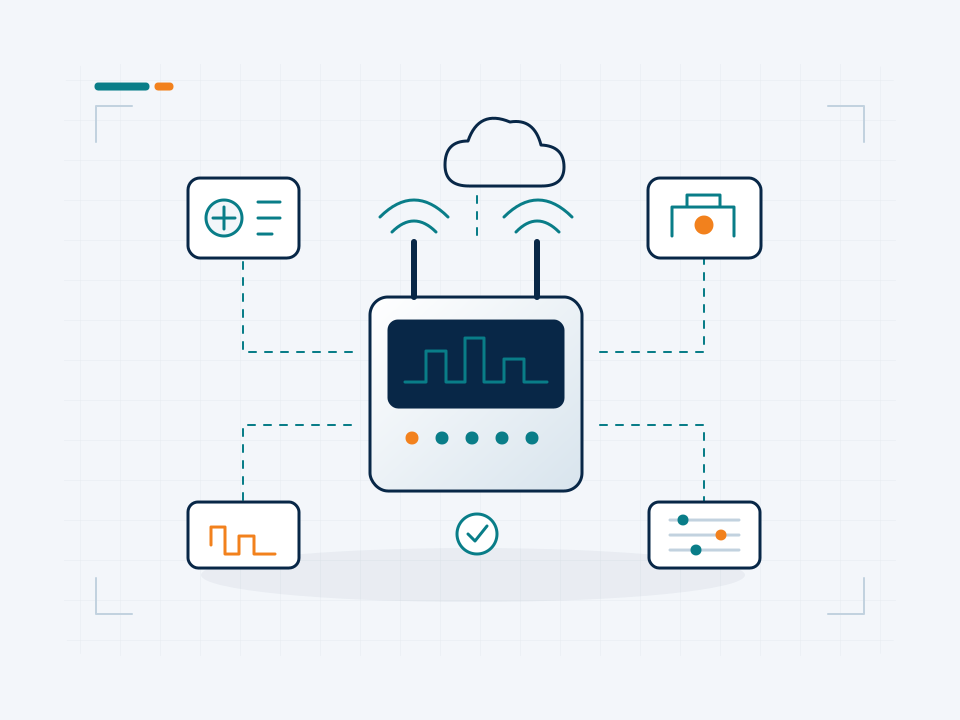
Conceptual technical representation of sensors, data collector and server connection
Conceptual technical illustration · From transmitted data to a traceable process
ApplicationWarehouse, vehicle and shipment
ArchitectureSensor + gateway + server
DeliverySource files of the project

Your project, your product

Developed confidentially and delivered with source files.

We may work with a confidentiality agreement (NDA) before sharing technical details. At the end of the project, we deliver the source codes, design files and technical documents we have developed to you.

  • NDA before sharing technical information
  • Clear deliverables agreed at the outset
  • Source and technical files at the end of the project
Our confidentiality and delivery process

VOMRO engineering approach

Together we define which condition belongs to which shipment.

In a cold chain tracking project, temperature graph alone may not be sufficient. Which pallet, container, vehicle or warehouse the measurement belongs to; It should also be determined how the device and the product are paired during loading, transportation and delivery. Separate evaluation of the short change caused by door opening and the long-term temperature deviation allows the operations team to work on the correct event. Recording frequency and alarm delay are decided through this usage.

VOMRO develops the customer's unique tracking device project. A custom gateway can also be prepared that connects existing sensors to the company's software. In projects related to food, medicine or any other sensitive cargo, the product owner's quality processes, data retention expectations and verifications to be implemented are the initial input. Before sharing technical details, we will sign a confidentiality agreement upon your request.

01

Do warehouse, vehicle and reusable packaging require the same device?

A fixed cold room may have power and network access, while a portable container prioritises battery life, size and ease of use. Vehicle-mounted devices require assessment of supply fluctuations and antenna placement; pallet-mounted sensors require attention to impacts and incorrect pairing during loading. Collecting, cleaning, charging and assigning reusable devices to a new shipment after delivery are all part of the product workflow.

These differences define the development boundaries. We specify information to share with the operator's existing WMS, TMS or ERP software and the steps users take in the field. Barcode or QR pairing, the point at which recording begins and who receives the report after transport are worked through with examples before prototyping.

  • Cold room, refrigerated vehicle and shipping sensor scenarios
  • Matching pallet, box, container and device ID
  • Defining the reuse, charging and service flow
02

What event data should accompany the temperature measurement?

When choosing a temperature and relative humidity sensor, measurement range, target error margin, response time and condensation conditions are evaluated together. The temperature of the electronics in the cabin may not be the same as the ambient temperature to which the load is exposed. The need for an external probe, access of the sensor to the airflow and protection of the cable connection are solved together with the mechanical design. Correlating the calibration data with the device serial number can be included in the software.

Door contacts, light detection, accelerometers or GNSS data can be added as needed. Impact detection requires defined thresholds, sampling and pre-event recording; location tracking requires defined indoor coverage and data freshness. A GNSS receiver is not assumed to provide a position in every environment. Sensor faults, disconnected probes and stale data are distinguished from valid measurements, with timestamps and quality status defined for every record shown to the user.

  • Temperature, humidity, door opening and impact events
  • External probe, sensor placement and mechanical protection
  • Information on location freshness and measurement quality
03

How to preserve measurements when mobile connection is lost?

Options such as BLE sensor and in-vehicle gateway, Wi-Fi or LoRa based connection in the warehouse, and a device that transmits data directly over 4G are compared. The choice is determined by the number of devices, coverage, data volume, battery life and the network management of the business. The connection time and retries of the cellular connection are included in the energy budget. The antenna's relationship with the metal casing, refrigerated body and the carried load is examined on the actual assembly.

The offline recording queue defines local memory capacity, write endurance, data integrity during power loss and behaviour when full. After reconnection, records are transmitted with sequence numbers and timestamps so the server can identify duplicates. If MQTT is used, session, delivery level and message lifetime settings follow the application requirements. They do not replace the device's local recording mechanism; end-to-end recovery of missing data is verified separately.

  • Comparison of BLE, LoRa, Wi-Fi and cellular connectivity
  • Power outage resistant local recording approach
  • Managing duplicate records and record order
04

How do alarms, shipment logging and traceability combine?

On the server, we establish relationships between devices, sensors, shipments, locations and events. Business rules cover delays, hysteresis, repeated notifications and alarm closure as well as thresholds. Connection loss and temperature deviation are shown separately. We define how a past event is reported when its measurement arrives later. The interface must make clear whether the user is viewing live data or historical records.

APIs, data export and reporting are developed for the customer's traceability infrastructure. Where event-sharing models such as GS1 EPCIS are required, we assess mappings for product identity, process step, time, location and sensor data. EPCIS support is designed together with the receiving system's data model rather than added as a label. Device authentication, customer-account separation, user permissions and audit records form part of the software architecture.

  • Creating, verifying and closing the alarm
  • WMS, TMS, ERP or customer API integration
  • Event model review based on requirement GS1 EPCIS
05

How to verify a sample cold chain project?

For example, in a device developed for a reusable transport box, the box layout and shipping flow are first modeled. After selecting the sensor, battery and communication, the prototype is tested with the box. Door opening, specified temperature gradients, network loss and battery depletion are converted into controlled scenarios. It is recorded which test was performed on which hardware and software revision; acceptance values ​​are derived from the customer's product requirements.

The pilot shipment is not only used to indicate that the device has been turned on. Matching errors, the alarm reaching the right person, data gaps and the creation of the report at the end of delivery are all checked together. References to be used for measurement verification and, if necessary, external calibration service are planned with the customer. This engineering process does not automatically provide quality approval of the load or conformity assessment of the relevant sector; The required tests and documents are determined on a project-specific basis.

  • Pilot use on real box, vehicle or warehouse
  • Combined testing of sensor, network, energy and alarm scenarios
  • Measurement verification and preparation of acceptance records
06

Which files are delivered at the end of a custom project?

Upon your request, NDA will be signed before technical sharing. Your shipment flow, product idea and integration information are handled for project development purposes. The customer's project is not offered as a product of the sales catalog VOMRO. The electronic, software, mechanical and server scope and the functions to be validated in the pilot are clarified at the proposal stage; The impact of features added later is managed through revision.

Source codes of the project, PCB design files, within-scope mechanical CAD models and technical documents are delivered at the end of the project. Compilation and programming steps, device configuration, API descriptions, bill of materials and production testing information are defined in the delivery plan. License terms for third-party components are also displayed. Rapid PCB production and electronic component assembly support is provided only during the prototyping and validation process of customer projects developed by VOMRO.

  • NDA and clear project scope upon request
  • Source code, PCB/CAD and technical documentation delivery
  • Prototype and production preparation based on customer project

How it works

A clear process from start to delivery.

Not every project looks the same; however, the measurable requirement, controlled revision, and field verification steps remain unchanged.

  1. 01

    We define the workflow

    We define the relationship between cargo, shipments, sensors and alarms, together with confidentiality and acceptance expectations.

  2. 02

    We develop the device

    We prototype measurement, energy, communication and mechanical layout together.

  3. 03

    We try the pilot process

    In actual operation, we check record integrity, alarms and user steps.

  4. 04

    We hand over the source files

    We deliver the source files, designs and technical files for the approved project revision.

Frequently asked questions

Before starting the project

The technical scope, deliverables and test plan are clarified together according to the requirements of your project.

Can you develop a cold chain device that we will sell under our own brand?

Yes. Instead of selling ready-made devices, we provide engineering services for your device and system project. Target usage, cost, production quantity, communication and necessary verifications are evaluated together. Project resources are delivered at the end of the project.

Can data be transferred to our existing logistics software?

Integration can use an API or another supported interface. Device, shipment and product identifiers, data frequency, responsibility for alarms and processing of offline records are agreed with the team responsible for the connected system.

Will temperature records be lost if the internet goes out?

If local logging is included in scope, an offline queue can be developed on the device or gateway. Storage capacity, behaviour during power loss and recovery of records after reconnection are included in acceptance tests.

How do you plan for calibration and industry documentation?

Measurement target, reference method and device-based calibration data are considered in the design. If accredited calibration or product-specific conformity assessment is required, the relevant service and test plan is determined separately; An existing certificate is not assumed.

Can we work with NDA before sharing technical details?

Yes. We can complete the NDA arrangements together before you share your project's technical details.

Do you deliver source codes and technical files at the end of the project?

Yes. We deliver the source codes, design files and technical documents we developed within the scope of the project to you at the end of the project. The delivery list and file formats are clarified at the beginning.

Let's start with your idea

Let's talk about the product you dream of and the need you want to solve.