
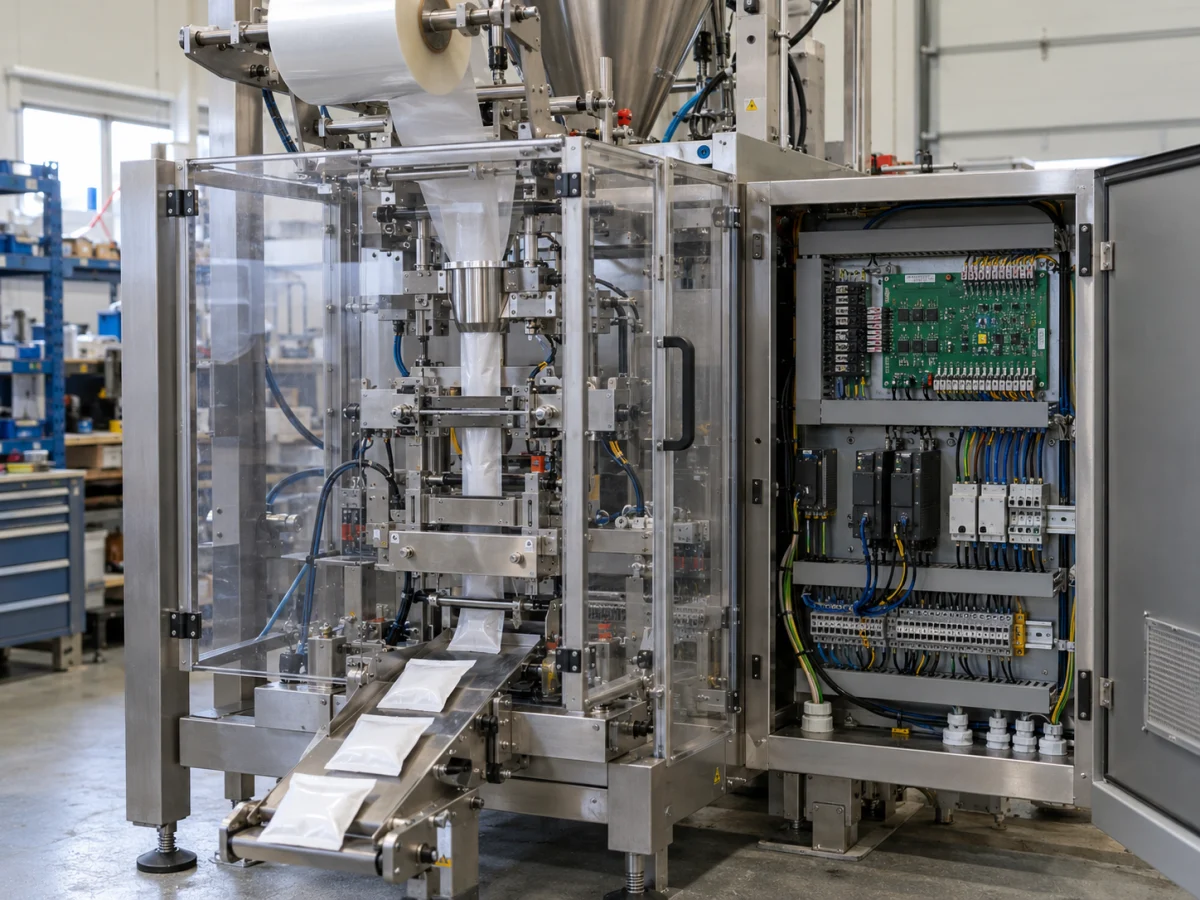
Electronics specific to the operation of your machine

Custom control board development for packaging machines

In a packaging machine, product arrival, film advance, completed filling and correctly timed jaw closure form one cycle. We translate these relationships into electronics when developing a new control system or adding a feature to an existing model. VOMRO develops custom PCBs, embedded software, displays and mechanical integration for packaging, filling and labelling equipment manufacturers. Machine trials and production preparation complete the work.

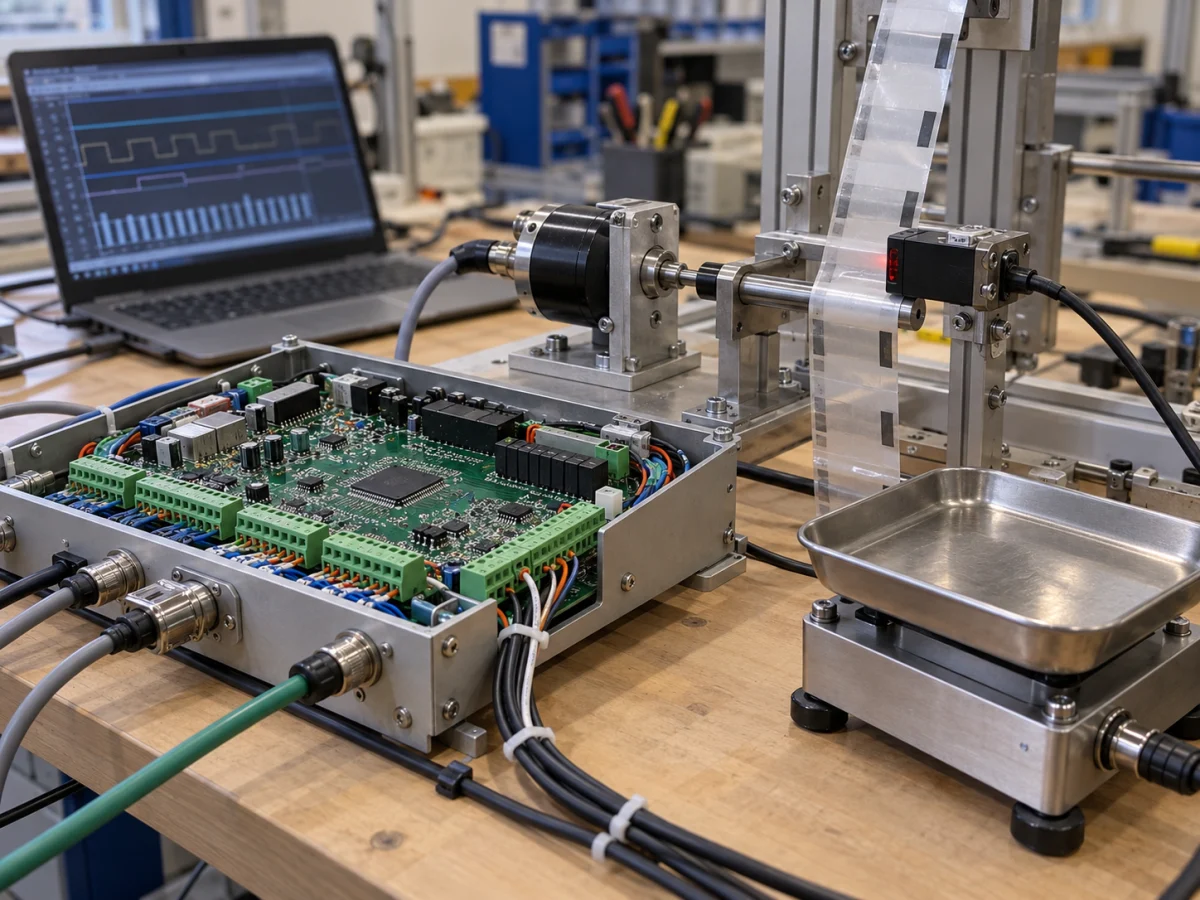
Custom electronic board connected to sensor and drive interfaces in a packaging machine's control compartment
Representative application image.
CustomerMachine and equipment manufacturers
ApplicationPackaging, filling and labelling
OutputValidated board, software and technical package

Your project, your product

Developed confidentially and delivered with source files.

We may work with a confidentiality agreement (NDA) before sharing technical details. At the end of the project, we deliver the source codes, design files and technical documents we have developed to you.

  • NDA before sharing technical information
  • Clear deliverables agreed at the outset
  • Source and technical files at the end of the project
Our confidentiality and delivery process

VOMRO engineering approach

Together, we define what happens in each cycle and in which order.

Each production-line unit performs a different task. Vertical packaging emphasises coordination of film and filling, while labelling depends on product position and mark detection. We develop operating scenarios from the machine, operator settings and product changeovers. Sensors, motors and valves are defined by their roles in those scenarios.

Some projects retain the PLC and add a custom weighing, sensor or communication board. Repeated machine families may justify broader control electronics tailored to the product. The choice considers volumes, maintenance, motion-control requirements and development costs. The shared aim is a machine-integrable solution that can be produced repeatedly.

01

Different control requirements for packaging, filling and labelling

Electronics scope follows the functions of horizontal or vertical packaging, premade-pouch filling, liquid filling, capping and labelling units. One machine may only count passing products; another may stop filling by weight or track film using registration marks. First, define the product path and expected result at each station.

List the board's connections to the existing machine, controlled loads and displayed information. Shared-board use in new models requires separate assessment of options and capacities. Machine videos, operating drawings, existing connections and packaging samples help make the initial scope concrete.
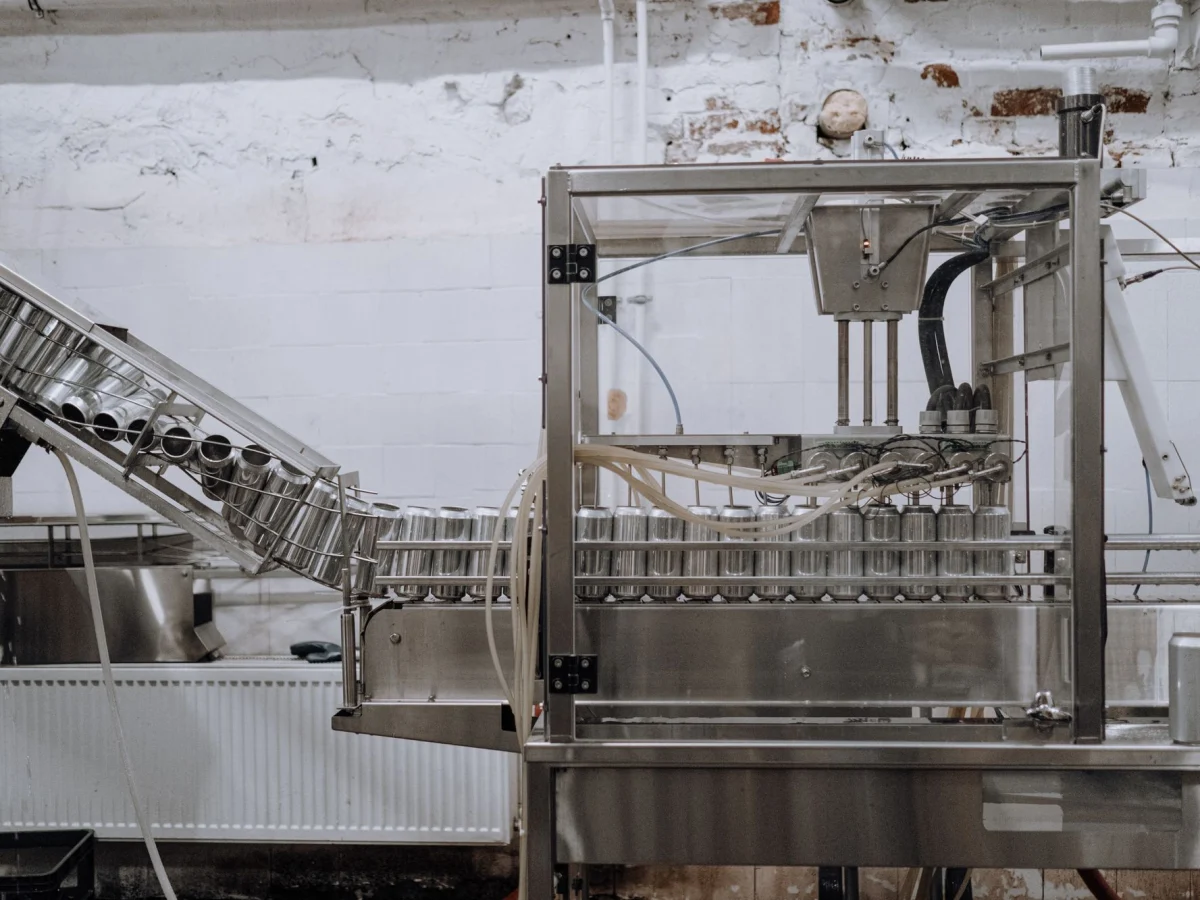
Aluminium cans travelling on a conveyor and a filling station with a protective enclosure
A conveyor and filling equipment working together on a packaging line.
02

Matching photoelectric-sensor and encoder information to the machine cycle

A photoelectric sensor detects a passing product or film mark. An encoder can report motion magnitude and direction. Assess signal type, mark spacing and minimum pulse duration. Electronics inputs are designed to capture events correctly throughout the machine's intended operating range.

Software must identify which cycle stage each detected event belongs to. Define responses to missing products, two consecutive products or missing marks. Restarting after a stop and manual jogging belong to the same flow. Detection is checked on the actual machine as film, product colour and speed change.

03

Reaching target quantities with filling and weighing boards

Powders, granules and liquids do not use one filling method. Load cells, flowmeters or existing dosing mechanisms can be considered. Target quantity, product behaviour and repeatability become requirements. Measurement circuits, embedded software and mechanical feeding are developed together.

Tare, vibration, continued material flow and residual product after stopping can affect weighing results. Slowdown and stop points are tested using the actual product, with settings adjusted from recorded prototype results. Production and service calibration steps are defined, and valid settings for each model are linked to its hardware and software versions.

04

Monitoring sealing jaws and heating sections

The heater, temperature sensor and switching device are selected for the sealing jaw's actual thermal behaviour. Where there are multiple zones, each zone's measurement and settings are addressed separately. Cold starts, product passing through during operation and extended idle periods are examined. The display clearly shows both the temperature setpoint and the measured value.

The shutdown or warning response to a disconnected sensor or unexpected heating is defined. The control board's role is assessed alongside the machine's independent safeguards. Trials use the actual packaging material and process conditions. Since sealing also depends on pressure, contact time and mechanical arrangement, control tests are complemented by the machine manufacturer's process trials.

05

Developing custom electronics alongside a PLC

Measurement, high-speed counting or a device-specific communication function can be added to an existing PLC system. The information the board receives and produces is clearly defined between the two teams. Inputs and outputs, data units, update intervals and the meaning of a connection loss are documented in a shared interface specification.

Where motor or servo drives are used, the manufacturer's command and feedback options are reviewed. The control board's role is given a clear boundary within the machine architecture. Independent systems required for functions such as motion safety and emergency stopping are assessed within the project scope. The prototype is operated with the existing controller and actual drives to test communication and transition behaviour.

Packaging control board test setup with a registration mark sensor, encoder and weighing platform
Representative application image.
06

Product changeovers, recipe screens and service access

We jointly identify which settings change and which mechanical interventions are needed when the operator switches products. A recipe may contain quantities, times and other valid parameters associated with a product name. Authorised setting limits, recipe selection and the status of an interrupted cycle are presented through a clear user workflow.

Display position, button or touchscreen selection, the wiring harness and control board mounting are resolved alongside the mechanical design. Connector access and board replacement during servicing are considered. Required production counters, stop reasons and event logs can be added. If the manufacturer wants remote monitoring, access permissions and the information to transmit are defined while preserving the machine's local control requirements.

07

Validation from the bench to the actual machine

Power supplies, sensor inputs, outputs and the display are checked on the first PCB. Scenarios such as cycle start, missing product, counting, filling and stopping are then tested with the machine. Test products, speed ranges and acceptance results are specified at the outset. Changes observed during trials are therefore recorded together with the conditions in which they occurred.

Cable lengths, electrical effects from motors, control cabinet temperature and maintenance access are also examined on the prototype. Pilot production can begin after the required revisions. A test fixture can be prepared for programming, checking inputs and outputs, and loading model-specific settings. Final machine acceptance trials are planned as a separate stage that complements functional checks on the board.

08

Delivery with your machine's source and manufacturing files

Mechanical drawings, process information and operating details of your machine may be shared when discussing your project. At your request, we can arrange a confidentiality agreement before technical information is exchanged. The electronics, software, display, mechanical and testing scope is defined during quotation. Editable sources and production outputs to be delivered are clearly specified in the same list.

At project completion, deliverables include the schematic and PCB sources, embedded software, display and CAD files developed within scope, together with the bill of materials and programming and testing instructions. Applicable third-party licence terms are stated. We provide prototype PCB manufacturing and assembly support only for customer projects developed by VOMRO. Recorded revisions and approval results provide an organised basis for subsequent model and component changes.

How it works

A clear process from start to delivery.

Not every project looks the same; however, the measurable requirement, controlled revision, and field verification steps remain unchanged.

  1. 01

    Define the machine cycle

    Identify the product path, sensor events, loads, recipes and acceptance results.

  2. 02

    Develop the electronics and software

    Develop the custom board, existing PLC interfaces, display and mechanical connections together.

  3. 03

    Test with the product and packaging

    Test the machine cycle and changing conditions with actual sensors, loads and materials.

  4. 04

    Prepare for repeat production

    Deliver approved versions, programming and testing procedures with the source files.

Frequently asked questions

Before starting the project

The technical scope, deliverables and test plan are clarified together according to the requirements of your project.

Can you add a custom board to our existing packaging machine?

The existing control architecture, sensors, drives and expected new function are examined. A suitable additional development scope can be prepared for measurement, counting, communication or the user interface.

Can we develop a weighing or sensor board while retaining our PLC system?

Yes. An integrated architecture can be established by defining the roles and data exchange of the PLC and custom board. Connection and fault conditions are tested with the actual control system.

How do you determine filling quantity and packaging speed?

The product, mechanical assembly, sensors and target operating range are evaluated together. Acceptance criteria are documented at the outset; the prototype is tested with the actual product and packaging, and the results are recorded.

Can we use the same board in different machine models?

Board and model options can be planned by identifying shared and varying functions. Software, hardware and parameter versions are matched, and the necessary validation scope is prepared for each variant.

Will our machine information remain confidential, and can we receive the sources?

We can work under an NDA before technical information is shared. Electronics, software, display and mechanical sources, together with production and test files, are supplied according to the deliverables list defined in the contract.

Can we work with NDA before sharing technical details?

Yes. We can complete the NDA arrangements together before you share your project's technical details.

Let's start with your idea

Let's talk about the product you dream of and the need you want to solve.