
Improve control of your own device

Custom control board design for water treatment and dosing equipment

You may want to manage your treatment or dosing device's pumps, valves, measurements and display according to your own operating process. VOMRO develops custom circuit boards and embedded software for RO, filtration, backwashing and chemical dosing equipment. Mechanical layout, user interfaces, prototypes and testing are planned within the same project. We support development of your branded product from the initial idea to manufacturing files.

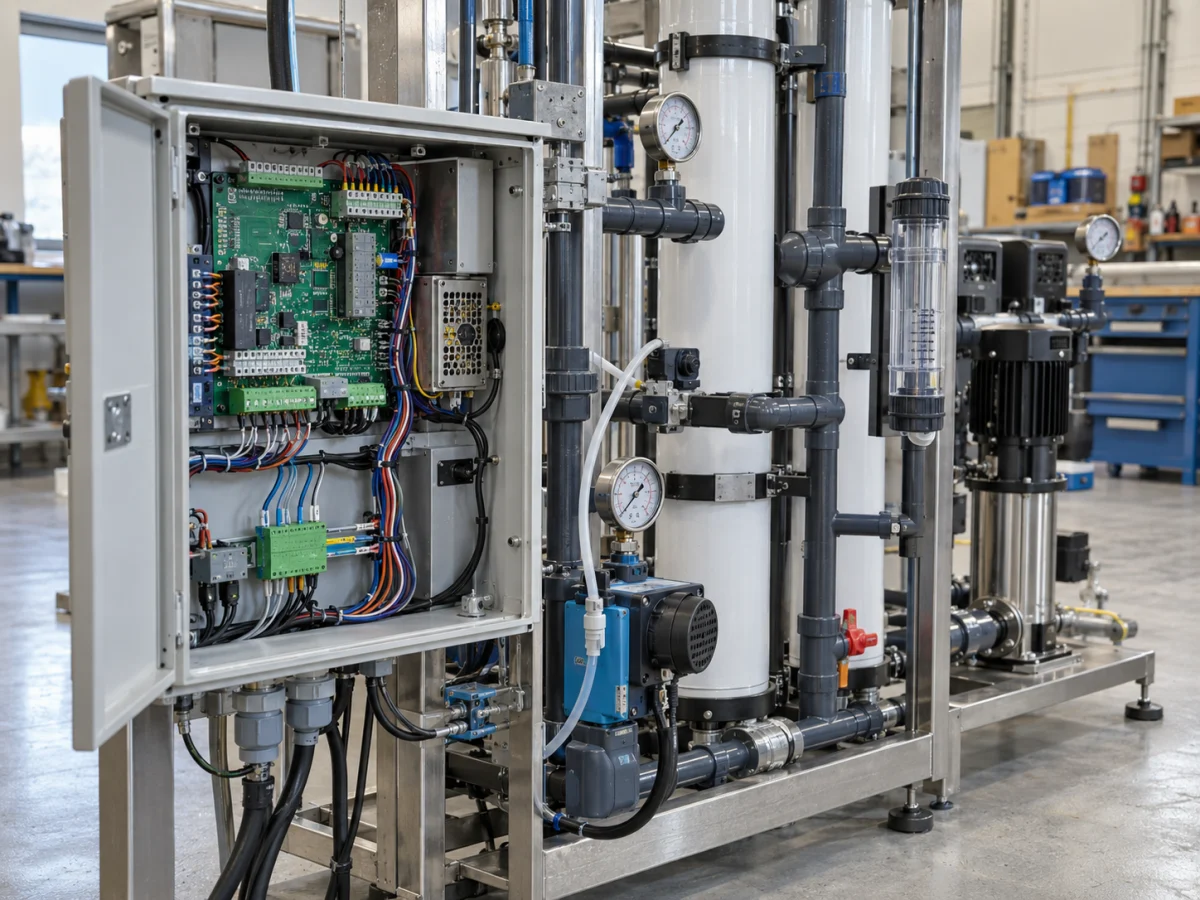
Custom electronic control enclosure designed together with pump and measurement connections on a water treatment frame
Representative application image.
ApplicationRO, filtration and dosing equipment
DevelopmentCustom PCB, software, display and mechanics
DeliveryPrototypes, testing and comprehensive technical files

Your project, your product

Developed confidentially and delivered with source files.

We may work with a confidentiality agreement (NDA) before sharing technical details. At the end of the project, we deliver the source codes, design files and technical documents we have developed to you.

  • NDA before sharing technical information
  • Clear deliverables agreed at the outset
  • Source and technical files at the end of the project
Our confidentiality and delivery process

VOMRO engineering approach

We turn the water's path through the device into a clear control flow.

A treatment device checks initial conditions, enters production, washes when required and stops when its tank is full. A dosing unit may use flow, the target measurement and chemical level to decide how to operate. We break the manufacturer's process knowledge into these steps. Before design, define each step's entry conditions, activated equipment and completion criteria.

You may have a mechanical prototype, an existing board or only an idea. Sensors, pumps, valves, connection drawings and target quantities are assessed together. We plan functions shared between the first model and later product family, allowing board design to develop alongside assembly and everyday use.

01

Which water treatment and dosing equipment can we develop?

Compact reverse-osmosis devices, industrial RO units, filter-backwash systems, auxiliary softening controls and standalone dosing devices start with different requirements. One may prioritise tank levels and output volume; another may need sequential washing of multiple filters. I/O is determined from those scenarios.

We can develop all controls for a new product or add measurement and communication modules to an existing cabinet. Your team's filtration and fluid-equipment knowledge provides essential electronics inputs. Flow diagrams, sensor lists, equipment power supplies and operator tasks help establish the initial scope.
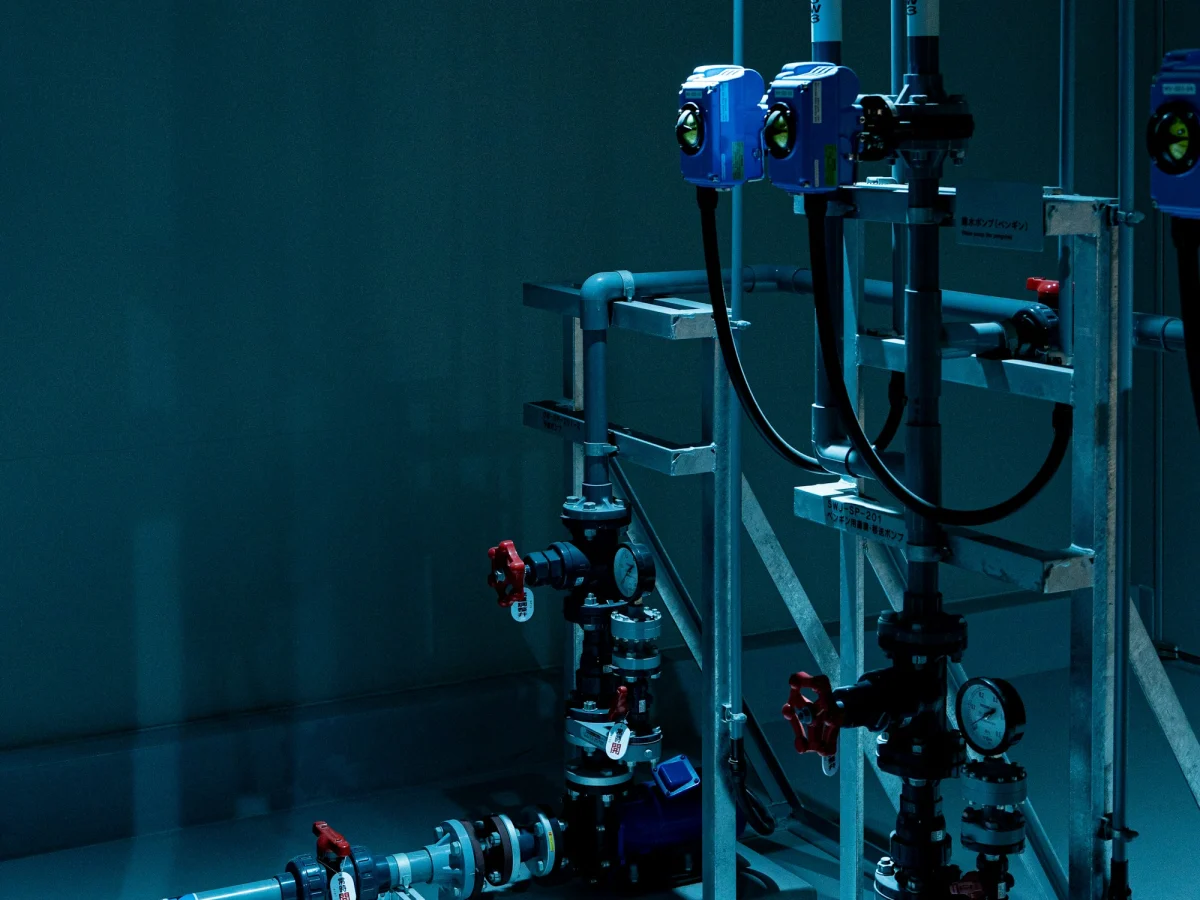
Valves, electric actuators and pressure gauges in industrial piping
Piping, valves and pressure-monitoring equipment in a fluid system.
02

Production, washing and standby sequences for RO control boards

In reverse-osmosis control, supply conditions, pressure, tank levels and washing steps interact. Pump-start conditions, valve states after production and washing timing are defined with the manufacturer. Software runs that flow while the display shows production, standby or a condition requiring intervention.

Operating bands can prevent frequent starts and stops as tank levels change. Measurements and entry conditions are rechecked after power returns. Define in advance how an interrupted washing cycle resumes. Each model's conditions are tested on the prototype and incorporated into software and the test plan.

03

Integrating pH, ORP, conductivity and flow measurements

Probe type, measurement range, connection and cable affect circuit selection. Reading an electrode directly differs from receiving current, voltage or digital output from an existing sensor. The measurement section is developed with the actual sensor. Calibration steps and required temperature compensation are defined upfront.

Electrical effects from pumps, long sensor cables and mounting position can change readings. These conditions are examined on the prototype. Disconnected sensors, out-of-range readings and valid measurements are handled as distinct states. Conductivity-to-TDS calculations require assessment of the conversion and water properties; technical documentation explains how the displayed value is obtained.

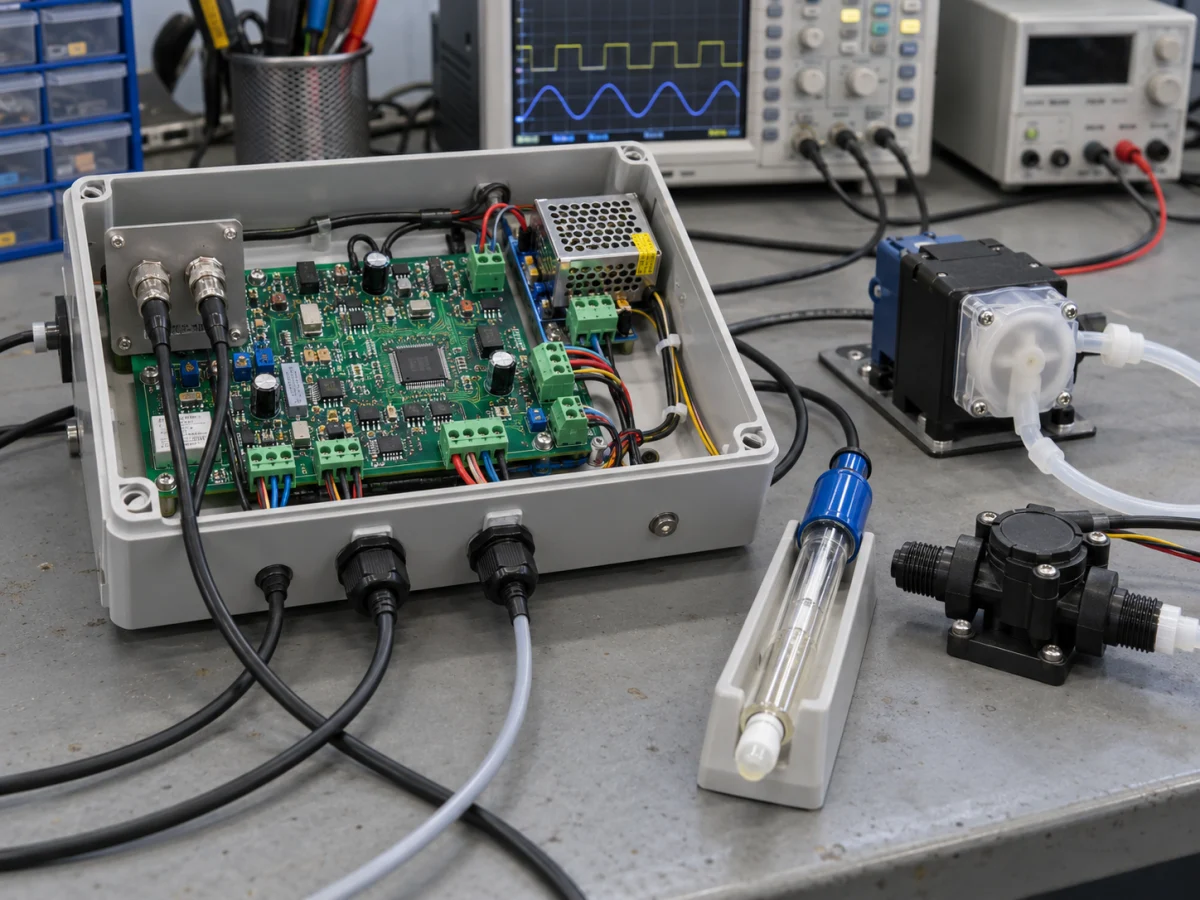
A custom measurement board tested with a probe, flow sensor and dosing pump
Representative application image.
04

Dosing pump control based on measured demand

Dosing can follow time, water throughput or a measured value. The fluid, pump, mixing delay and process objective determine the method. In measurement-controlled dosing, the delay before pump action reaches the sensor matters. Settings must be tested on the actual system, responses observed and operating ranges adjusted when necessary.

Software can include chemical-tank level, water-flow confirmation and standby commands. Define behaviour when measurements are invalid or operating limits are reached. Record settings agreed with the manufacturer and test results. The physical dosing outcome is assessed through trials using the actual pump and fluid.

05

Electronic integration with pumps, valves and existing drives

Power supply, startup current and switching frequency are assessed for pumps, solenoid valves and contactor coils. Where required, the board provides command and status interfaces to an existing drive. Power connections and sensitive sensor inputs are laid out together, with protection and isolation appropriate to device conditions.

A pump command, drive feedback and actual flow are different information. Document which feedback is used and what delays mean. In multi-valve operations such as filter washing, transition order is assessed with the mechanics. Actual-load prototype tests check connections, heating and operation.

06

Device displays, maintenance information and remote monitoring

Users should easily understand production state, readings and reasons for waiting. Daily settings, probe calibration and model parameters have appropriate permissions. Maintenance counters, runtime and event history can follow servicing needs. Alarm explanations should clearly indicate the checks required.

Existing interfaces such as RS485/Modbus, or Ethernet, Wi-Fi and cellular connections where required, can be developed. Plan recorded data, access permissions and local operation during connectivity loss. Delayed records retain timestamps and device identity. A server dashboard can be scoped to monitor multiple devices.

07

Assessing enclosure layout and prototypes under operating conditions

Separation from fluid paths, condensation risk, sensor wiring and service access affect mechanical design. Position the display, PCB mounting holes, cable glands and connectors together. Assembly can be tested using a 3D sample or sheet-metal enclosure. Gaskets and materials follow actual environmental and cleaning conditions.

After bench testing, evaluate startup, normal operation, sensor loss and power interruptions on the target device. Measurements are linked to board and software versions. Electronic control, independent protections and process-validation work are defined upfront. Conformity tests required by intended use also form part of the plan.

08

Production preparation for your brand, confidentiality and source delivery

Functions approved on the first prototype become programming and test procedures for subsequent boards. Model settings, calibration data and hardware versions are organised. Prototype PCB fabrication and assembly support are offered only within customer projects developed by VOMRO. Post-pilot revision and production decisions follow the results.

We can work under an NDA before technical details are shared. Schematics, editable PCBs, embedded software, displays, mechanical CAD and test documents to be developed are listed upfront. Sources and manufacturing files produced within scope are delivered at completion, with third-party licence conditions stated separately. The resulting technical package supports future models and maintenance.

How it works

A clear process from start to delivery.

Not every project looks the same; however, the measurable requirement, controlled revision, and field verification steps remain unchanged.

  1. 01

    Let's define the flow and conditions

    Define device diagrams, measurements, loads, operator actions and production objectives together.

  2. 02

    Let's develop the control system

    Prepare the PCB, embedded software, display and mechanical layout around the same workflow.

  3. 03

    Let's validate with the actual setup

    Connect sensors, pumps and valves to the prototype and test normal and interrupted operation.

  4. 04

    Let's complete the manufacturing package

    Deliver approved sources, model settings, programming and test instructions.

Frequently asked questions

Before starting the project

The technical scope, deliverables and test plan are clarified together according to the requirements of your project.

Can you develop a custom control board for our existing RO device?

The scope can follow assessment of sensors, pumps, valves, connections, display and desired sequence. A mechanical sample or device drawing can provide the starting point.

Can we use pH, ORP and conductivity measurements in one device?

A suitable architecture follows assessment of probes, measurement ranges and mounting conditions. Required calibration and validation with actual sensors are included.

Can software manage dosing pumps and filter-washing sequences?

Sequences can follow the manufacturer's process and equipment conditions. Inputs, transitions, waiting periods and fault responses are tested together on the prototype.

Can we monitor several devices remotely?

Suitable connectivity and a server dashboard can be included. Permissions, recorded data and offline device behaviour are defined upfront.

Which files do you deliver at project completion?

Board, software, display and mechanical sources developed within the contractual scope, together with manufacturing and testing documents, are delivered. We can work under an NDA before technical sharing.

Let's start with your idea

Let's talk about the product you dream of and the need you want to solve.