VOMROIndustrial Technology

Home appliances, electrical devices and electronic products

End-of-line (EOL) test station

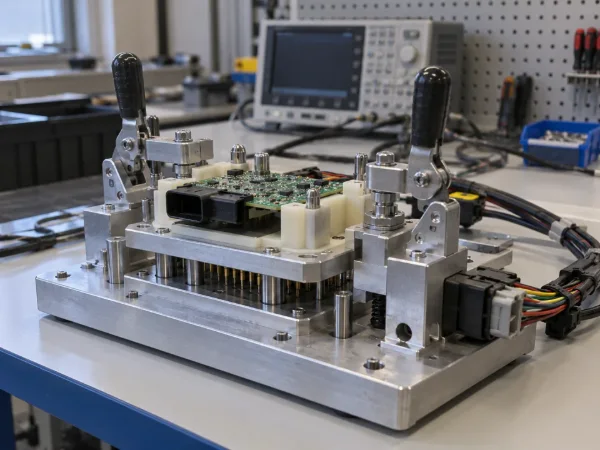
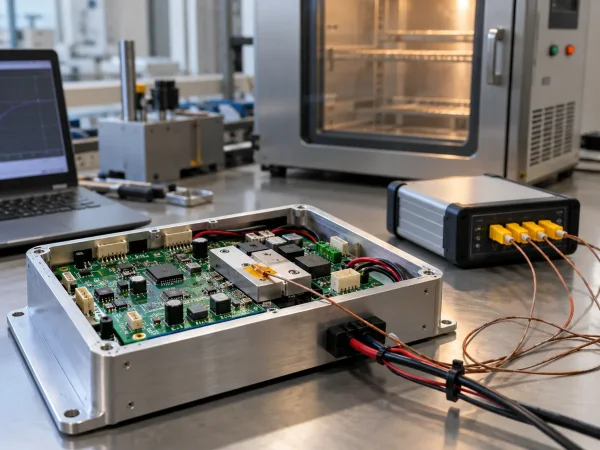
An end-of-line test station checks every product coming off the production line one last time before packaging. Electrical safety tests such as earth continuity, insulation resistance and high voltage, as well as functional tests of the motor, heater, sensors and control board, are performed automatically in a defined sequence in one station. The product is identified by its barcode, the result is recorded with the serial number and a label is printed for the passed product. VOMRO designs the station for your product and your line speed.

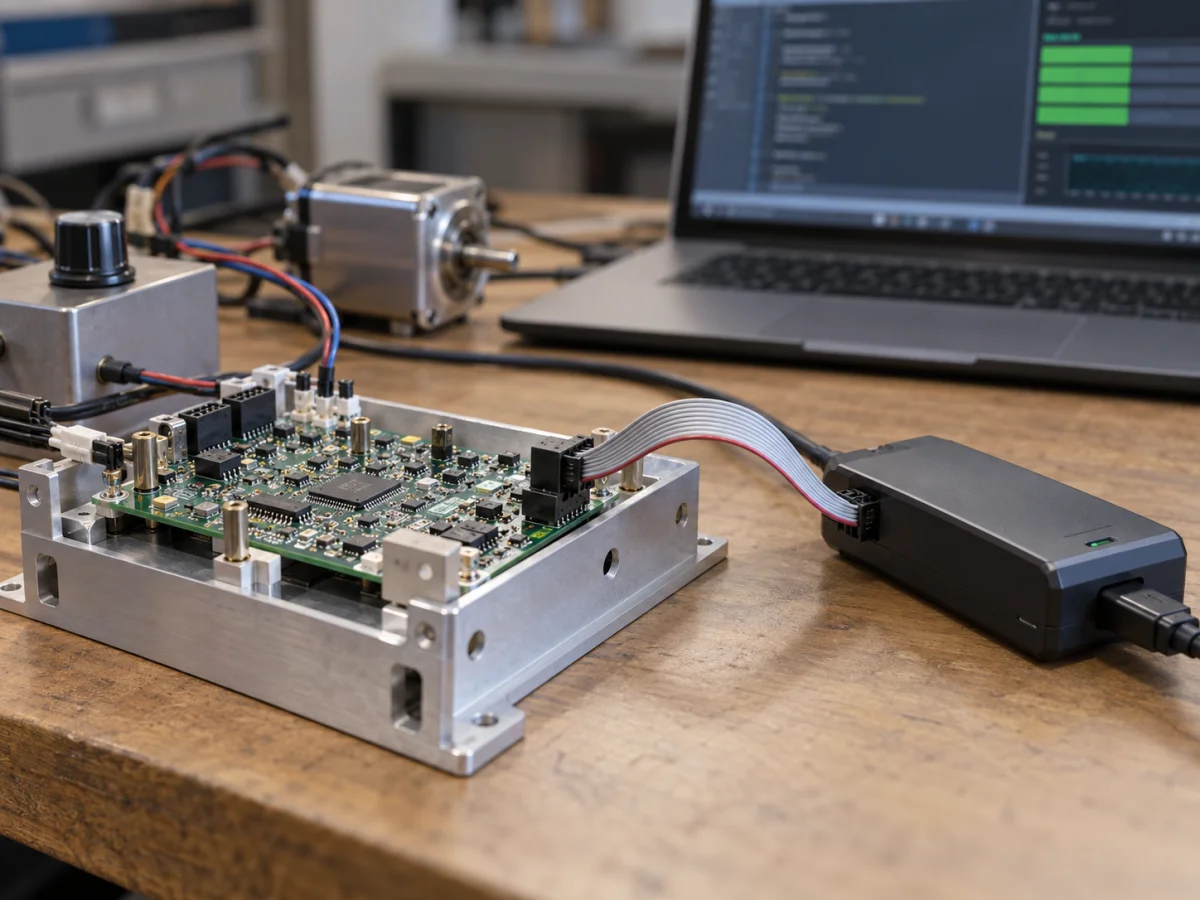
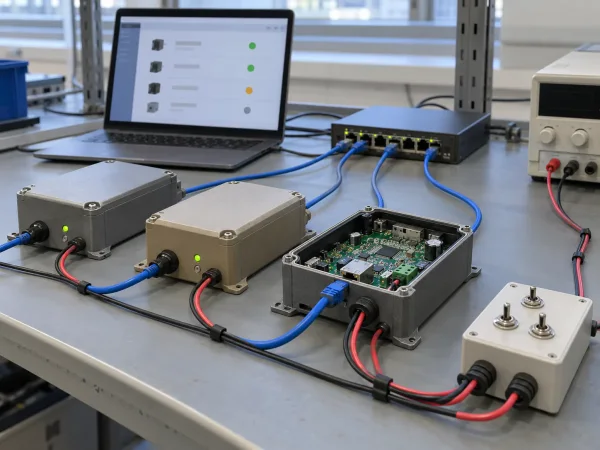
Devices connected to a network switch with power and Ethernet cables on a test bench, a laboratory power supply and a laptop screen showing the status of each device
The product is identified by barcode; the test steps run in sequence and the result is displayed and recorded.
Safety testsEarth continuity, insulation, high voltage
FunctionMotor, heater, sensor, control board
Data loggingBarcode, label, MES / ERP transfer

Why it matters

Every product leaving the line should be tested as if it were the first one in the customer's hands.

The safety of an electrical product is ensured not only by its design but by the correct assembly of every single unit. A loose earth screw, a pinched cable or damaged insulation can be a hazard to the user even if the product works. That is why, in many product groups such as household appliances, electrical safety tests are defined as routine production tests repeated on every unit.

Performing these tests with separate instruments, by hand and at different benches takes time and is prone to skipped steps. An end-of-line test station combines all steps in one flow, guides the operator and makes sure no product is packed with an incomplete test.

01

What does end-of-line testing cover?

End-of-line testing verifies before packaging that the product is both safe and working correctly. The scope varies by product; a typical electrical appliance includes the following steps:

  • Earth continuity: measuring the low resistance between accessible metal surfaces and the earth conductor.
  • Insulation resistance: verifying the insulation between live parts and the housing.
  • High-voltage (hipot) test: checking that the insulation withstands a defined voltage for a defined time.
  • Leakage current and power consumption: checking current and power values while the product is running.
  • Functional tests: operation of the motor, pump, heater, valve, sensors, display and buttons.

Which tests are performed with which values is determined by the standard your product is subject to and by your own quality plan. For household appliances, for example, IEC 60335-1 defines the routine tests to be carried out during production in a separate annex.
02

How are electrical safety tests integrated?

Electrical safety tests require measurement accuracy and traceable calibration. For these tests we integrate calibrated commercial safety testers into the station, control the instrument from the station software and read its results automatically. This way measurement reliability comes from the calibrated instrument, while the flow and logging come from the station.

The high-voltage test is the most critical step of the station for operator safety. The test only starts with the protective cover closed or with two-hand control; when the cover is opened, high voltage is cut immediately, and the product is discharged at the end of the test.

  • Integration of a calibrated safety tester into the station
  • Protective cover, safety switch and two-hand control
  • Warning light while high voltage is active
  • Automatic discharge and safe disconnection after the test
03

Functional tests: does the product really work?

A product that passes the safety tests may still not work correctly: the motor may run in reverse, a sensor may not be connected or the wrong firmware may have been loaded onto the control board. Functional tests take the product through a short operating scenario.

  • Motor and pump current, direction of rotation and speed check
  • Heater current and power rating
  • Reading sensors and switches
  • Communication with the control board via a service protocol, firmware version check
  • Operator-confirmed or camera-based check for display, LEDs and buttons

If the product's control board has a service or test mode, the station can communicate with the board through this mode and run the tests much faster and in more detail. If you develop the board's firmware yourself, we recommend defining the test mode together.

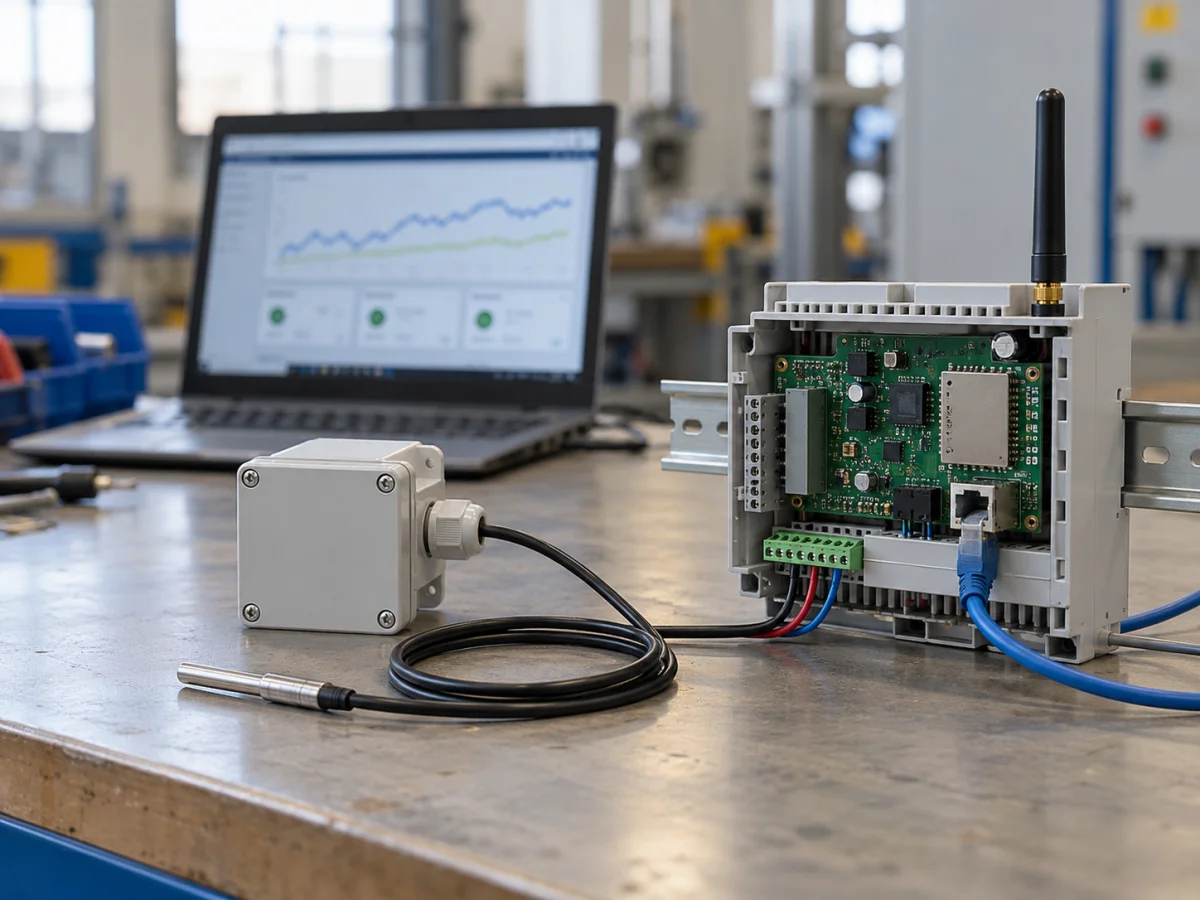
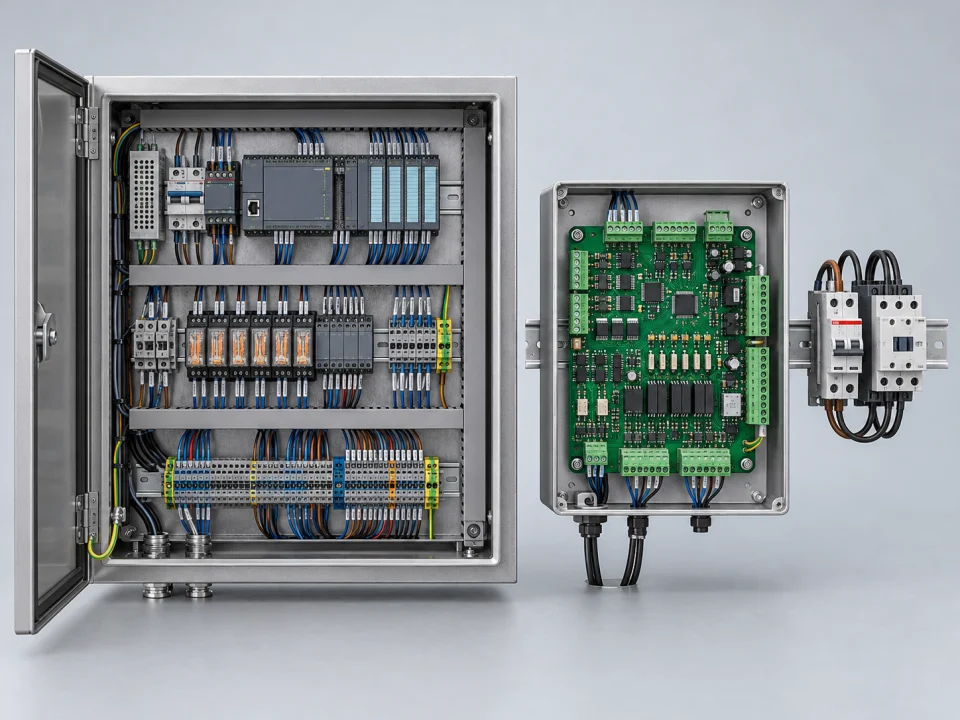
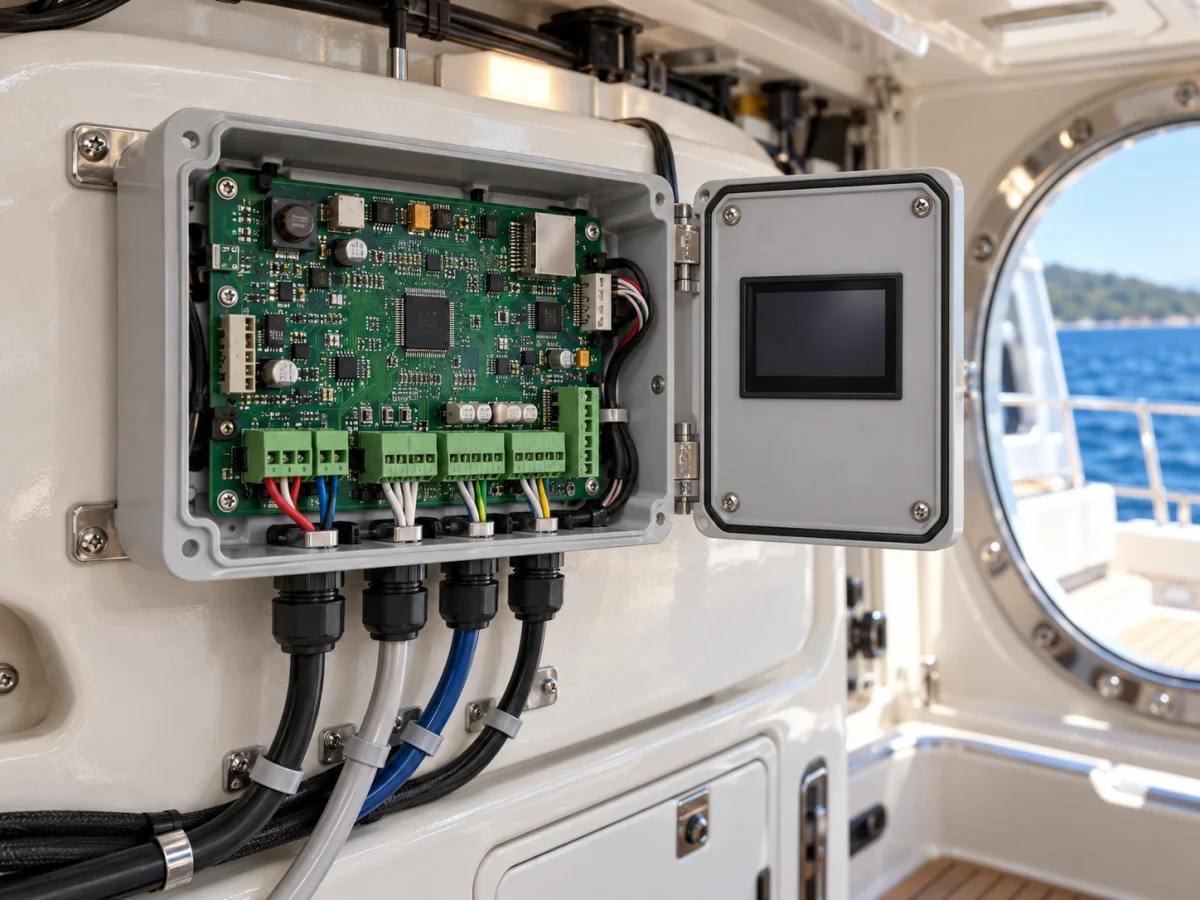
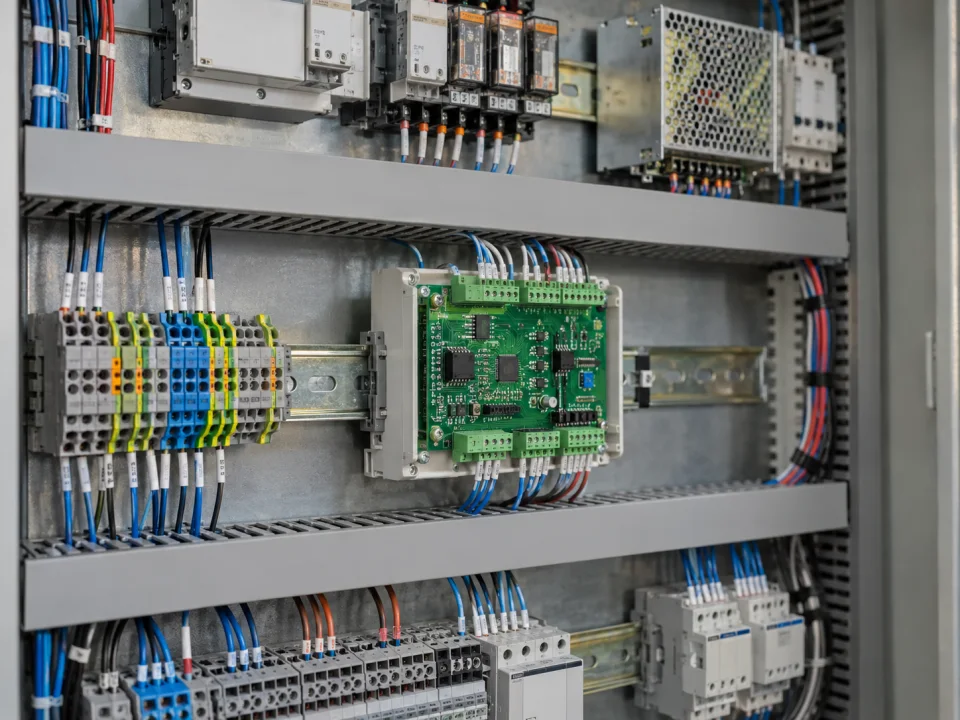
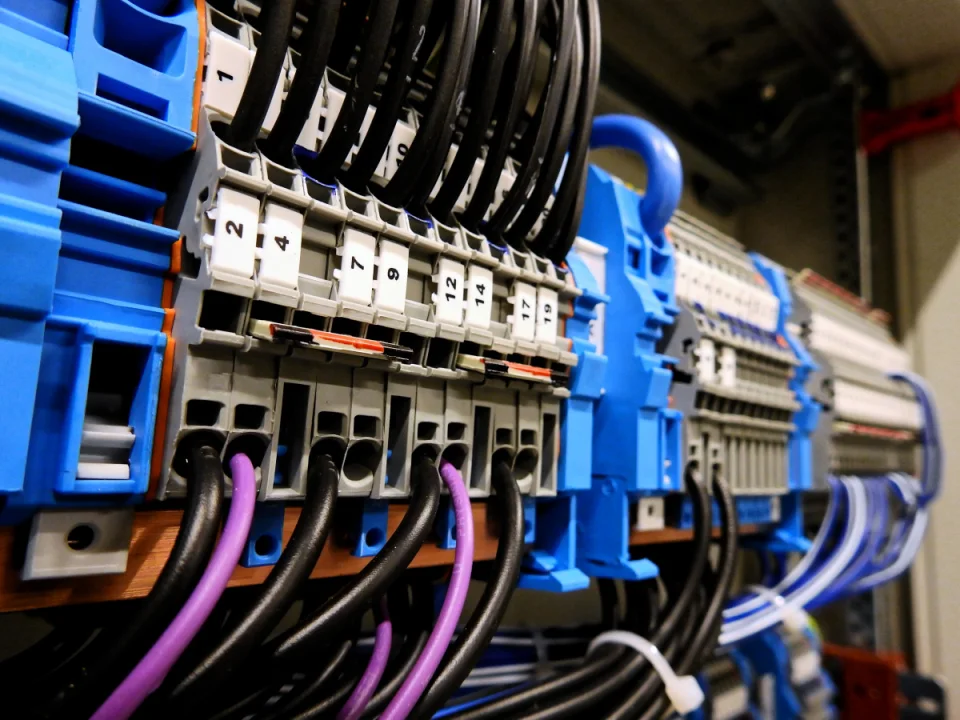
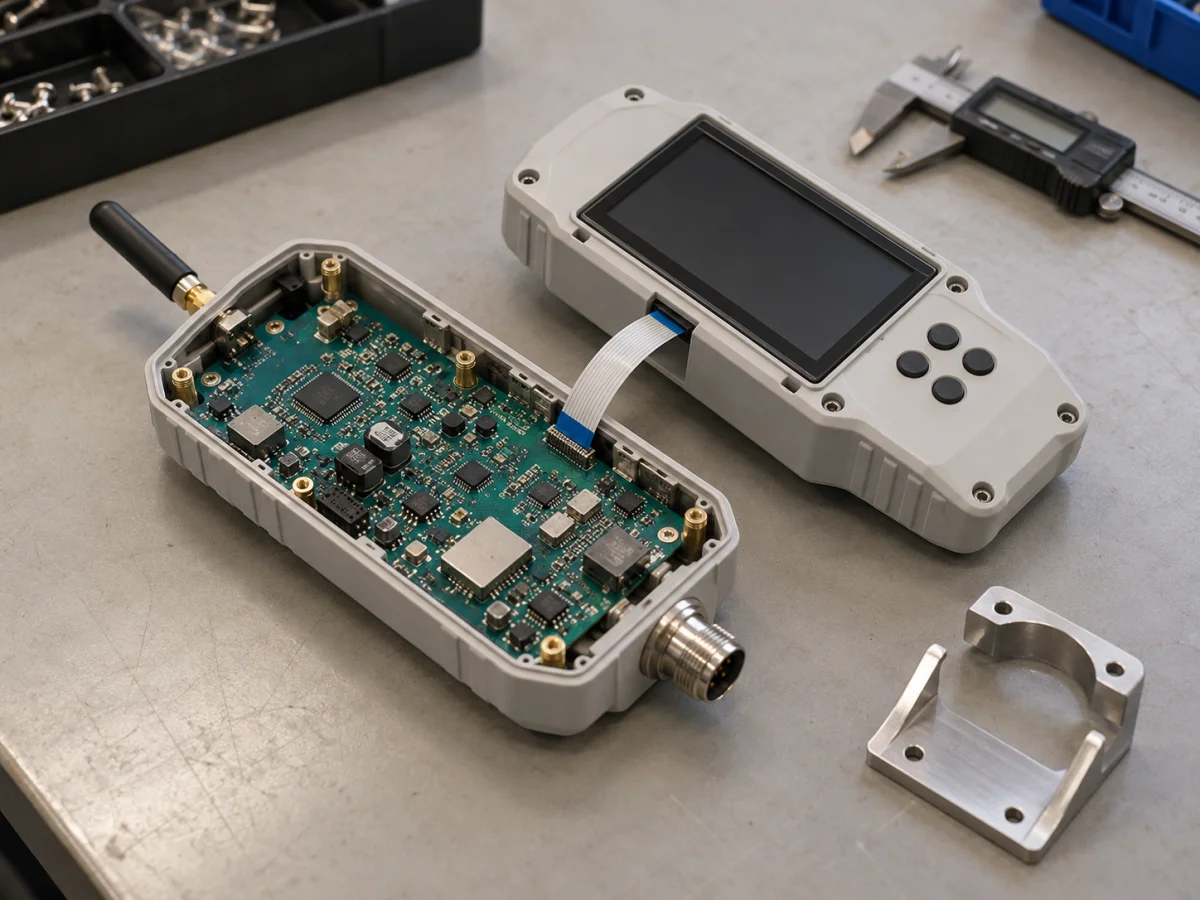
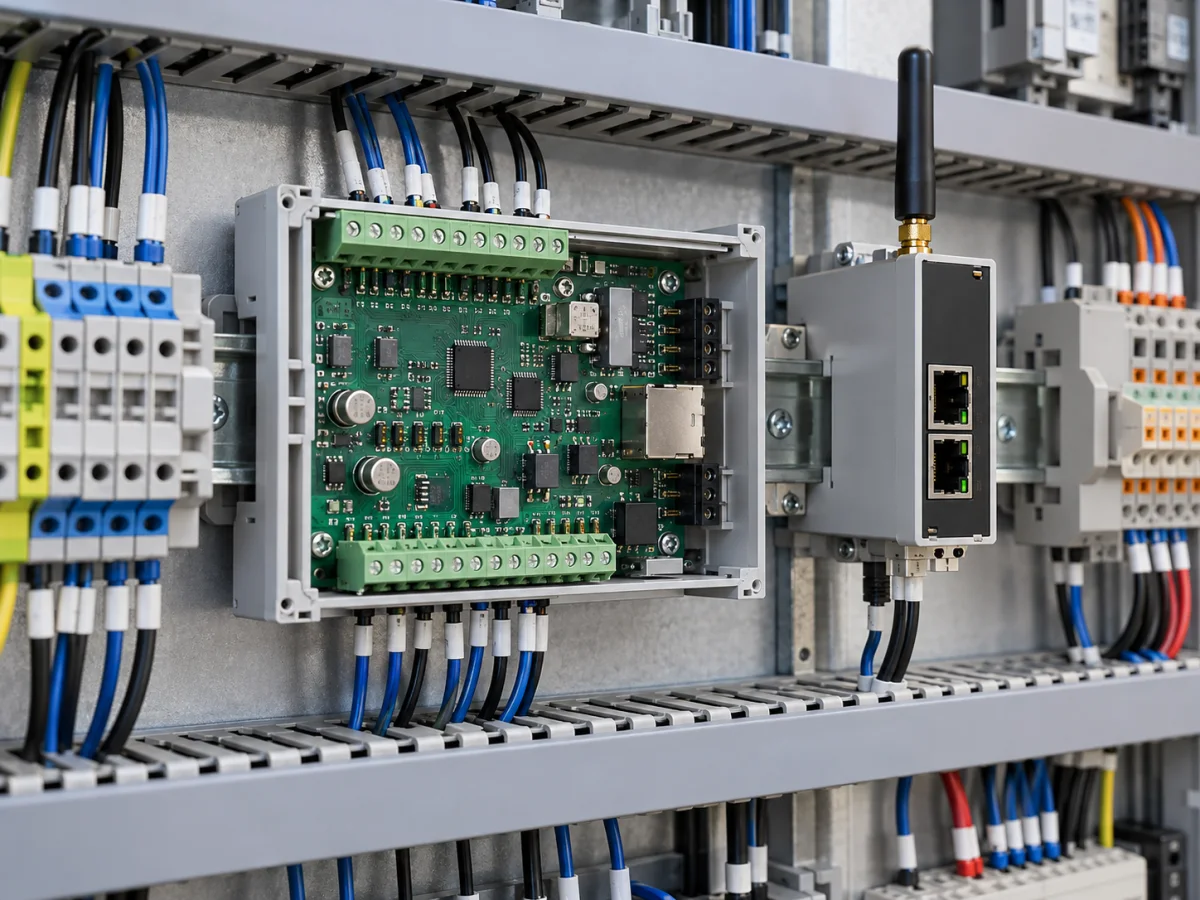
Custom DIN-rail mounted control board and Ethernet communication module inside a cabinet
The station control system manages communication between the test instruments, the product and the factory network.
04

Operator guidance and error prevention

End-of-line stations are usually used by different operators on different shifts. The test sequence and connections should not be left to the operator's memory.

  • Automatic selection of the test recipe for the product model when the barcode is scanned
  • Step-by-step on-screen guidance with images
  • Preventing missing connections with connection and fixture presence sensors
  • No label for a product whose test is not complete
  • Preventing a rejected product from being retested without approval

A stack light and audible alarm let other operators on the line see the station status from a distance.

05

Logging, labelling and MES / ERP integration

The test result of every product is stored with all measured values, linked to its serial number. When a complaint comes in from the field, you can find within minutes on which day, at which station and with which values that product was tested.

  • Logging of all measurements with the serial number
  • Printing a product label or test label for the passed product
  • Hourly output, first pass yield and failure distribution reports
  • Transfer to the MES / ERP system via a database, files or an API
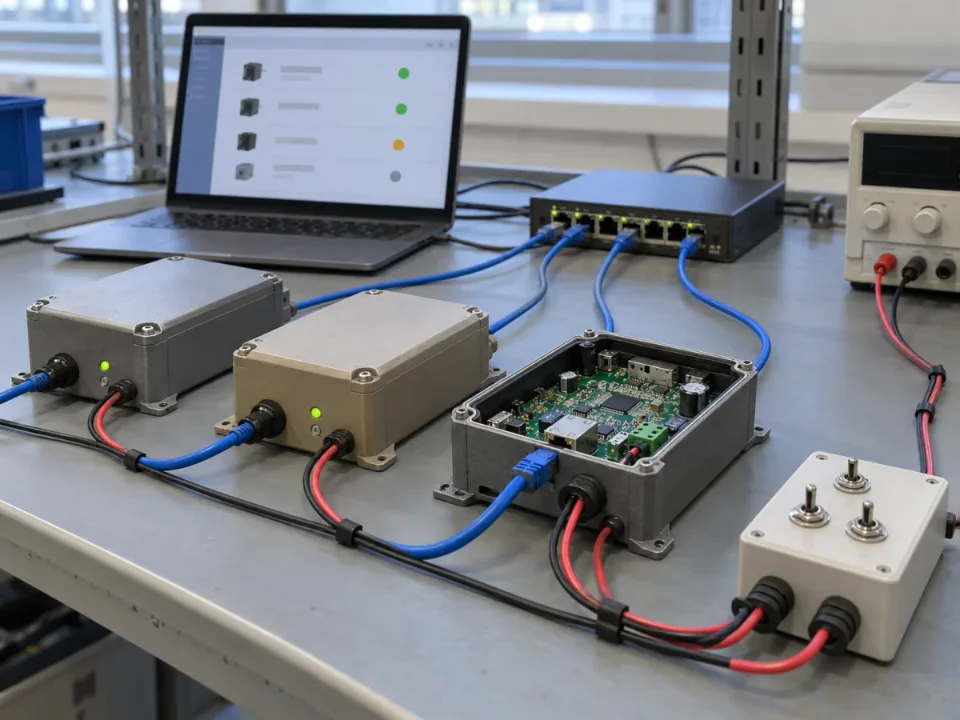
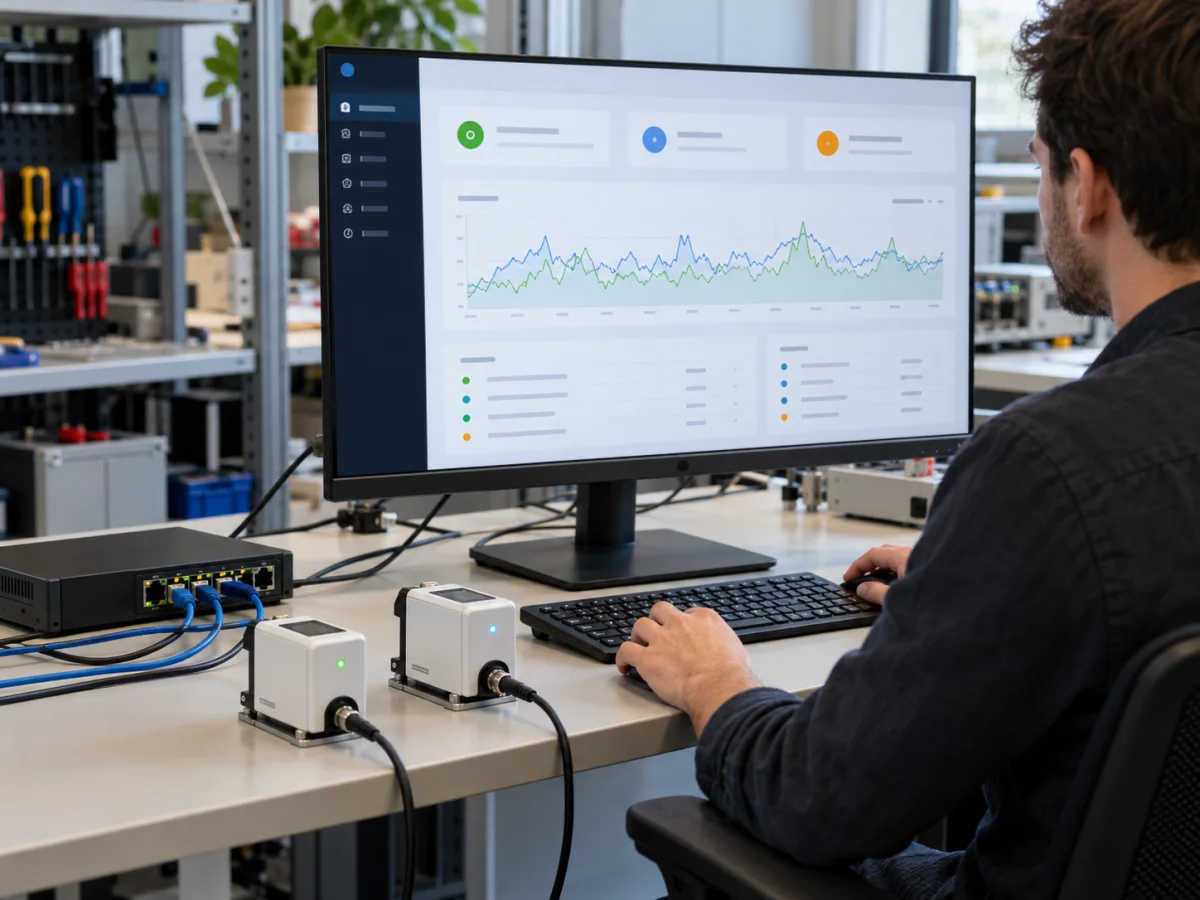
Management dashboard showing the status and measurement data of connected devices
Test results and failure distributions can be monitored on a dashboard for production management.
06

Station design that matches the line speed

If the station's test time exceeds the line's cycle time, the end of the line becomes a bottleneck. The total test time is calculated together with the time for the product to enter and leave the station and to be connected.

When the time is not enough, there are several solutions: splitting the tests across two stations, testing several products in parallel, shortening connection with quick-connector fixtures or moving some tests to an earlier point on the line. We can design the station with automatic loading and unloading on a conveyor line or with manual loading at a separate bench.

Technical options

Features configured for your product and your line

Test scope and values are defined at the quotation stage according to your product's standard and your quality plan.

End-of-line test station configuration options
FeatureOptions
Electrical safetyEarth continuity, insulation resistance, high voltage, leakage current (with a calibrated tester)
FunctionMotor, pump, heater, valve, sensor, display and button tests
Product communicationService protocol, UART, RS-485, CAN, Modbus; firmware version check
MeasurementCurrent, voltage, power, speed, temperature, pressure
GuidanceRecipe selection by barcode, step-by-step screen with images
Data loggingMeasurement logging with serial number, label printer, reports
IntegrationMES / ERP transfer, stack light, conveyor and PLC communication
SafetyProtective cover, safety switch, two-hand control, emergency stop, discharge
LayoutIntegrated into the conveyor or a stand-alone test bench

Project process

From test plan to a working station

The station is designed according to your product's test plan and your line speed.

  1. 01

    We draw up the test plan

    We define the product models, tests, limit values and target cycle time.

  2. 02

    We design the station

    We plan the mechanical layout, test instruments, safety measures and software flow.

  3. 03

    We build and validate

    We build the station and verify with known-faulty products that the tests catch the fault.

  4. 04

    We commission it on your line

    We hand over with operator and maintenance training, operating instructions and support.

Frequently asked questions

About end-of-line test stations

Product models, the test list and the target cycle time are enough to start sizing the station.

Can we use our existing safety tester?

In most cases, yes. Instruments with a remote control interface (such as RS-232, USB or Ethernet) can be controlled from the station software. When you share the instrument model, we assess the integration options.

Can several product models be tested at the same station?

Yes. A separate test recipe is defined for each model; when the barcode is scanned, the right recipe is selected automatically. If the connections differ between models, interchangeable adapters are used.

How long are test results stored?

The retention period is set according to your quality policy. Results are kept in a local database and optionally transferred to your factory server or MES system.

Can the operator skip test steps?

No. The test flow is managed by the software; the product is not labelled until all steps are complete. Retests and limit value changes require an authorized password and are logged.

What determines the price?

Test scope, the test instruments to be integrated, the number of product models, the level of automation, conveyor integration and MES requirements.

Let's start from your line

Let's fully test every product before it is packed.

Share your product models, the tests you need to perform and your line speed; we will prepare a suitable station design and a quotation.

We develop products for companies, manufacturers and institutions. We do not take on student, thesis or hobby projects, or requests for PCB fabrication/assembly only, board repair or board copying.