VOMROIndustrial Technology

Automotive, home appliance and machine wire harnesses

Wire harness tester

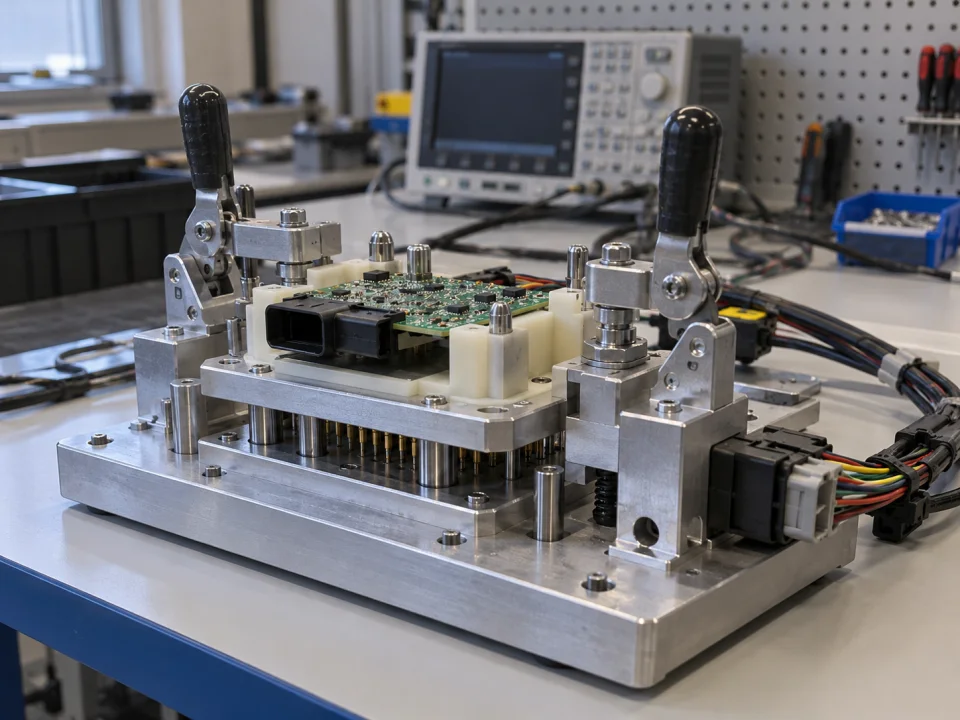
A wire harness tester connects the connectors at both ends of the harness to test adapters and checks that every point is connected to the right point, and only to the right point. Open circuits, shorts and cross-wiring are found within seconds; the fault is shown on screen with the pin number and a label is printed for the passed harness. VOMRO testers are configured for your harness connectors and point count.

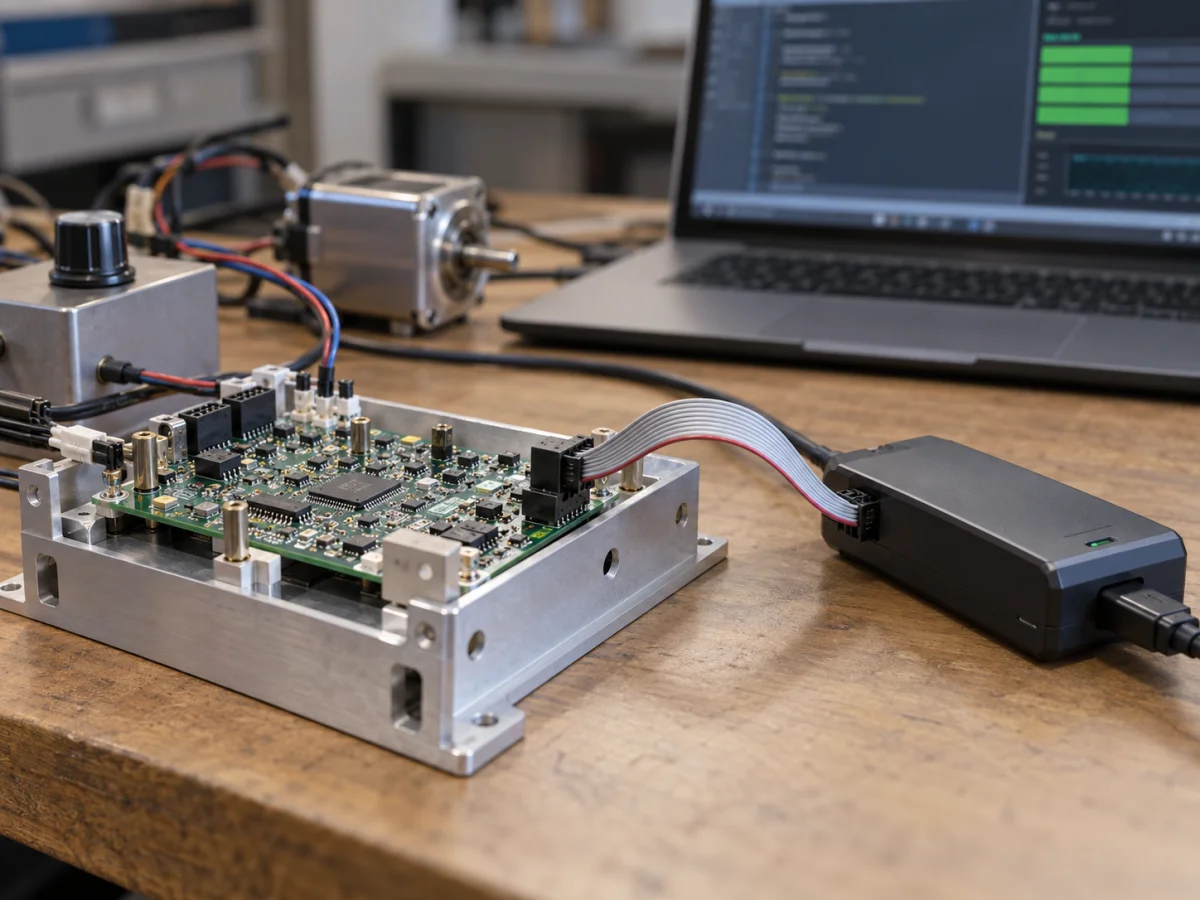
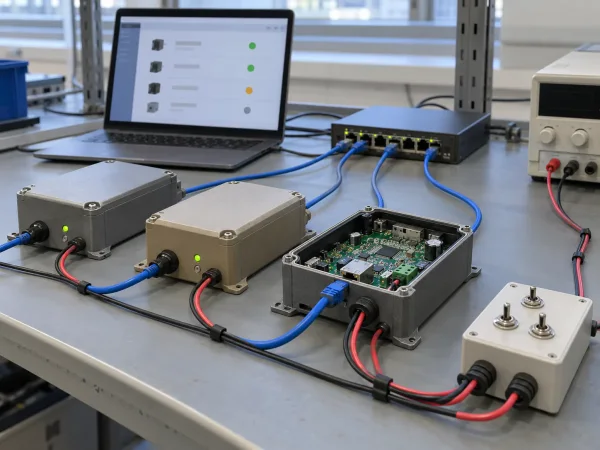
Engineer running a test with a laptop among cables, connectors and test boards connected to an aluminium profile test frame
The harness is plugged into the test adapters; a fault is shown on screen with the relevant pin numbers.
TestOpen circuit, short circuit, miswiring
ConnectionConnector-specific test adapters
Data loggingLabel, serial number, test report

Why it matters

A single wrong pin can stop an entire vehicle or machine.

Wire harnesses are mostly made by hand; hundreds of wires, dozens of connectors and thousands of pins are fitted in the same shift. Even the most careful operator occasionally swaps two wires, does not fully seat a pin or leaves out a wire.

If this error goes unnoticed on the assembly line, the product does not work at the customer, and in automotive it can even lead to a recall. A wire harness tester checks 100% of harnesses and provides the traceability the automotive supply chain expects.

01

How is wire harness testing done?

The tester drives each test point in turn and checks whether this signal appears at any of the other points. This produces a connection map showing which point is connected to which, and it is compared with the expected map.

  • Open circuit: no connection between two points that should be connected.
  • Short circuit: points that should not be connected touch each other.
  • Miswiring: a wire is inserted into the wrong pin or two wires are swapped.
  • Missing wire: the connection is missing altogether.

This test uses low voltage and current and does not damage the harness. Even a harness with hundreds of points is tested in a few seconds.
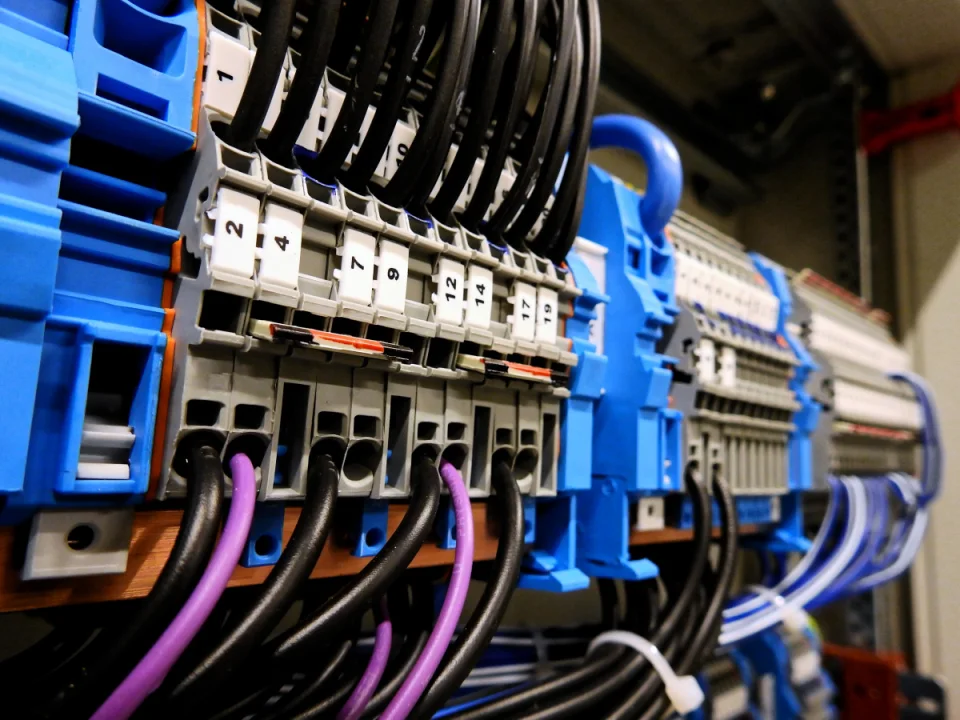
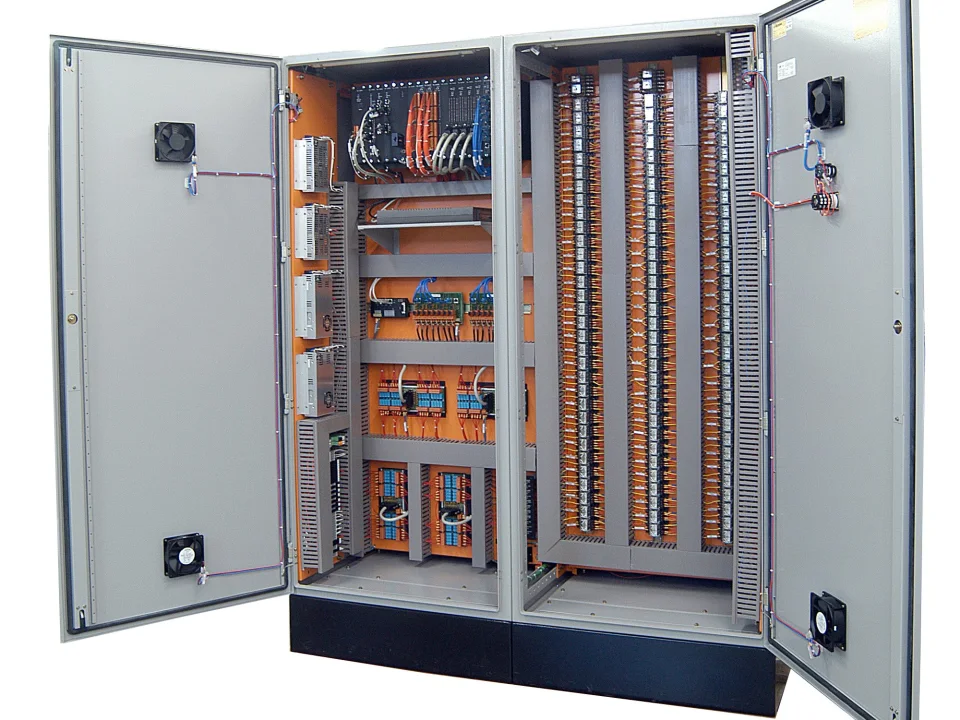
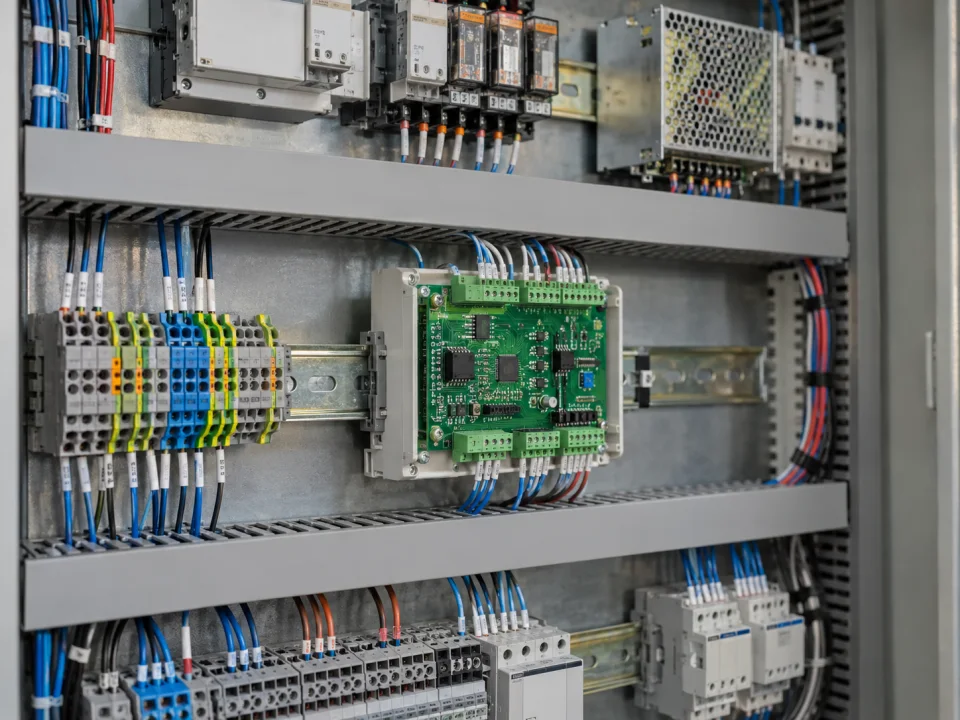
Many wires connected to numbered terminal blocks
Every wire being connected to the right point means far more connections than can be checked one by one on the assembly line.
02

Learning from a golden harness and the connection list

There are two ways to introduce a new harness type. The first is to plug a verified reference (golden) harness into the tester and let it learn the connection map automatically. The second is to import the harness connection list (which pin of which connector goes to which pin) as a table.

Learning from a golden harness is fast, but if the reference harness itself contains an error, that error is learned too. That is why we recommend comparing the learned map with the connection list and, where possible, doing the first setup from the connection list. Each harness type is saved as a program; when the barcode is scanned, the right program opens automatically.

03

Connector test adapters and pin seating check

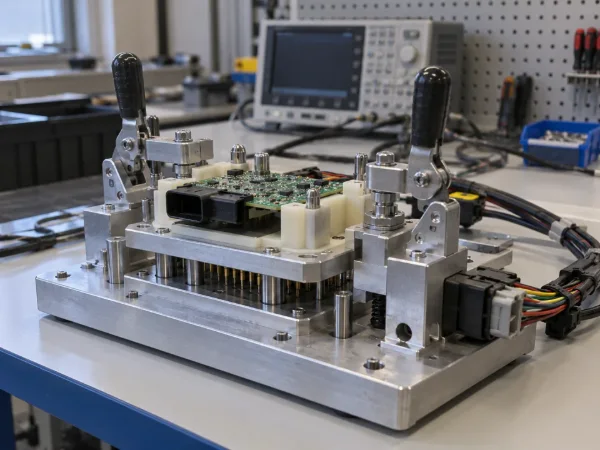
The most used and most worn part of the tester is the test adapters into which the harness connectors are plugged. For each connector type, a special adapter with a mating connector or spring-loaded pins is prepared.

Some faults are electrically invisible: the pin is inserted into the connector but not fully latched. It makes contact during the test and backs out under vehicle vibration. To catch this, adapters with spring-loaded pins push the pin with a controlled force; when a pin that is not fully seated backs out, contact is lost and a fault is reported. The presence of clips, locks and connectors can be checked with sensors.

  • Connector-specific, easily replaceable test adapters
  • Pin seating (push-back) check with spring-loaded pins
  • Presence sensors for connector locks, clips and accessories
  • Adapter recognition to prevent use of the wrong adapter
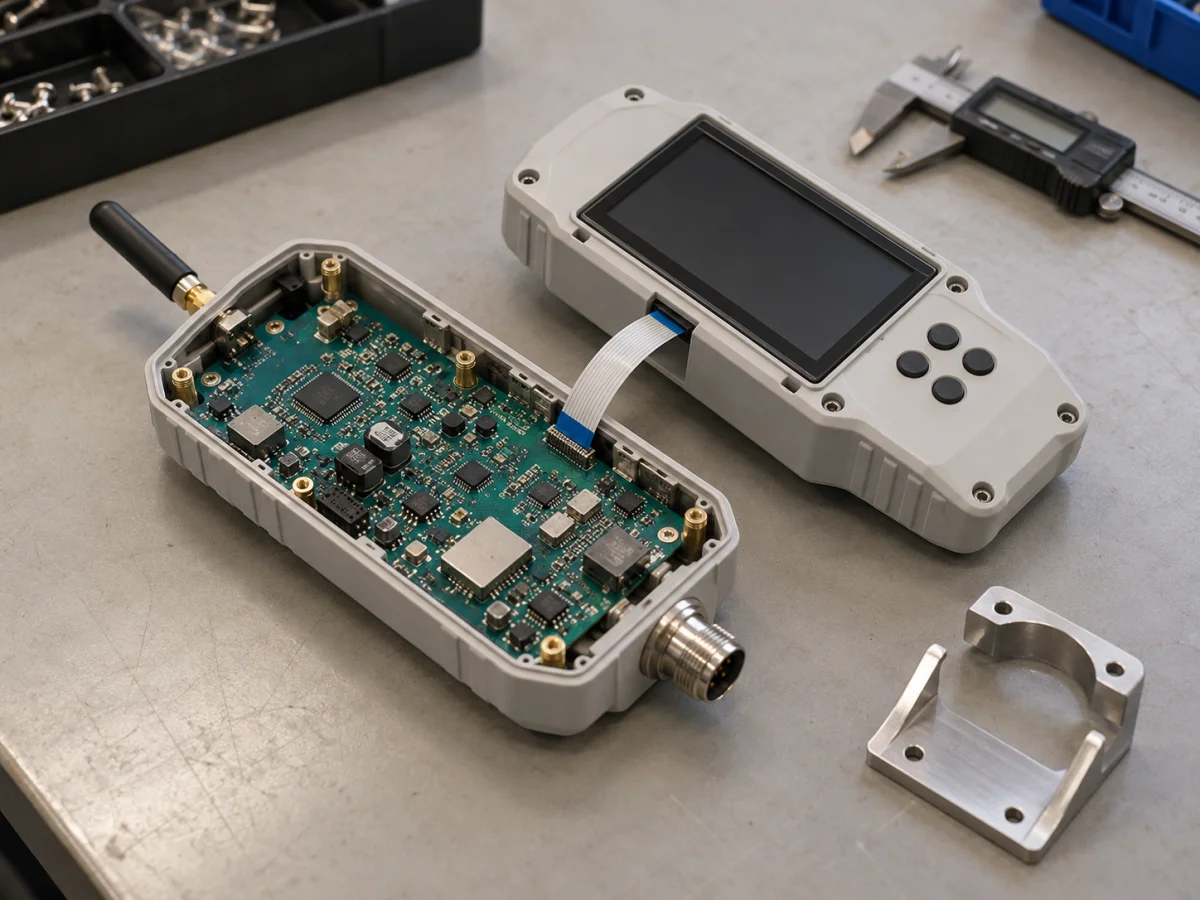
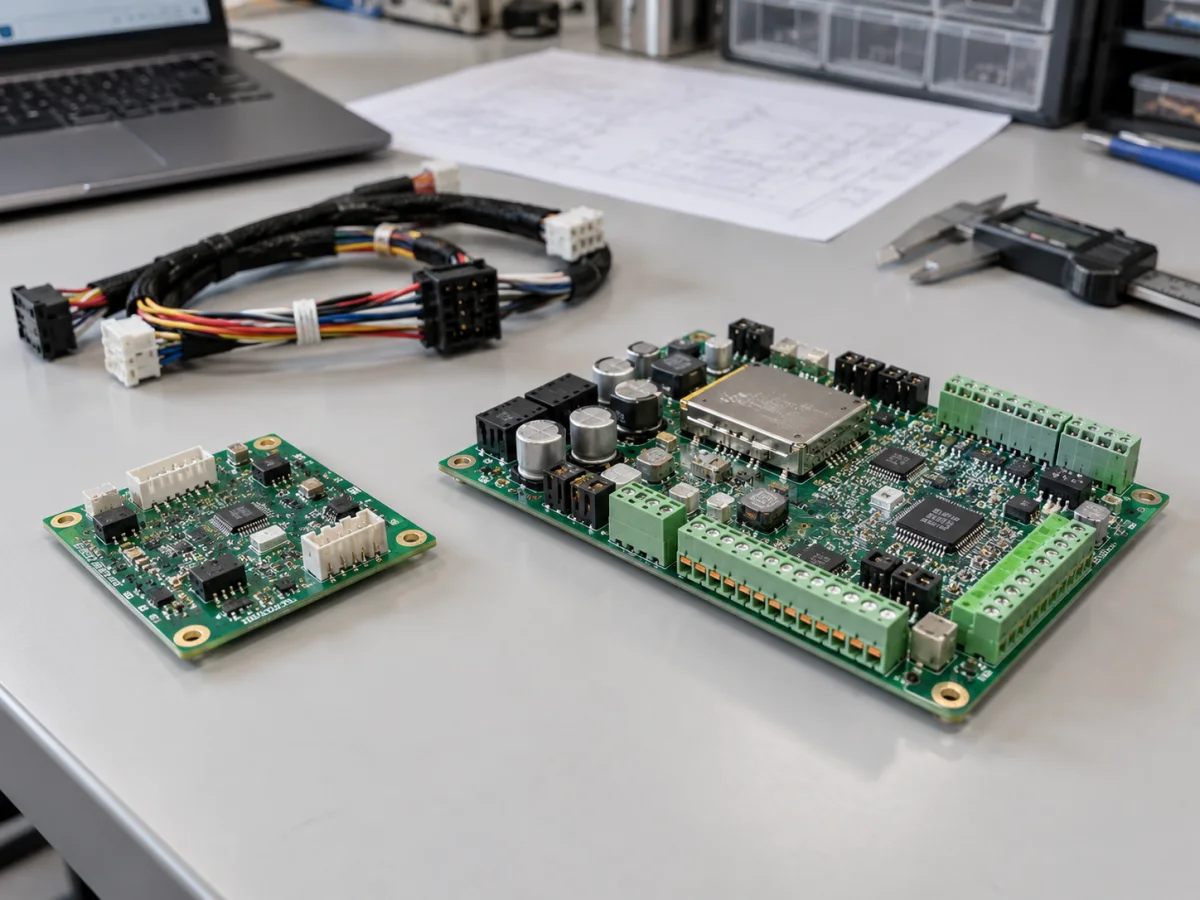
Wire harness with different connector types at its ends, the electronic boards it connects to and a caliper
A separate test adapter is prepared for each connector type in the harness; the harness is plugged into the adapters and tested in one go.
04

Resistance, diode and insulation tests

A simple continuity test is sufficient for many harnesses. Some harnesses, however, require additional measurements:

  • Low resistance measurement: to check splice and crimp quality; 4-wire measurement for very low resistances.
  • Component test: value and polarity check of resistors, diodes or capacitors integrated into the harness.
  • Insulation resistance and high-voltage test: verification of insulation between wires in harnesses carrying high voltage or critical for safety.

High-voltage tests require additional safety measures: an enclosed test area, lid safety interlocks and a qualified operator. We decide together whether these tests are needed based on where the harness is used and the customer specification.

05

Labelling, traceability and error prevention

Automatically printing a label for a passed harness prevents an untested harness from getting into a shipment. The label can contain the harness code, serial number, date and station information and can be adapted to your customer's label format.

  • Automatic label for passed harnesses; fault ticket for rejected ones
  • Test record with serial number and operator information
  • Preventing a faulty harness from being retested without approval
  • Reports by day, shift and fault type
  • Optional MES / ERP transfer

Fault reports show at which pin and which operator station most errors are made; this information can be used to improve assembly instructions and training.

06

Test integrated into the assembly board

Adding test points to the assembly board on which the harness is built catches the error as soon as the harness is complete. The test starts without the operator removing the harness from the board, the faulty pin is indicated with a light and the correction is made on the spot.

A separate test bench, on the other hand, suits testing harnesses from different assembly lines at a single point. Which setup is right depends on your harness variety, production volume and line layout.

Technical options

Features configured for your harness

Point count and test scope are set according to your harness connectors and the customer specification.

Wire harness tester configuration options
FeatureOptions
Test pointsModularly expandable to the harness pin count
Basic testsOpen circuit, short circuit, miswiring, missing wire
Additional testsLow resistance (4-wire), diode / resistor, insulation and high voltage
AdapterMating connector or special spring-pin adapter; pin seating check
SensorsPresence check for clips, locks and connectors
ProgrammingLearning from a golden harness or importing a connection list
InterfaceScreen in Turkish or English, faulty pin shown by number and light
Data loggingLabel printer, barcode reading, serial number logging, CSV / MES
InstallationStand-alone test bench or integrated into the assembly board

Project process

From harness drawing to test line

The tester is prepared according to your harness connectors and your production layout.

  1. 01

    We review the harness

    We determine the harness drawing, connector types and point count.

  2. 02

    We design the adapters

    We finalise the connector-specific test adapters and the test scope.

  3. 03

    We program and validate

    We load the connection list and verify with known-faulty harnesses that the tester catches the error.

  4. 04

    We commission it on your line

    We hand over with operator training, a spare adapter list and operating instructions.

Frequently asked questions

About wire harness testers

A harness drawing or connection list and the connector part numbers are the fastest start for a quotation.

How many points can it test?

The tester has a modular design; the point count is set according to the total pin count of your harness and can be increased later by adding modules.

Can we test different harness types on the same tester?

Yes. Each harness type is saved as a separate program and the connector-specific adapters are changed. The right program can be opened by scanning a barcode.

How long do connector adapters last?

Adapter life depends on the number of mating cycles and the connector type. Worn mating connectors or spring-loaded pins are designed as replaceable parts; the test software can track the number of uses.

Is a high-voltage test necessary?

For most low-voltage signal harnesses, a continuity test is sufficient. Insulation and high-voltage tests are added for harnesses that carry high voltage, are safety-critical or where the customer specification requires them.

What determines the price?

The number of test points, connector variety and number of adapters, additional tests, labelling and traceability requirements.

Let's start from your harness

Let's test every harness completely before shipment.

Share the harness drawing or connection list and the connector types; we will prepare a suitable tester design and a quotation.

We develop products for companies, manufacturers and institutions. We do not take on student, thesis or hobby projects, or requests for PCB fabrication/assembly only, board repair or board copying.