VOMROIndustrial Technology

Multi-zone temperature control for plastic injection moulding

Hot runner temperature controller

A hot runner controller measures each manifold and nozzle heater in the mould as a separate zone and holds it at the set temperature. The VOMRO controller combines PID control, soft start for damp heaters, early detection of thermocouple and heater faults and communication with the injection moulding machine in one box. The number of zones, the mould connector and the interface are configured for your mould.

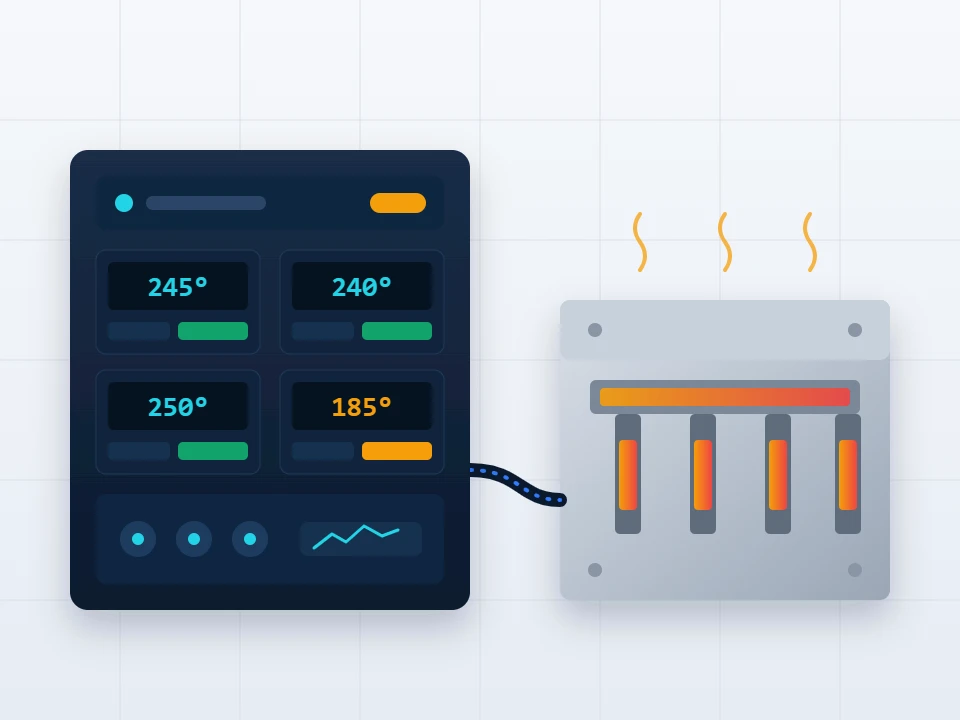
Drawing of a multi-zone controller showing zone temperatures and a heated hot runner manifold
Multi-zone temperature control and mould manifold.
Zones2–24 zones depending on the mould, modular
ControlPID, auto-tuning, soft start
ConnectionCabling matched to the mould connector

Why it matters

A few degrees of difference in the mould come back as defects in the part.

In a hot runner mould, the plastic stays molten throughout the manifold and nozzles. If the temperature of a nozzle drops, the part does not fill completely or the nozzle tip freezes; if it rises, the material degrades and stringing and discolouration appear. That is why every heater has its own thermocouple and its own control zone.

A good controller does more than hold the temperature; it tells the operator immediately when a heater fails open, a thermocouple is wired in reverse or a triac shorts. Seeing the problem before production stops directly reduces scrap and mould repair costs.

01

What does a hot runner controller do?

In cold runner moulds, the runner also solidifies with every shot and goes to scrap or the granulator. In a hot runner system, the runner is heated inside the mould and kept molten; this saves material, shortens the cycle time and makes part quality more consistent. The price of this advantage is that the temperature of every heater must be managed precisely.

The controller reads the actual temperature from each zone's thermocouple, compares it with the set value and adjusts the power delivered to the heater accordingly. Because manifold blocks and nozzles differ in mass and heat loss, each zone behaves differently; a single common setting does not give the right result for the whole mould.

  • Independent control zones for manifold and nozzle heaters
  • Set temperature held stable throughout the mould
  • Safe operation during heat-up, standby and start-up
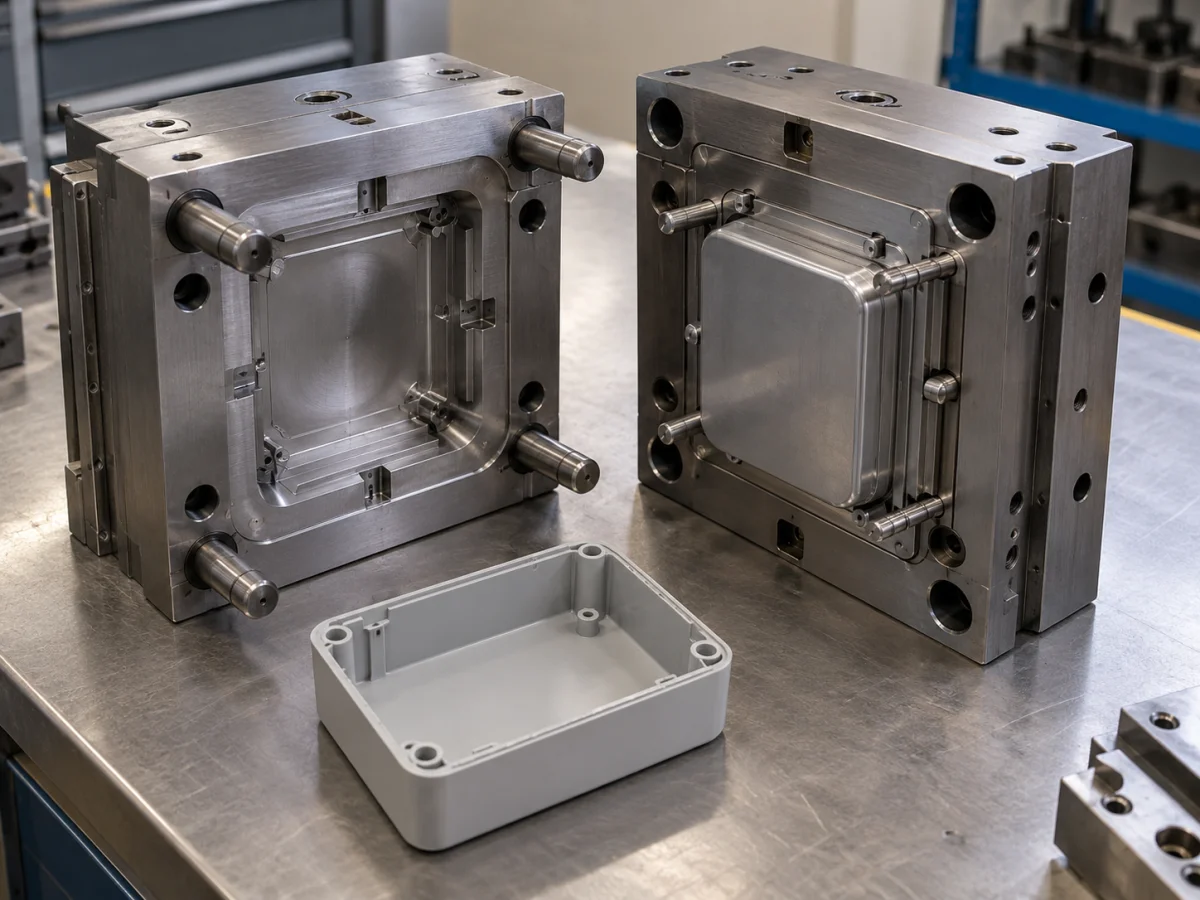
Steel body of a plastic injection mould and cavity detail
In an injection mould, temperature directly affects part filling and surface quality.
02

Which features directly affect part quality?

PID control and auto-tuning: A control that only switches the heater on and off makes the temperature oscillate around the set point. PID control delivers power gradually; the auto-tuning function learns the heat-up behaviour of each zone and sets the parameters itself. This narrows the temperature difference between nozzles.

Soft start (moisture removal): In moulds that have been idle for a long time, the insulation material inside the heaters absorbs moisture. Applying full power directly to the heater can cause leakage current and heater failure. Soft start first dries the heaters at low power and then switches to normal heating.

Standby and boost: During short stops, taking the zones to a lower standby temperature prevents material degradation; a controlled ramp-up when restarting speeds up the return to production.

  • Zero-crossing or phase-angle power control
  • Synchronized start for even heat-up across zones
  • Option to run temporarily on learned power output if a thermocouple fails
03

How does it catch faults before production stops?

Most hot runner faults go unnoticed until defects appear in the part. The controller monitors the following conditions zone by zone and raises an alarm, so the operator sees directly which nozzle has which type of problem.

  • Thermocouple open or shorted: when the measurement is lost, the zone is switched to safe mode.
  • Reversed thermocouple: a warning is given if the measured temperature falls while heating.
  • Heater open circuit: detected if the temperature does not rise although power is applied, or if the current measurement is zero.
  • Shorted power device: an alarm is raised if the temperature keeps rising while the zone is off.
  • Leakage current and fuse: heater insulation problems and blown zone fuses are reported.

Alarm records are stored with date and zone information. The maintenance team knows which heater or thermocouple needs replacing before taking the mould out of the machine.

04

How are zone count, power and cabling chosen?

The number of zones equals the number of independent heater and thermocouple pairs in the mould. A small single-cavity mould needs only a few zones, while in multi-cavity moulds the zone count rises quickly. The VOMRO controller is designed with a modular board structure; it can be adapted to different moulds by adding zone boards.

The heater power of each zone determines the zone fuse and power device selection. The pin assignment of mould connectors varies by hot runner manufacturer. A wrong assignment connects a thermocouple to another zone and makes the controller drive the wrong heater. That is why we ask for the mould wiring diagram or the existing connector type before quoting.

  • Number of zones and heater power of each zone
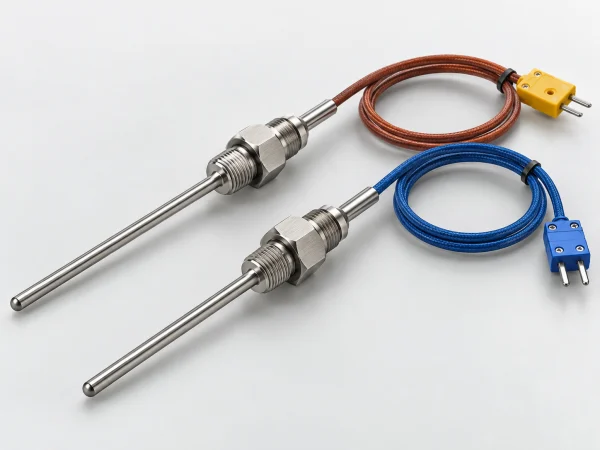
  • Thermocouple type (J or K) and mould connector pin assignment
  • Supply voltage and choice of cabinet or portable housing
05

Integration with the injection moulding machine and the factory network

If injection starts before the hot runner temperatures reach the required range, the nozzles are stressed and defective parts are produced. The controller can give the machine a “ready” signal when all zones are ready and warn the machine via a relay output in case of a critical alarm.

With Modbus communication, temperatures and alarms can be transferred to the machine controller, a SCADA system or production monitoring software. Set values for each mould are stored as recipes, so there is no need to enter the settings one by one when the mould is changed.

  • Machine-ready and alarm relay outputs
  • Modbus RTU (RS-485) or Modbus TCP
  • Mould-based recipes and temperature logging
06

Can it replace your existing controller?

In place of a controller that has failed or whose spare parts can no longer be found, we can configure a unit that works with your existing mould cables. All we need to know is the mould connector type, pin assignment, number of zones and thermocouple type.

For mould makers and hot runner system integrators, custom front panel and menu options can also be prepared to offer under their own brand. The first unit is commissioned by testing it on your mould.

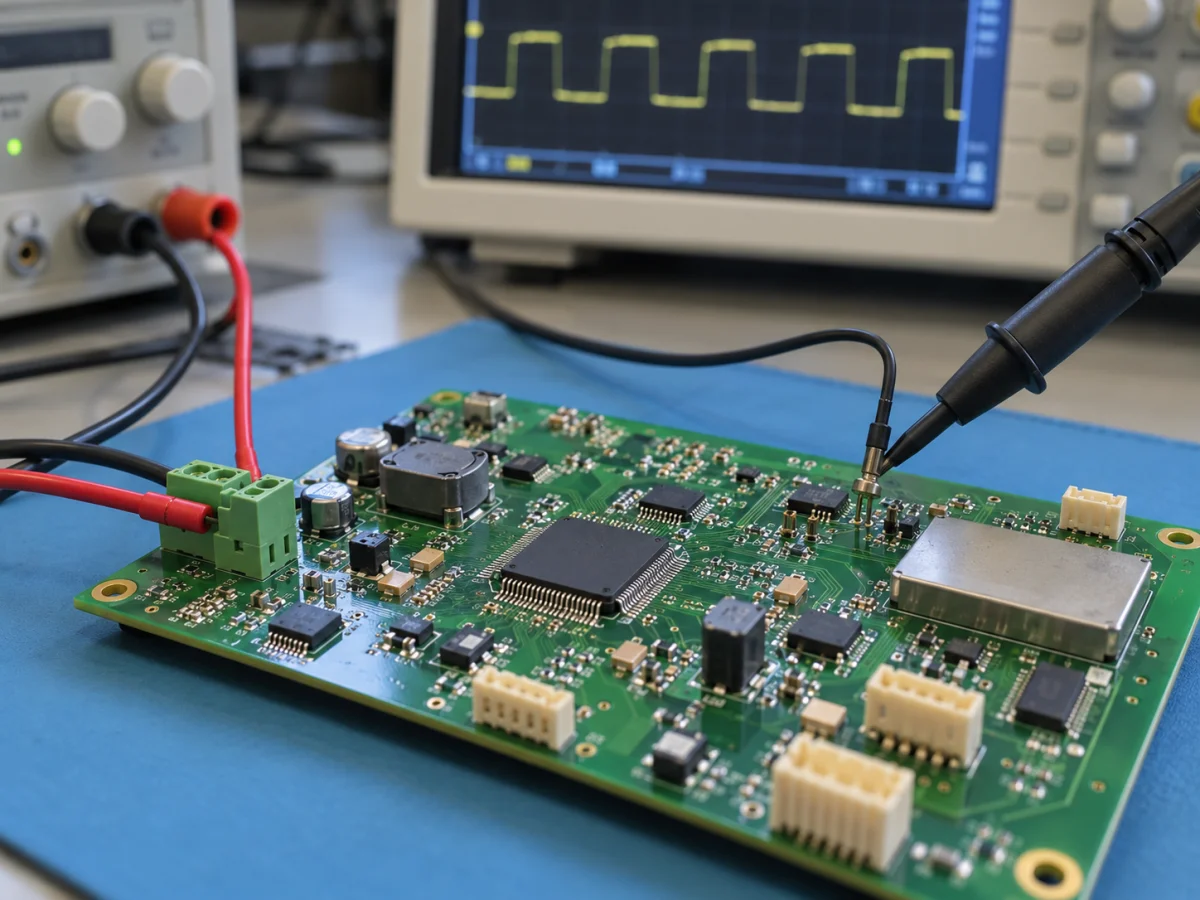
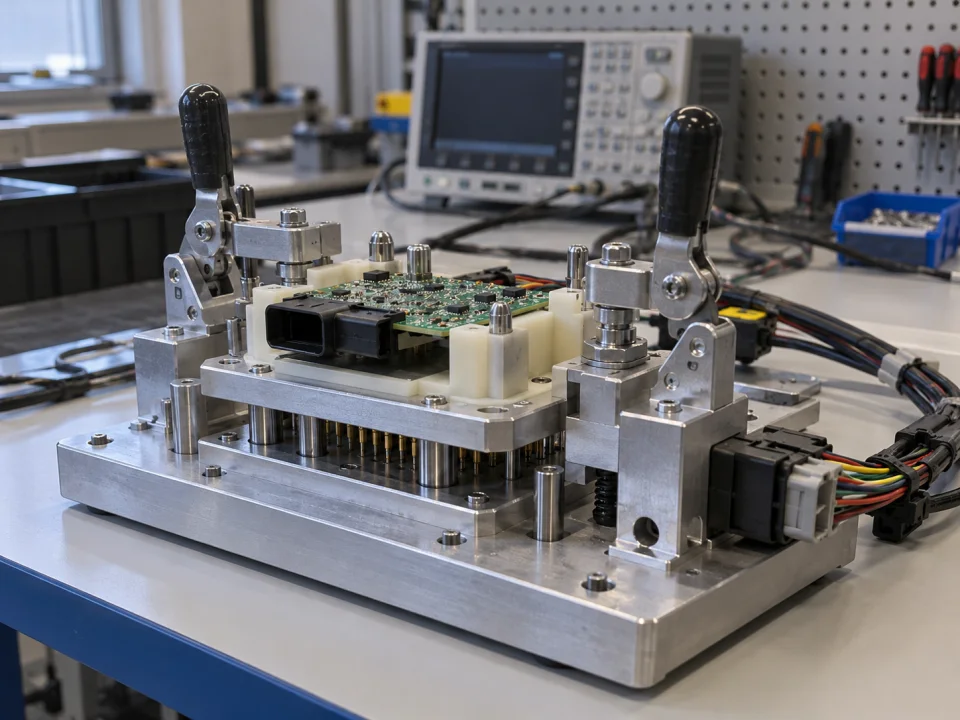
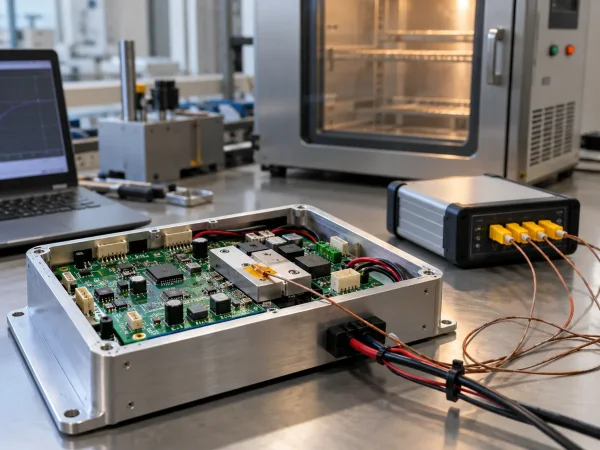
Verifying a controller board on a test bench with its test points and a measuring probe
Every zone board is tested for power, measurement and alarm functions before delivery.

Technical options

Features configured for your mould

Exact values are finalised at the quotation stage based on the mould data and application conditions.

Hot runner controller configuration options
FeatureOptions
Number of zones2–24 zones, modular zone boards; more depending on the project
ThermocoupleType J or K, measurement per zone
ControlPID, auto-tuning, manual percent power mode
Power switchingTriac / solid-state relay; zero-crossing or phase-angle control; zone fuse
Start-upSoft start and moisture removal, synchronized heating, standby and boost
Fault detectionThermocouple open / shorted / reversed, heater open, shorted power device, optional current measurement
CommunicationModbus RTU (RS-485); optional Modbus TCP
InterfaceDisplay per zone or central touchscreen, menu in Turkish or English
ConnectionCabling according to mould connector type and pin assignment

Ordering process

From mould data to commissioning

The controller is configured with your mould's actual zone count and cabling.

  1. 01

    We collect the mould data

    We clarify the zone count, heater powers, thermocouple type and connector pin assignment.

  2. 02

    We configure the controller

    We prepare the zone boards, cabling and interface for your needs.

  3. 03

    We test it on the mould

    We verify heat-up, stability and alarm functions on your mould.

  4. 04

    Delivery and support

    We deliver with operating instructions, spare parts information and service support.

Frequently asked questions

About hot runner control

For questions specific to your mould, you can share the mould wiring diagram or a photo of the connector.

Should the thermocouple be type J or type K?

The controller must be set to whatever thermocouple type is installed in the mould. The two types produce different voltages; with the wrong selection, the measured temperature deviates significantly from the actual value and the mould runs hotter or colder than necessary.

Do I need to change my existing mould cables?

Usually not. The controller's connector and pin assignment are prepared to match your existing mould cables. If you use several moulds with different pin assignments, just mention it at the quotation stage.

Is soft start necessary for every mould?

It is recommended for moulds that have been idle for a long time or stored in a damp environment, to protect heater life. If the mould runs hot continuously, this step can be shortened or disabled.

How many zones can it control?

Thanks to the modular design, we offer standard configurations from 2 to 24 zones. For moulds with more zones, the number of boards and the housing are scaled up for the project.

How is the price determined?

The number of zones, display type, communication option, housing and order quantity determine the price. When you share your mould data, we prepare a quotation matching the configuration.

Let's start from your mould

Let's configure your hot runner controller for your mould.

Share the number of zones, thermocouple type and connector pin assignment; we will prepare a suitable controller configuration and a quotation.

We develop products for companies, manufacturers and institutions. We do not take on student, thesis or hobby projects, or requests for PCB fabrication/assembly only, board repair or board copying.