VOMROIndustrial Technology

How many cycles does your product withstand?

Life cycle and endurance test rig

A life test rig imitates the motion of real use and opens and closes, presses, turns or pulls your product thousands, or if necessary hundreds of thousands, of times. Every cycle is counted; force, position and electrical state are monitored; as soon as the product leaves the expected behaviour, the rig stops and records the failure cycle. VOMRO designs the mechanics, electronics and software together and builds the test rig to suit your product and your test specification.

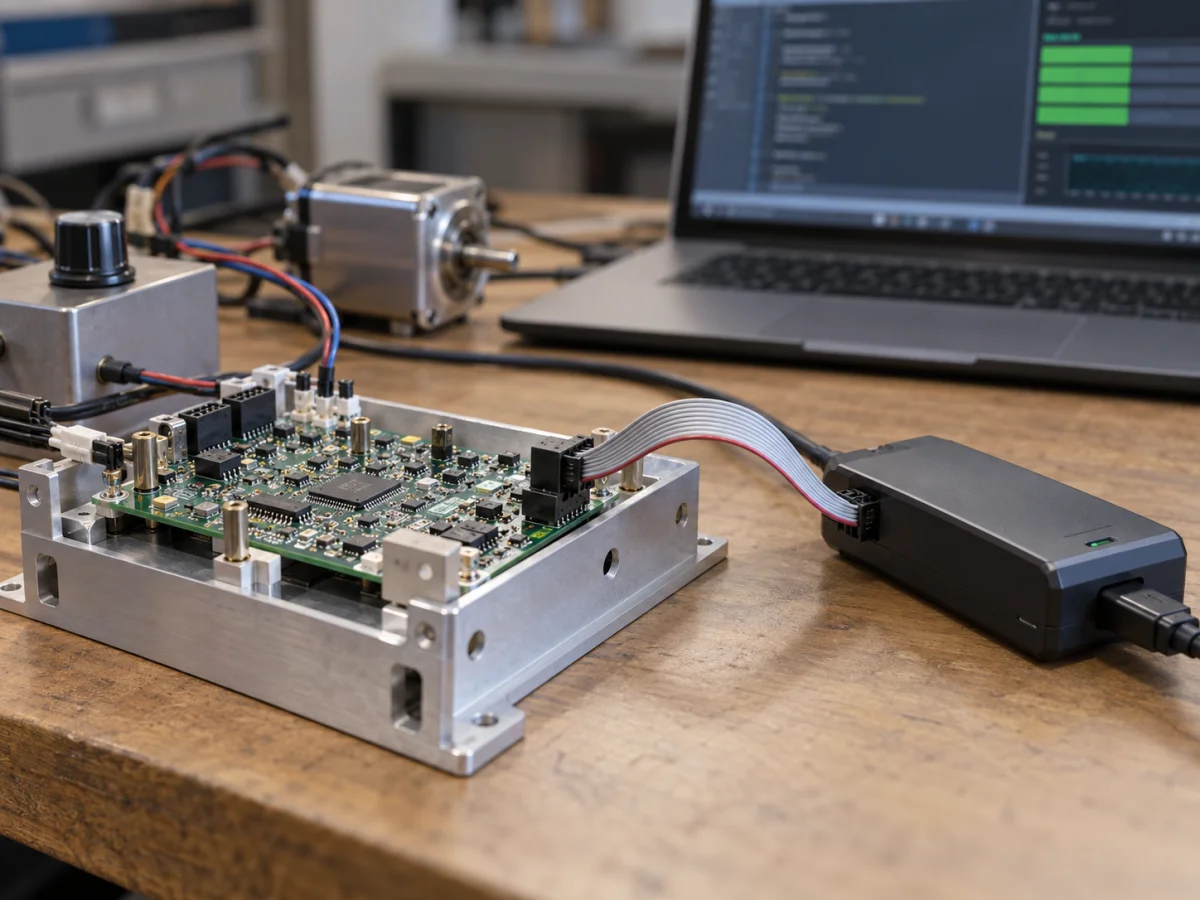
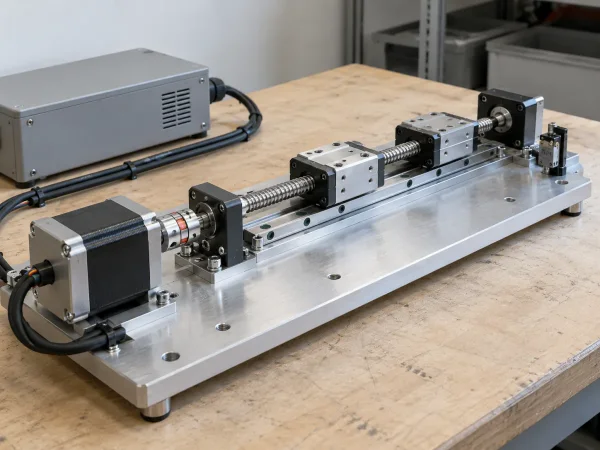
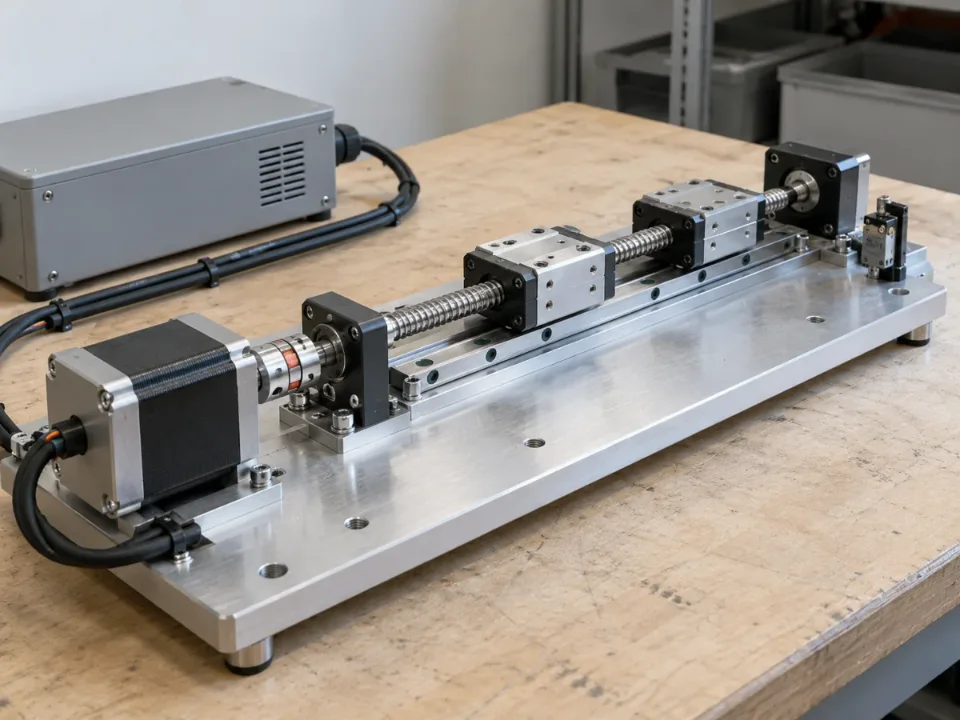
Motorized test motion mechanism of a stepper motor, lead screw and linear guides mounted on an aluminium base plate, with a control box
The motion is repeated with the same speed and position every cycle; if a measurement leaves its band, the test stops.
ApplicationHinge, lid, button, lock, motor, actuator
MotionPneumatic, servo / stepper motor or crank
MonitoringCycles, force, position, electrical state

Why it matters

Saying “durable” is not enough; you have to show how many cycles it withstands.

A household appliance lid, a car glovebox lid, a furniture hinge, an electrical switch or a lock mechanism all move thousands of times over their service life. Your customers, especially automotive and home appliance manufacturers, ask for a test report showing that the part they source withstands a specified number of cycles.

This test cannot be done by hand; it needs regular, repeatable motion, reliable cycle counting and capture of the moment of failure. A life test rig is used both for design validation in new product development and for periodic sample checks in series production.

01

What is life testing and which products is it used for?

Life testing applies the repeated motion a product will experience over its service life in a short time and under controlled conditions. At the end of the test it becomes clear whether the product completed the specified number of cycles without failure, how much its performance dropped and, if it failed, when and how.

  • Hinge, lid, drawer and door mechanisms
  • Buttons, switches, toggle switches and keypads
  • Lock, latch and clip mechanisms
  • Small motors, actuators, valves and solenoids
  • Flex and mating-cycle tests on cables and connectors

The number of cycles and the conditions to apply are usually defined in the standard your product is subject to or in your customer's specification. If there is no specification, we build the test plan together based on the expected service life.
02

How is the motion generated? Pneumatic, motor or crank

The right motion mechanism determines how well we imitate the product's real use. A lid opened by hand opens up to a certain angle and at a certain speed; a button is pressed with a certain force and released.

  • Pneumatic cylinder: simple, fast and economical; force is set by pressure. Common for back-and-forth motions.
  • Servo or stepper motor: speed, position and motion profile are set precisely; preferred for angle-controlled lids and rotary motions.
  • Crank and cam mechanism: a durable solution for constant, repeated motion at very high cycle counts.
  • Robot arm: when complex, human-like trajectories are required.
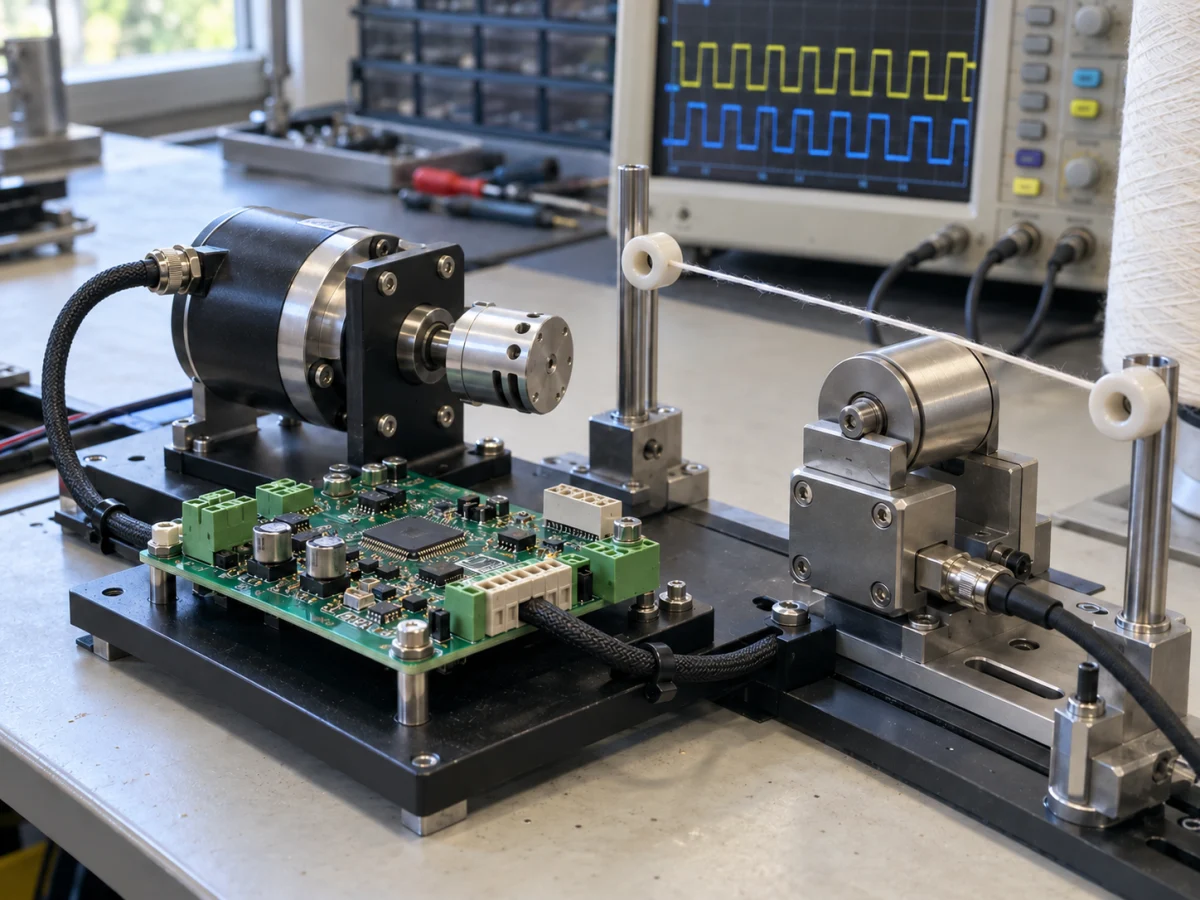
Test bench of a motor, coupling and load drum connected to a control board; an oscilloscope showing the signals behind
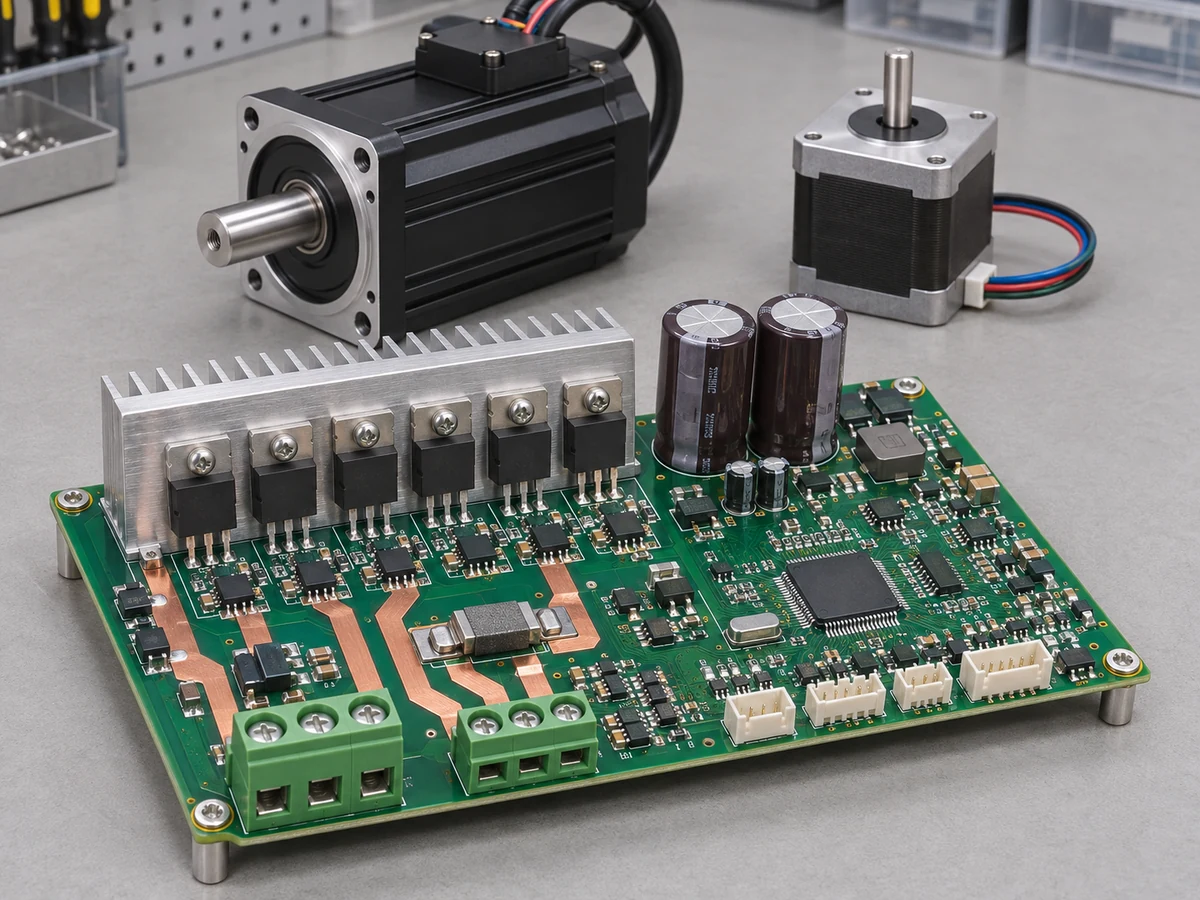
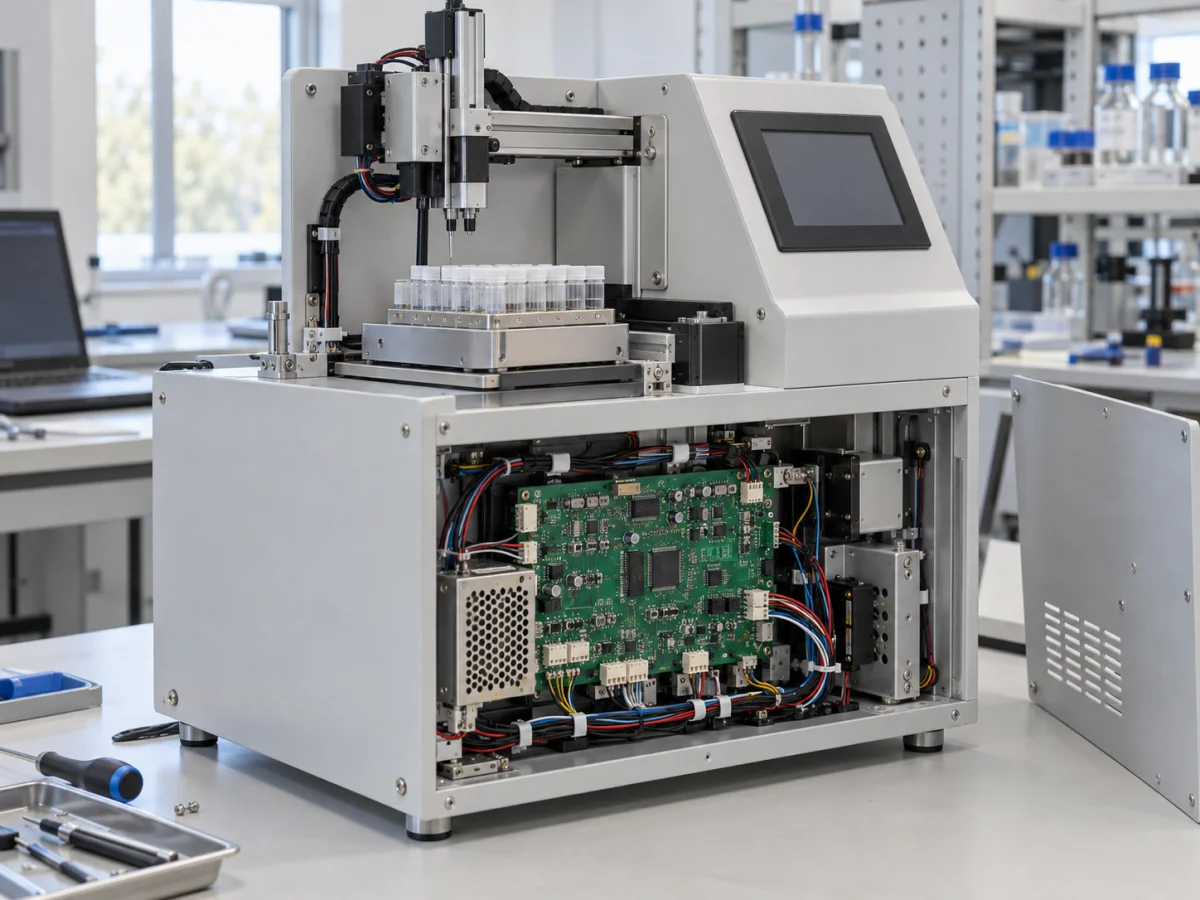
In motorized rigs, the motion is managed by a control board; motor current and signals can be monitored throughout the test.
03

Can the test be accelerated? Cycle rate and realism

To finish a hundred-thousand-cycle test quickly, it is tempting to run the rig as fast as possible. However, very fast cycles can heat friction surfaces and springs in a way that would not happen in real use, causing the product to fail for the wrong reason or, conversely, to appear unrealistically successful.

An example calculation: at 20 cycles per minute, a 100,000-cycle test takes about 83 hours, i.e. 3.5 days non-stop. The same test at 10 cycles per minute takes about 7 days. We set the cycle rate taking into account the product's heating, the conditions in the specification and dwell times. If necessary, we fit temperature sensors on critical surfaces to verify that the rate does not overheat the product.

04

How is a failure detected? Force, position and electrical measurement

The value of a life test depends on the moment it catches the failure. A failure noticed hours after the product broke leaves the failure cycle uncertain. The rig checks the product's behaviour in every cycle.

  • Force measurement: opening-closing or pressing force with a load cell; an increase in force indicates binding, a drop indicates breakage or loosening.
  • Position check: whether the target position is reached, using sensors.
  • Electrical check: contact state and contact resistance for switches and buttons; current consumption for motors.
  • Time check: whether the motion is completed within the defined time.

When values leave the defined band, the rig stops and the failure cycle and last measurements are recorded. If required, the test can be paused at set intervals for an intermediate inspection of the product.

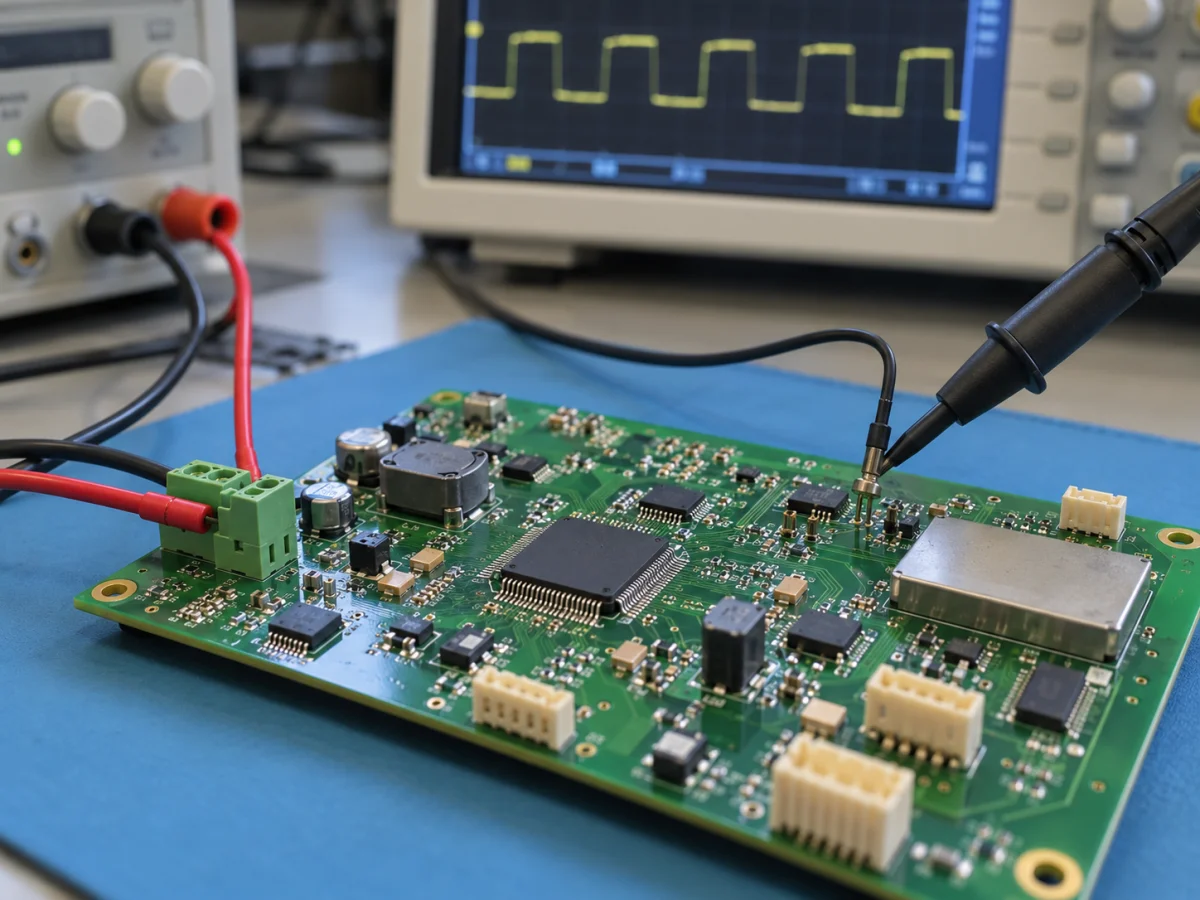
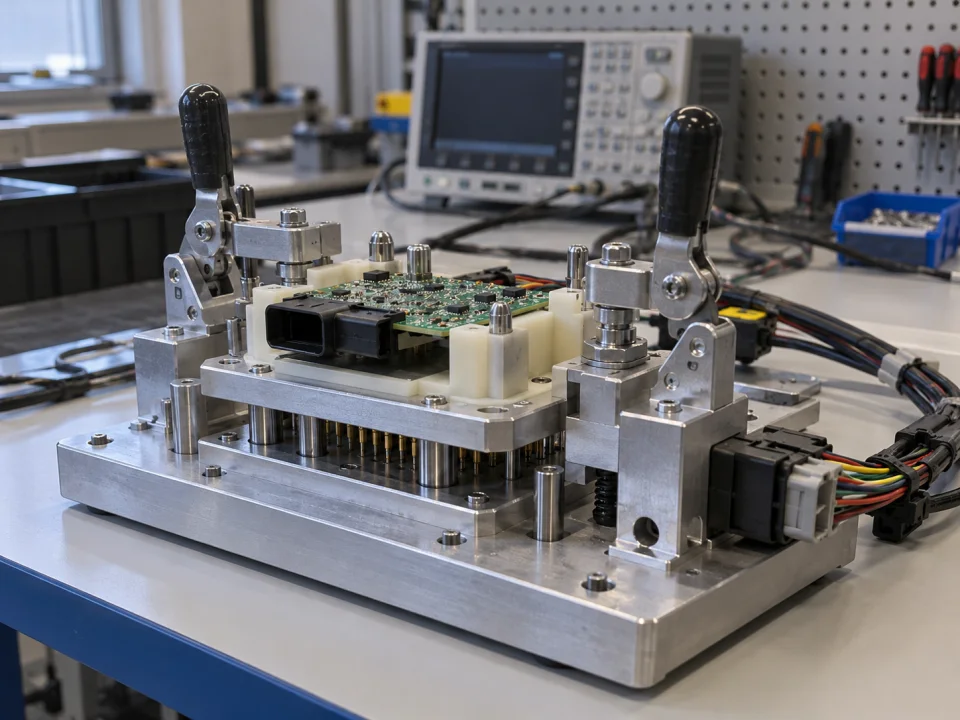
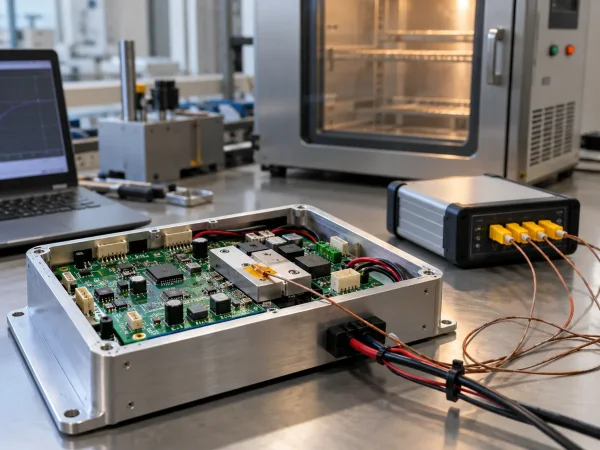
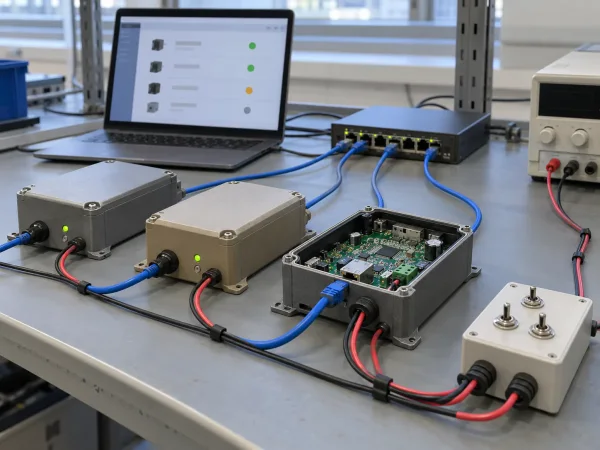
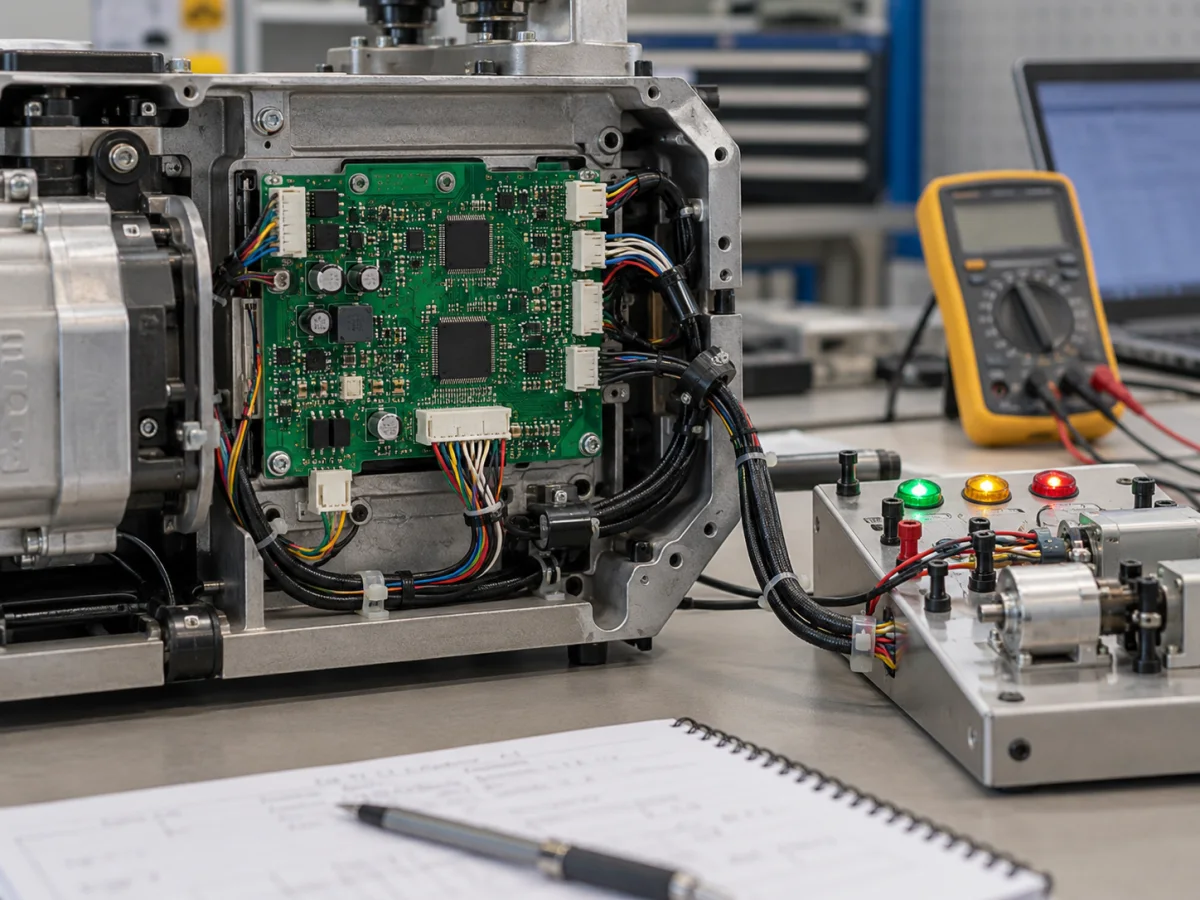
Test bench connected to the control board of an electromechanical product, with indicator lamps and a measuring instrument
Electrical measurements are monitored in sync with the mechanical motion to reveal the cause of the failure.
05

Multi-station rigs and environmental conditions

A single sample is not enough for a reliable test result; most specifications require several samples to be tested under the same conditions. In multi-station rigs, each station works independently with its own cycle counter, force measurement and failure log; when one sample fails, only that station stops.

The life of some products is affected by temperature and humidity. We can design the rig to run inside a climate chamber or add the ambient temperature to the test record. Operation inside a chamber directly affects the choice of materials, cables and sensors, so it must be decided at the start of the project.

06

Test report and data logging

The report you present to your customer shows how reliably the test was carried out. For each sample, the rig records the start and end time, total cycles and how force and other measurements changed over the cycles.

  • Sample information, test parameters and operator record
  • Force and measured values at defined cycle intervals
  • Failure cycle, failure type and last measurements
  • Report with charts and CSV data export
  • Cycle count retained during a power failure

Technical options

Features configured for your product and specification

Motion type, force range and number of stations are set according to your product's use and the test specification.

Life and endurance test rig configuration options
FeatureOptions
MotionPneumatic cylinder, servo / stepper motor, crank-cam, rotary table
Motion profileSpeed, stroke, angle, dwell times; according to the product's use
MeasurementForce via load cell, position sensors, contact state, motor current
Failure detectionForce band, position, time and electrical criteria; automatic stop on failure
StationsSingle or multiple stations; independent counter and log per station
EnvironmentRoom conditions or operation inside a climate chamber, temperature logging
InterfaceTouchscreen in Turkish or English, test recipes, password-protected settings
Data loggingCycle, force and failure log; report with charts, CSV
SafetyProtective cover, door safety switch, emergency stop

Project process

From specification to test report

The rig is designed to imitate your product's real-use motion.

  1. 01

    We review the specification

    Together we define the product, motion, cycle count and acceptance criteria.

  2. 02

    We design the mechanism

    We design the motion mechanism, fixtures and measurement points in 3D.

  3. 03

    We build and validate

    We build the rig and verify the force measurement with reference weights or a measuring instrument.

  4. 04

    We hand over

    We commission it with a sample test and provide training on operation and reporting.

Frequently asked questions

About life and endurance testing

The product itself or a photo of it, and the customer specification if there is one, are the most important inputs for designing the rig.

How many cycles should we test?

The number of cycles is usually stated in the standard the product is subject to or in your customer's specification. If there is no specification, we set the target cycle count together based on the product's expected service life and daily frequency of use.

Can we test different products on the same rig?

For products with a similar type of motion, the same rig can be used with interchangeable fixtures. Products with very different motions may need a separate mechanism; we assess this at the start of the project.

Does the test reset if the power goes out?

No. The cycle count and test records are kept in non-volatile memory. When power returns, the test continues where it left off after operator confirmation.

How accurate is the force measurement?

Accuracy depends on the selected load cell and the measurement electronics. The load cell is chosen according to the product's expected force range and verified with reference weights at delivery.

What determines the price?

Motion type and complexity, number of stations, force and other measurements, climate chamber compatibility and reporting scope.

Let's start from your product

Let's prove your product's durability in numbers.

Share the product you want to test, the motion and the specification if you have one; we will prepare a suitable rig design and a quotation.

We develop products for companies, manufacturers and institutions. We do not take on student, thesis or hobby projects, or requests for PCB fabrication/assembly only, board repair or board copying.