VOMROIndustrial Technology

Non-contact tank and well level measurement

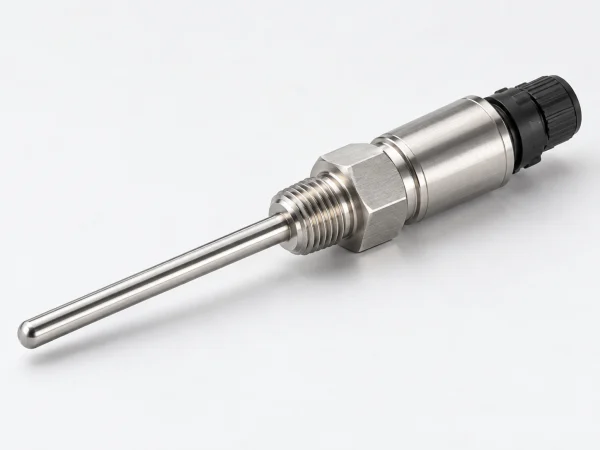
Ultrasonic level sensor

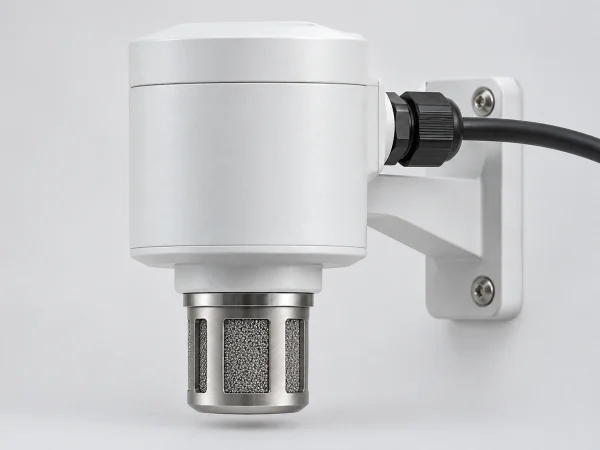
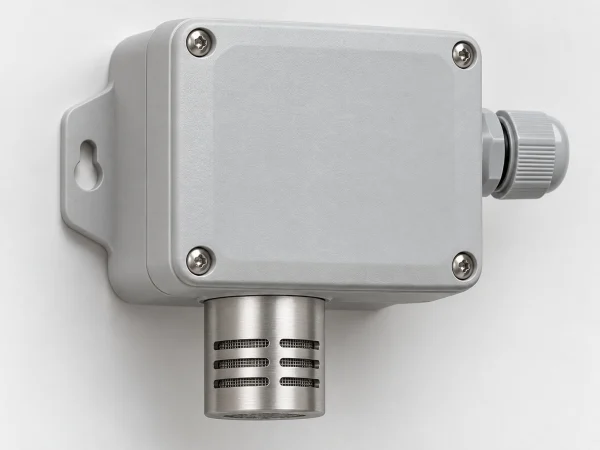
An ultrasonic level sensor is mounted at the top of the tank and calculates the level from the return time of the sound pulse it sends to the liquid surface. Because it does not touch the liquid, it does not get fouled or worn and needs little maintenance. It is used for level monitoring, pump control and overflow alarms in water, wastewater and suitable chemical tanks; output and housing options are configured for your application.

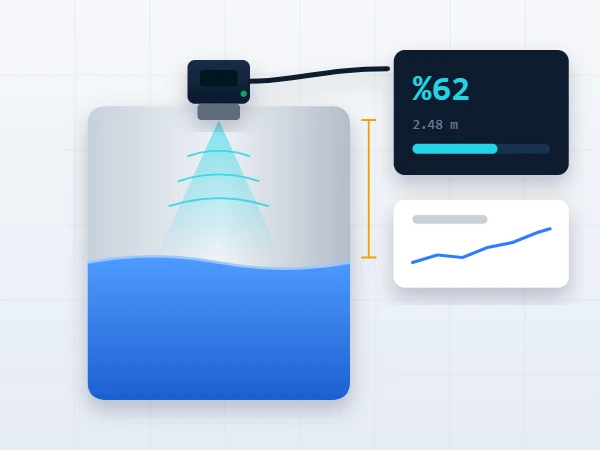
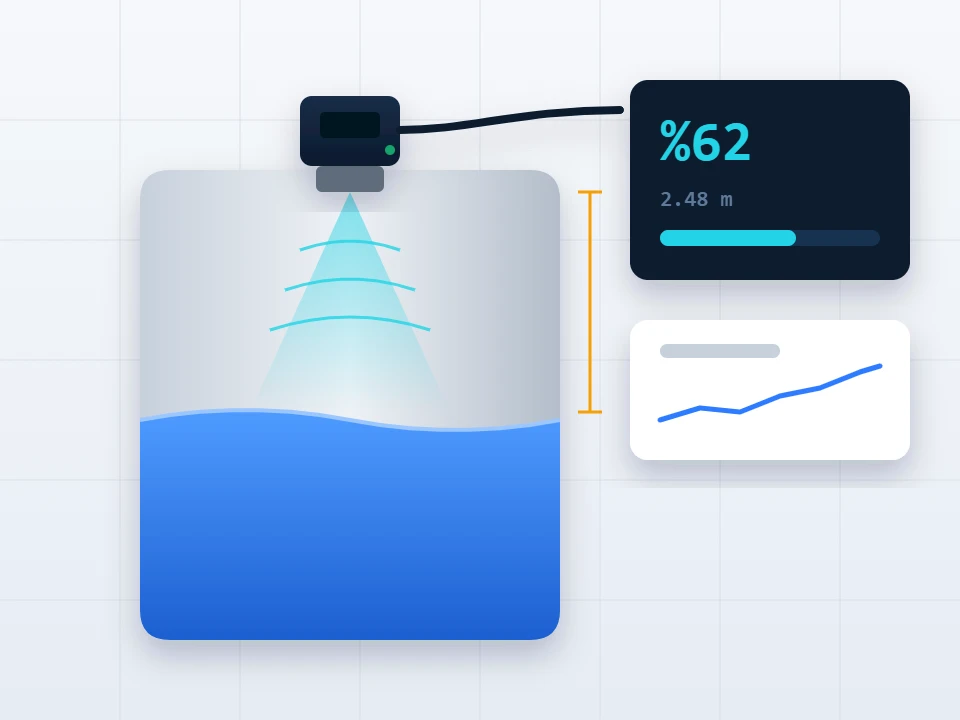
Drawing of an ultrasonic level sensor mounted on a tank lid, sound waves travelling to and from the liquid surface, and a display showing the level percentage
Non-contact level measurement from the round-trip time of a sound pulse.
ApplicationWater, wastewater, suitable chemical tanks, wells
MeasurementNon-contact, temperature-compensated
Output4-20 mA, Modbus RTU, relay

Why it matters

Accurate level information prevents pumps running dry and tanks overflowing.

Float switches only detect specific points, and their mechanical parts clog or stick over time. Continuous level measurement shows how full the tank is at any moment, runs pumps at the required levels and makes consumption visible.

Ultrasonic measurement is not the right choice for every application. On this page we explain clearly how it works, where it gives good results and in which cases another method should be chosen.

01

How does an ultrasonic level sensor work?

The sensor sends a short sound pulse at a frequency the human ear cannot hear. The pulse reflects off the liquid surface and returns to the sensor. Because the speed of sound in air is known, the distance between the sensor and the liquid surface is calculated from the round-trip time. Subtracting this distance from the tank height gives the level, and defining the tank geometry gives the volume.

The speed of sound in air changes with temperature; the difference between 0 °C and 40 °C is close to 7 percent. That is why the sensor automatically corrects the calculation with its own built-in temperature measurement. A measurement without temperature compensation shows a significant error between summer and winter.

  • Non-contact measurement: no moving parts in contact with the liquid
  • Display of distance, level, percentage and volume
  • Built-in temperature compensation
02

Blanking distance and beam angle

Blanking distance: Directly in front of the sensor there is a short distance in which the return signal cannot be distinguished after the sound pulse is sent. If the liquid enters this zone, the measurement becomes unreliable. That is why the sensor should be placed above the tank's maximum fill level by at least the blanking distance; a short stand-off pipe can be used if necessary.

Beam angle: The sound pulse spreads in a cone. Ladders, agitators, pipes or protrusions on the tank wall inside the cone can create false echoes. The sensor should be mounted at a point where the inflow and internal fittings do not enter the beam cone, far enough from the tank wall.

  • Blanking distance margin between maximum level and the sensor
  • Mounting away from the inlet and internal fittings
  • Sensor face perpendicular to the liquid surface
03

When should it not be used?

Ultrasonic measurement relies on sound travelling through air. In media that absorb or deflect the sound pulse, the measurement becomes unstable. In the following cases a different method gives more accurate results:

  • Heavy foam: Foam absorbs the sound pulse; radar or hydrostatic measurement is preferred.
  • Heavy vapour and high temperature: The speed of sound changes unpredictably.
  • Dusty silos: Dust and a sloping bulk surface weaken the echo.
  • Pressurized or vacuum tanks: These tanks are outside the scope of the standard product.
  • Fuel and solvent tanks: These require explosive atmosphere (ATEX) certification and are outside the scope of this product.

In these cases, hydrostatic level measurement with a pressure sensor is usually a good alternative. We can assess your application and choose the right method together.

04

Outputs and pump control

The 4-20 mA analogue output is the most common option for connecting to PLCs and indicators and is resistant to noise over long cable runs. Modbus RTU (RS-485) transmits temperature and fault information in addition to level over the same line; several sensors can be connected to a single line.

In the relay output configuration, the sensor can run the pump between defined low and high levels without needing another controller. The difference left between the levels (hysteresis) prevents the pump from switching on and off frequently. The same relays can also be used for overflow and dry-run alarms.

  • 4-20 mA analogue output
  • Modbus RTU (RS-485) communication
  • Pump control with hysteresis and alarm relays
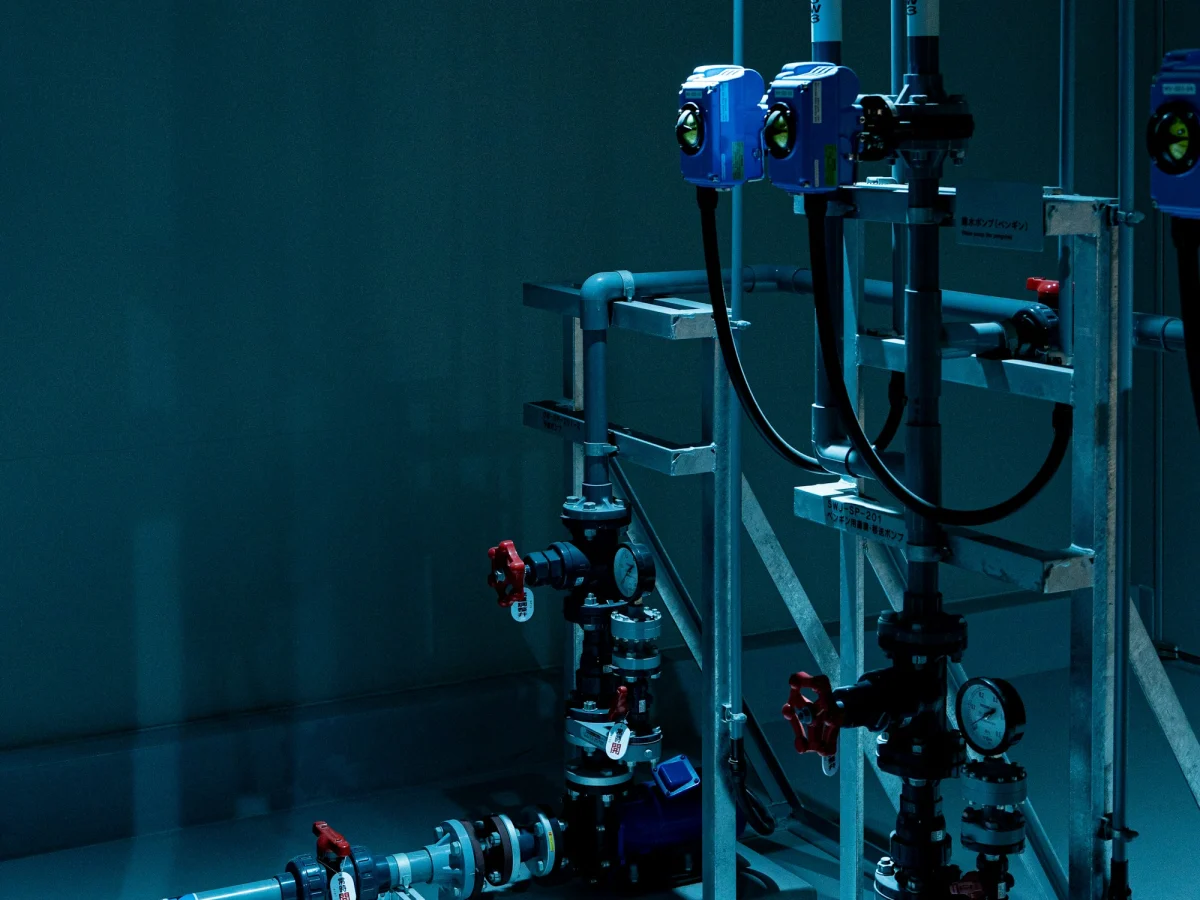
Tanks, pipes and control equipment in a water treatment plant
In water and wastewater plants, level measurement is the basis of pump and dosing control.
05

Housing material and mounting

Even though the sensor does not touch the liquid, it is affected by vapour and splashes inside the tank. A PP housing is usually sufficient for water and wastewater applications. In chemical tanks containing acids and bases, a PVDF housing with higher chemical resistance is preferred. Chemical compatibility should be checked before ordering based on the chemical and its concentration.

Mounting is done with a threaded connection or flange on the tank lid. In applications such as open channels, wells and manholes, the sensor is fixed with a bracket. For sensors outdoors in direct sunlight, a sun shield helps temperature compensation work correctly.

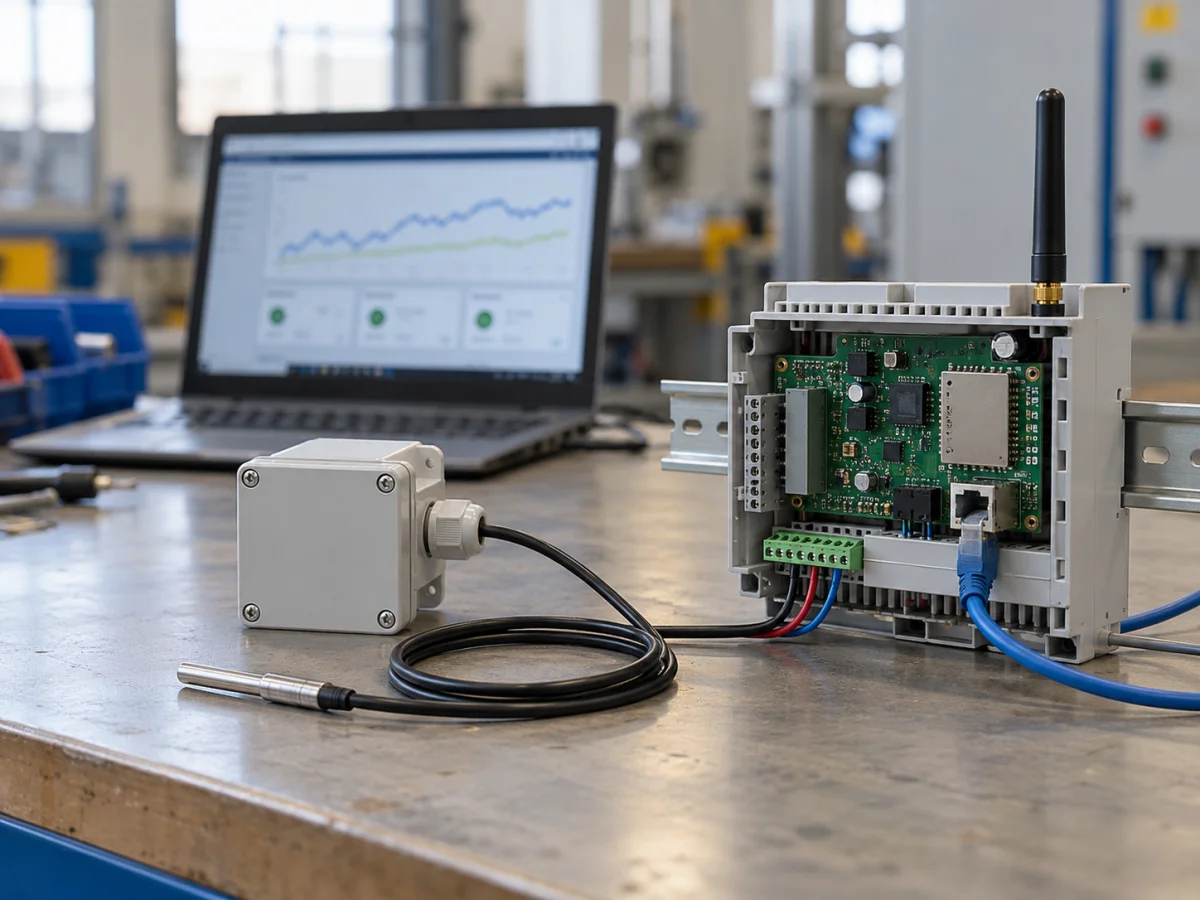
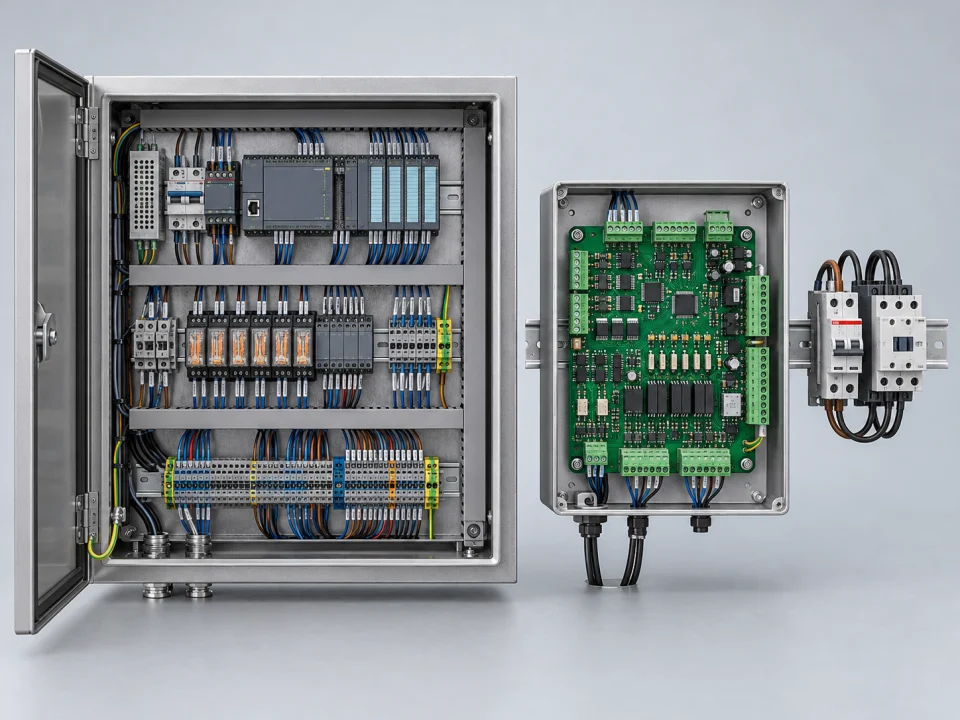
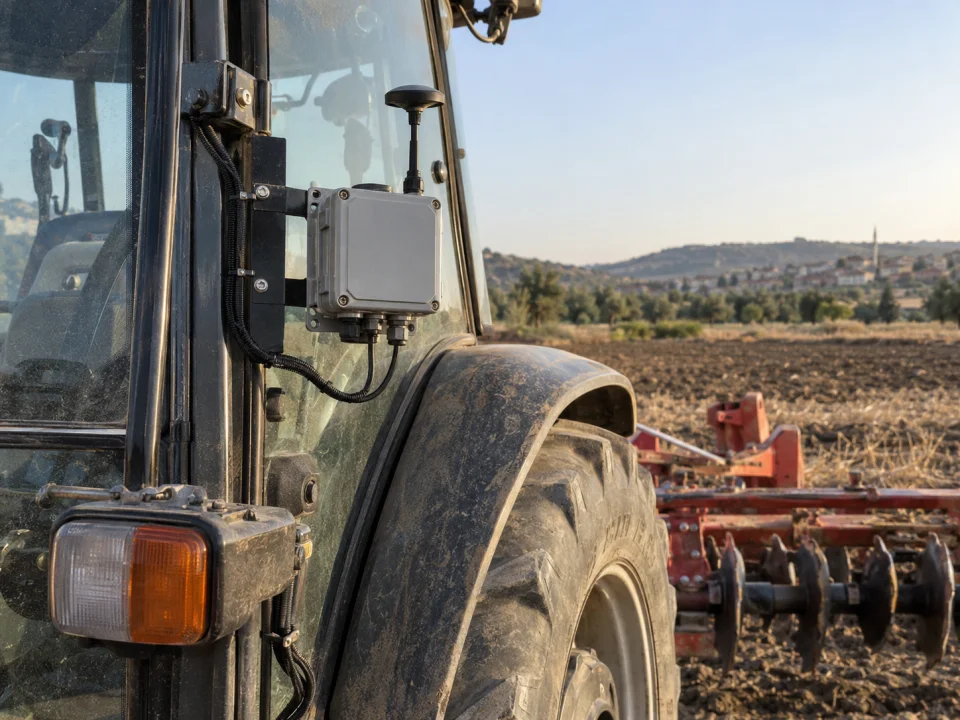
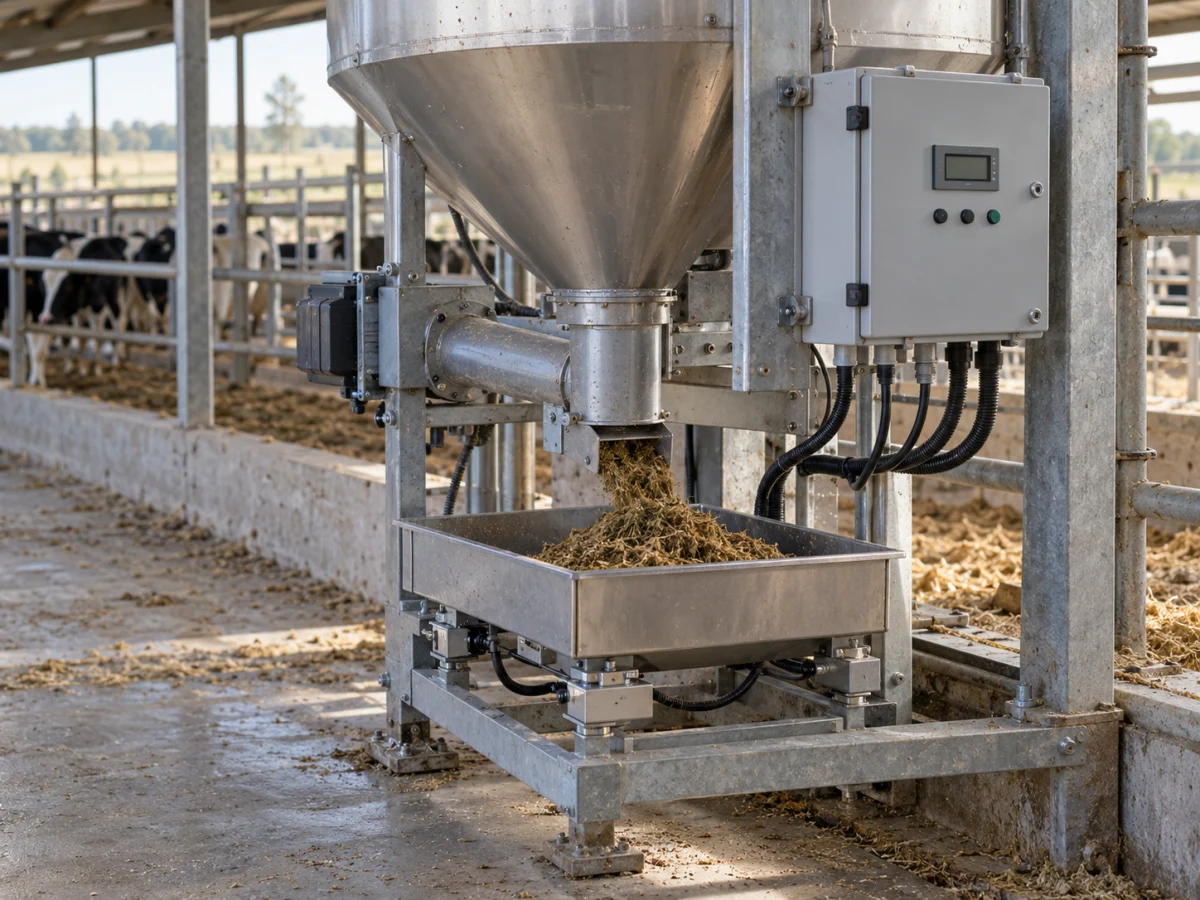
Control unit mounted on field equipment
In agriculture and irrigation applications, the storage tank level can be connected to the control unit in the field.
06

Installation and setup

After installation, the tank height (distance from the sensor face to the tank bottom) and the measuring range are entered in the sensor. For geometries such as horizontal cylindrical tanks or tanks with a conical bottom, the tank dimensions are entered for level-to-volume conversion. In tanks with false echoes, an empty-tank scan teaches the sensor these echoes so they are ignored during measurement.

On turbulent surfaces it is normal for the measured value to fluctuate; adjusting the damping time stabilizes the output signal. However, very long damping causes a delay in fast-filling tanks; this value should be chosen according to the application.

Technical options

Features configured for your application

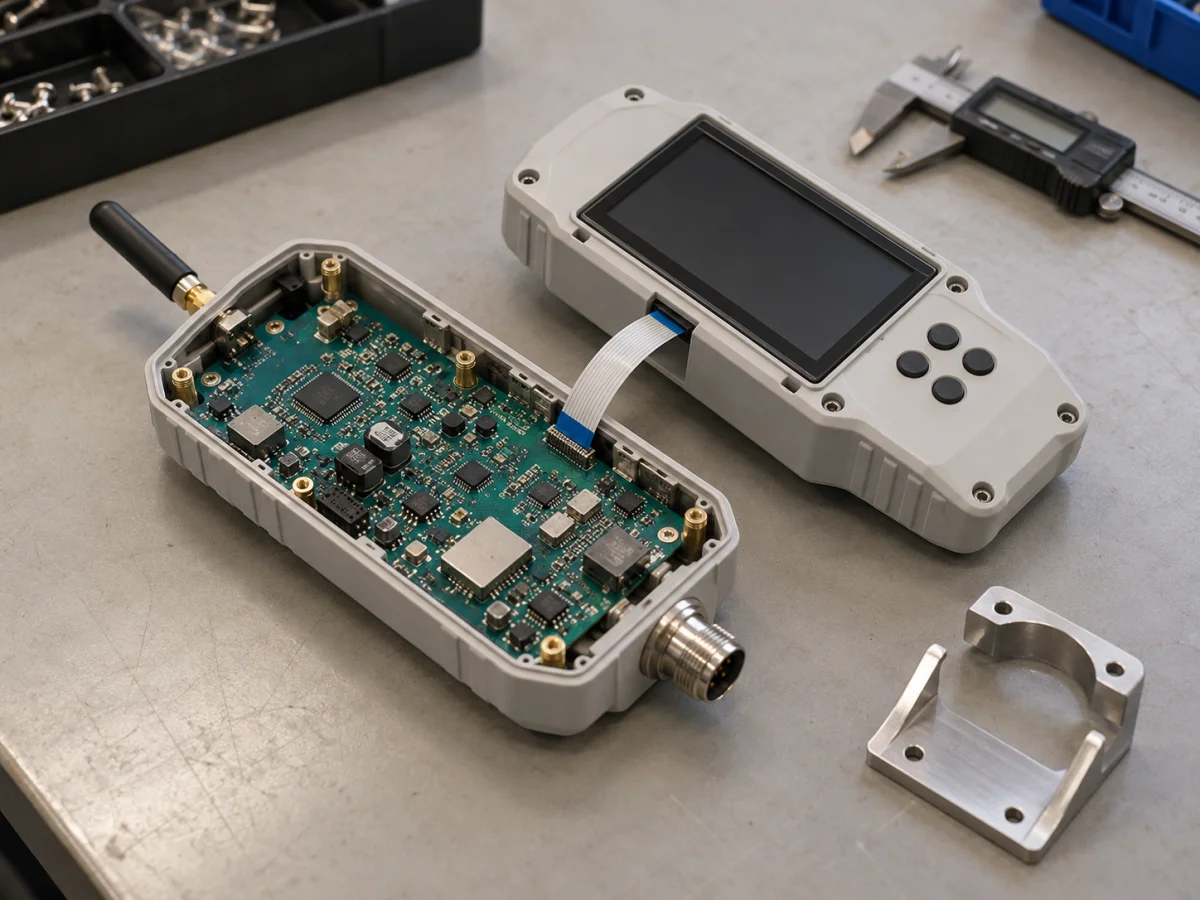
Measuring range, housing material and output type are finalised after assessing the tank and process data.

Ultrasonic level sensor configuration options
FeatureOptions
Measurement methodUltrasonic time of flight, built-in temperature compensation
Measuring rangeSensor type selected according to tank height
Output4-20 mA, Modbus RTU (RS-485), relay
Power supply12–24 VDC
HousingPP or PVDF; construction suited to the protection class for outdoor use
MountingThreaded connection, flange or bracket
FunctionsLevel, percentage, volume; pump control with hysteresis, overflow and dry-run alarms
Remote monitoringWeb dashboard with an optional GSM or LoRa module

Selection process

Let's choose the right sensor for your tank together

A correct result starts with the right method and the right mounting point.

  1. 01

    We learn about the application

    We assess the type of liquid, tank dimensions, ambient temperature and foam conditions.

  2. 02

    We choose the method

    We determine whether ultrasonic measurement is suitable and suggest an alternative if necessary.

  3. 03

    We configure it

    We define the measuring range, housing material, output type and mounting accessory.

  4. 04

    We commission

    We set up the tank definition and alarm levels and provide installation support.

Frequently asked questions

About the ultrasonic level sensor

Tank dimensions, the type of liquid and a photo of the installation location are the most useful information for the right selection.

Should I choose ultrasonic or radar?

For clean water, wastewater and foam-free chemical tanks, an ultrasonic sensor is an economical and reliable solution. If there is heavy foam, vapour, high temperature or pressure, a radar level sensor is more suitable.

Where on the tank should the sensor be mounted?

It should be mounted at a point away from the inlet, the agitator and the tank wall, perpendicular to the liquid surface. A margin equal to the blanking distance should be left between the maximum fill level and the sensor.

Can I use it in a diesel or fuel tank?

No. Fuel and solvent tanks can create an explosive atmosphere and require ATEX-certified equipment. Our standard product is not within this scope.

Can it be connected to my existing PLC?

Yes. The 4-20 mA output can be connected to the analogue input of almost any PLC. In systems that support Modbus RTU, temperature and fault information can be read in addition to the level.

Can I get OEM sensors under my own brand?

For series requirements, labels, housing colour and parameter presets can be prepared for your brand. We assess this together based on quantity and delivery schedule.

Tell us about your tank

Let's set up level measurement with the right method.

Share the tank dimensions, the type of liquid and the output you need; we will prepare a suitable sensor configuration and a quotation.

We develop products for companies, manufacturers and institutions. We do not take on student, thesis or hobby projects, or requests for PCB fabrication/assembly only, board repair or board copying.